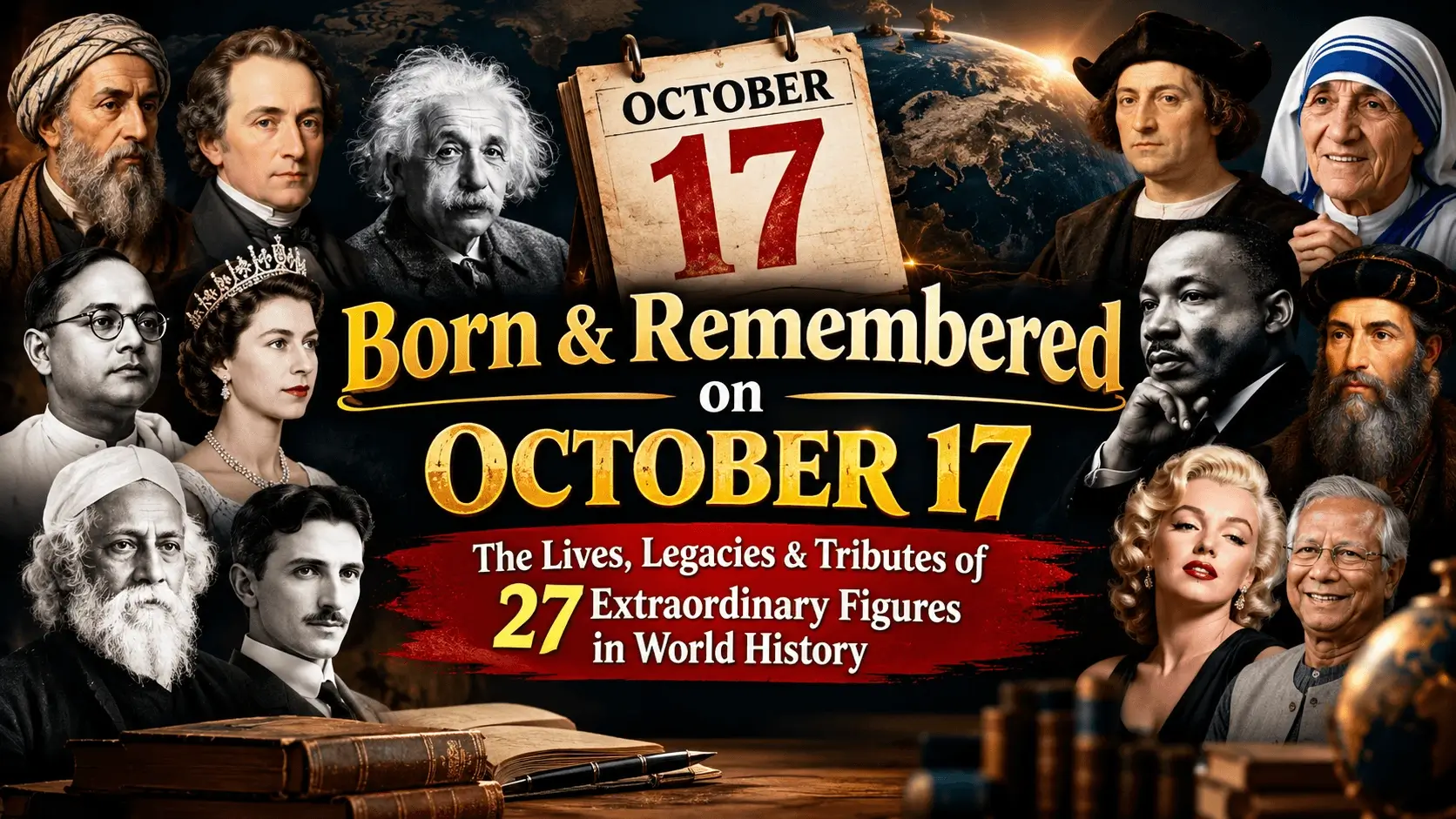
Every year, October 17 emerges as one of the most astonishing calendar dates in global history—a singular crossroads where the threads of revolutionary liberation, mystic spirituality, cutting-edge science, high-speed motorsport, Olympic glory, and cinematic elegance intertwine across three centuries. From the mystic baul riverside songs of 19th-century Bengal to the concert grand pianos of Paris, the dust of the 1803 Haitian Revolution, the roaring Formula 1 tracks of Monza, and the historic studios of Swadhin Bangla Betar Kendra, October 17 belongs to those who dared to leave an indelible mark on human consciousness.
In our comprehensive cultural archive, October 17 commemorates 27 extraordinary global and regional titans: celebrating the birthdays of 20 pioneers and honoring the solemn memorial anniversaries of 7 eternal legends. Below is your complete, authoritative chronicle—showcasing each figure's life trajectory, authentic portrait, seminal breakthroughs, and direct connections to their individual biographical blog articles, detailed directory profiles, and curated quotes and wishes collections.
Quick Navigation: Jump to Any of the 27 Figures

1. Jean-Jacques Dessalines (Jean-Jacques Dessalines (Jacques Ier))
Founding Father of Haiti, Revolutionary General & Hero of Black Independence
Jean-Jacques Dessalines was a military genius, revolutionary general, and the founding father of Haiti who led the enslaved population of Saint-Domingue to victorious independence against the armies of Napoleonic France. Born into brutal chattel slavery on a sugar plantation in Cormier, Dessalines worked in the fields until the monumental slave uprising of August 1791. Joining the revolutionary forces, his extraordinary courage, physical stamina, and strategic instinct elevated him to the position of chief lieutenant to Toussaint Louverture.
When Napoleon Bonaparte dispatched a massive armada under General Charles Leclerc in 1802 with secret orders to re-establish chattel slavery, Dessalines waged a ferocious defensive campaign, most famously at the Siege of Crête-à-Pierrot. Following Louverture's treacherous capture and deportation, Dessalines took supreme command of the indigenous revolutionary army, rallying formerly divided factions under a new red-and-blue flag created by ripping the white center out of the French tricolor.
On November 18, 1803, at the epic Battle of Vertières, Dessalines decisively crushed the veteran French army under General Rochambeau, forcing the complete evacuation of French troops. On January 1, 1804, at Gonaïves, Dessalines proclaimed the independence of Saint-Domingue, permanently restoring its indigenous Taíno name: Haiti (Ayiti, "land of high mountains"). Haiti became the first independent republic in Latin America, and the first nation in human history created by enslaved people who threw off their chains. Crowned Emperor Jacques I in October 1804, Dessalines was assassinated by political conspirators at Pont Rouge on October 17, 1806. In Haiti, October 17 is permanently commemorated as "Dessalines Day" (Fête Dessalines), a national public holiday honoring the liberator of the Black Republic.
Key Milestones & Notable Works:
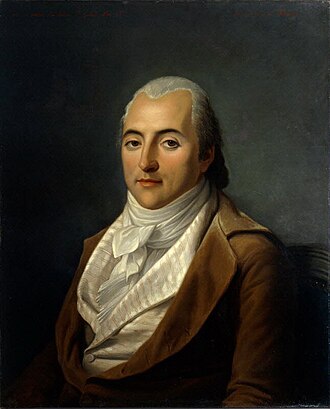
2. Henri de Saint-Simon (Claude-Henri de Rouvroy, comte de Saint-Simon)
Visionary French Social Philosopher, Pioneer Sociologist & Founder of Saint-Simonianism
Claude-Henri de Rouvroy, comte de Saint-Simon, was a visionary French social philosopher, economist, and founding father of modern sociology and utopian socialism, whose radical ideas on industrial organization, scientific meritocracy, and social justice profoundly shaped nineteenth- and twentieth-century political philosophy. Born on October 17, 1760, in Paris into an illustrious aristocratic family claiming descent from Charlemagne, Saint-Simon rejected feudal privilege from his youth, traveling to America at nineteen to fight in the American Revolutionary War alongside General Washington and the Marquis de Lafayette.
Returning to France, Saint-Simon enthusiastically renounced his aristocratic title during the French Revolution, adopting the name "Citoyen Bonhomme". Narrowly escaping the guillotine during the Reign of Terror, he dedicated the remainder of his life, often living in grinding poverty, to forging a comprehensive science of society that would replace feudal monarchies and theological dogma with an enlightened industrial and scientific order.
Saint-Simon argued that human society progresses through historical stages, and that the emerging 19th-century industrial age required government not by hereditary nobles, soldiers, and priests, but by productive "industriels"—scientists, engineers, artists, and laborers working cooperatively for the physical and moral uplift of the poorest and most numerous class (la classe la plus nombreuse et la plus pauvre). In landmark works such as L'Industrie (1817), Du système industriel (1821), and Nouveau Christianisme (1825), Saint-Simon formulated principles of social planning, meritocratic administration, and the emancipation of women. His direct disciple Auguste Comte created sociology, while his philosophy of Saint-Simonianism inspired the construction of the Suez Canal, European railway networks, and major socialist traditions. Saint-Simon passed away in Paris on May 19, 1825.
Key Milestones & Notable Works:

3. Fakir Lalon Shah (ফকির লালন শাহ্ (লালন সাঁইজি))
Spiritual Baul Saint, Mystic Philosopher, Lyricist & Humanist
Fakir Lalon Shah (reverently called Lalon Sainji) was a monumental mystic philosopher, poet, humanist, and social reformer whose songs revolutionized the cultural and spiritual landscape of Bengal. Living across more than a century, Lalon established his spiritual akhra (hermitage) at Chheuriya in Kushtia, where disciples of all religious backgrounds—Muslims, Hindus, and outcasts—gathered to practice universal love, inner contemplation, and radical humanism.
Lalon rejected all rigid orthodoxies, ritual sectarianism, and the oppressive Hindu caste hierarchy and Islamic clerical dogmatism. For Lalon, the human body was the sacred cosmos ("Ja achhe bhrimande, ta achhe dehebhande" - whatever is in the universe is within this human vessel), and the true divine essence resided not in temples or mosques, but as the "Achhin Pakhi" (the elusive unknown bird) dwelling within the human heart.
Composing an estimated two thousand immortal songs set to the resonant music of the ektara and dotara, Lalon left masterpieces that deeply inspired Rabindranath Tagore, Allen Ginsberg, and global human rights movements. His songs—such as "Shob Loke Koy Lalon Ki Jaat Shongshare" (Everyone asks what caste is Lalon in this world), "Khachar Bhitor Achhin Pakhi", and "Milon Hobe Koto Dine"—remain the pinnacle of Bengali folk literature. Lalon passed away peacefully at his Chheuriya akhra on 1st Kartik 1297 of the Bengali calendar (October 17, 1890) at approximately 116 years of age. Every year on October 17, hundreds of thousands of bauls, pilgrims, and scholars gather at his mazar in Chheuriya for the national Lalon Memorial Festival.
Key Milestones & Notable Works:
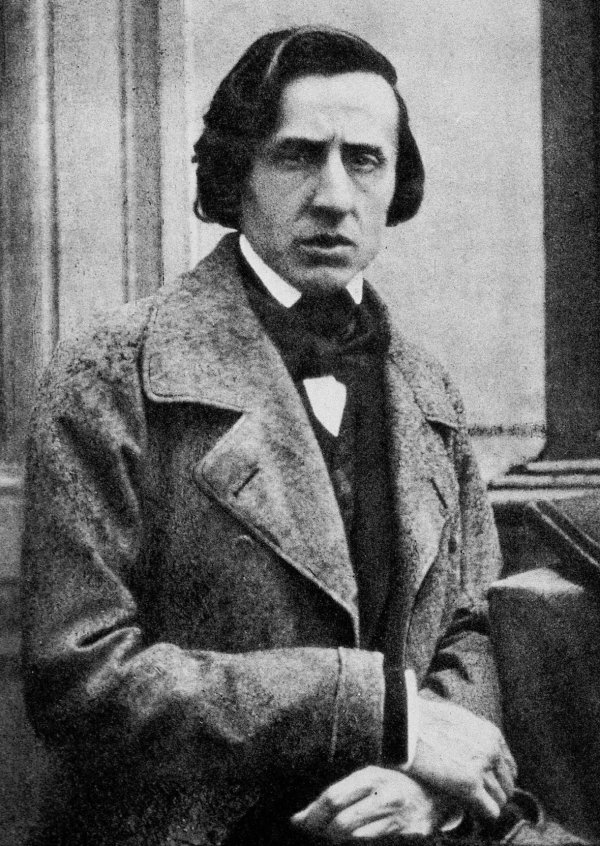
4. Frédéric Chopin (Fryderyk Franciszek Chopin)
Polish Virtuoso Pianist, Romantic Composer & "Poet of the Piano"
Fryderyk Franciszek Chopin was a Polish composer and virtuoso pianist who remains the supreme poet of the piano in Western classical music. Born in Żelazowa Wola near Warsaw to a French father and Polish mother, Chopin was a child prodigy who performed publicly at age seven and published his first polonaise at age eight. Educated at the Warsaw Conservatory under Józef Elsner, Chopin absorbed the traditional folk rhythms of the Polish mazurka and polonaise, infusing them with profound artistic sophistication.
In November 1830, at age twenty, Chopin departed Warsaw on a European concert tour just days before the outbreak of the November Uprising against Russian imperial rule. Heartbroken by the brutal crushing of Polish independence, Chopin settled in Paris in 1831, maintaining Polish exile identity for the rest of his life. Disdaining the spectacle of cavernous concert halls, he preferred the intimate acoustic salon culture of Paris, captivating audiences that included Franz Liszt, Eugène Delacroix, and Hector Berlioz with his delicate touch, revolutionary use of tempo rubato, and emotional nuance.
Chopin's intense, decade-long romantic relationship with French author George Sand (Aurore Dupin) coincided with his most productive creative period, producing masterpieces including the 24 Preludes Op. 28, the Ballades, and the heroic Polonaises. Afflicted with chronic pulmonary tuberculosis throughout his adult life, Chopin's health deteriorated rapidly, leading to his tragic death at age thirty-nine on October 17, 1849, at his apartment on Place Vendôme in Paris. While his body was interred at Père Lachaise Cemetery in Paris, in accordance with his dying wish, his sister Ludwika secretly transported his heart back to his beloved homeland, where it remains enshrined in the pillar of the Church of the Holy Cross in Warsaw.
Key Milestones & Notable Works:

5. Georg Büchner (Karl Georg Büchner)
Revolutionary German Playwright, Poet, Scientist & Author of Woyzeck and Danton's Death
Karl Georg Büchner was a dazzling, revolutionary German dramatist, political theorist, natural scientist, and poet whose tragically brief life—ending at just twenty-three years of age—fundamentally transformed modern drama, anticipating expressionism, naturalism, and the theater of the absurd by nearly a century. Born on October 17, 1813, in Goddelau near Darmstadt into a family of physicians, Büchner studied medicine, natural sciences, and philosophy at the universities of Strasbourg and Giessen.
Fiercely enraged by the oppressive monarchical absolutism and feudal poverty suffocating the Hessian peasantry, Büchner co-founded the clandestine Society for Human Rights in 1834 and penned the explosive political pamphlet Der Hessische Landbote (The Hessian Courier). Featuring the defiant slogan "Friede den Hütten! Krieg den Palästen!" (Peace to the huts! War on the palaces!), it is considered one of the most radical socialist manifestos in German history.
Evading arrest by Hessian authorities, Büchner fled to Darmstadt, where in five feverish weeks he wrote his first dramatic masterpiece, Dantons Tod (Danton's Death, 1835), a profound, existential exploration of the French Revolution and the fatalistic machinery of history. In exile in Strasbourg and Zürich—where he earned a doctorate with a brilliant anatomical treatise on the cranial nerves of fish and was appointed university lecturer—Büchner wrote the novella Lenz, the comedy Leonce and Lena, and his unfinished crowning masterwork Woyzeck. Depicting the tragic humiliation and madness of a dehumanized working-class soldier, Woyzeck was the first modern working-class tragedy in European theater, inspiring Alban Berg's landmark modernist opera Wozzeck. Büchner died of typhus in Zürich on February 19, 1837. Today, Germany's most prestigious literary honor, the Georg Büchner Prize, bears his immortal name.
Key Milestones & Notable Works:

6. Sir Syed Ahmad Khan (سر سید احمد خان)
Pioneer Islamic Reformer, Philosopher & Founder of Aligarh Muslim University
Sir Syed Ahmad Khan was an extraordinary 19th-century intellectual, jurist, and educator who rescued the Muslims of British India from educational paralysis and political marginalization following the 1857 War of Independence. Born into an aristocratic family closely connected to the Mughal court in Delhi, Sir Syed entered the judicial service of the East India Company, witnessing firsthand the catastrophic collapse of Muslim social and economic standing after 1857.
Recognizing that adherence to outdated scholastic traditions and refusal to learn modern English and sciences would permanently disenfranchise South Asian Muslims, Sir Syed launched the revolutionary Aligarh Movement. In 1864, he established the Scientific Society of Aligarh to translate major Western scientific, historical, and philosophical works into Urdu. In 1870, he founded the influential journal Tahzibul Akhlaq (Mohammedan Social Reformer) to promote modern rationalism, scientific inquiry, women's education, and religious tolerance.
In 1875, inspired by the residential collegiate models of Oxford and Cambridge, Sir Syed founded the Muhammadan Anglo-Oriental (MAO) College in Aligarh, laying the cornerstone with the ambition that it should develop into a university that would bridge Eastern spiritual heritage with Western scientific excellence. In 1920, it became the world-renowned Aligarh Muslim University (AMU). Sir Syed was also a pioneering scholar of Indian archaeology, authoring Asar-us-Sanadid (Monuments of Delhi). On his October 17 birth anniversary, millions of Aligarh alumni and scholars across the world celebrate "Sir Syed Day" to honor the father of modern South Asian Muslim enlightenment.
Key Milestones & Notable Works:

7. Gustav Kirchhoff (Gustav Robert Kirchhoff)
Pioneer German Physicist & Formulator of Kirchhoff's Circuit Laws
Gustav Robert Kirchhoff was a titan of nineteenth-century physics whose mathematical discoveries laid the foundational principles of modern electrical circuit theory, thermal radiation, and astronomical spectroscopy. Born in Königsberg, East Prussia, Kirchhoff studied mathematics and physics at the Albertus University of Königsberg under Franz Ernst Neumann. In 1845, while still an undergraduate student of only twenty-one years, Kirchhoff formulated two laws that became immortal in physics: Kirchhoff's Current Law (conservation of charge) and Kirchhoff's Voltage Law (conservation of energy in closed electrical loops).
Appointed Professor of Physics at the University of Heidelberg in 1854, Kirchhoff entered into a legendary scientific collaboration with chemist Robert Bunsen. Together, they invented the optical spectroscope, demonstrating that every chemical element emits and absorbs light at unique, characteristic spectral wavelengths—creating the science of chemical spectroscopy. Utilizing this method, Kirchhoff and Bunsen discovered two brand-new chemical elements: cesium in 1860 and rubidium in 1861.
More astonishingly, Kirchhoff applied spectroscopy to the Sun, explaining the mysterious dark Fraunhofer lines in the solar spectrum and proving that the Sun and distant stars contain familiar terrestrial elements, notably sodium and iron—effectively founding modern astrophysics. In 1859, he formulated Kirchhoff's Law of Thermal Radiation, coining the concept of "black-body radiation" that four decades later led Max Planck to the birth of quantum mechanics. Appointed Chair of Theoretical Physics at the University of Berlin in 1875, Kirchhoff passed away in Berlin on October 17, 1887.
Key Milestones & Notable Works:
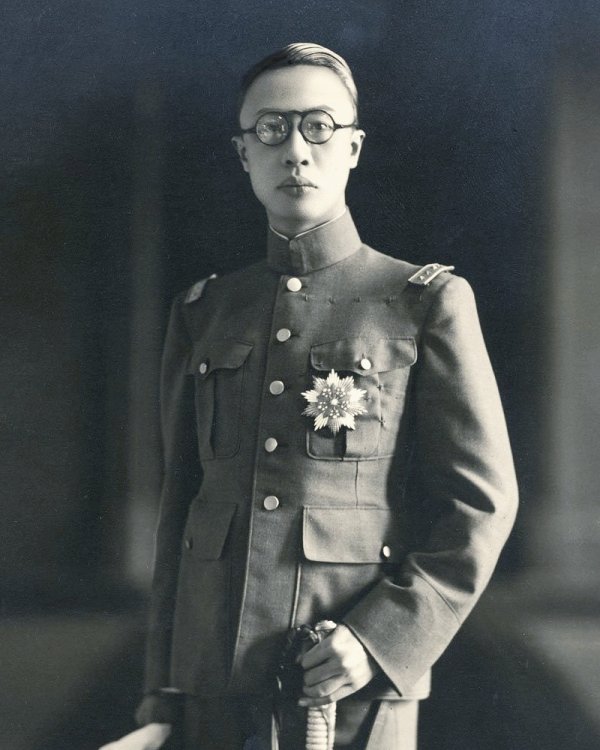
8. Puyi (愛新覺羅·溥儀 (Aisin Gioro Puyi))
The Last Emperor of China & Final Sovereign of the Qing Dynasty
Aisin Gioro Puyi was the twelfth and final monarch of the Qing dynasty, and the last emperor of imperial China, an institution that had endured for over two thousand years since Qin Shi Huang in 221 BC. Chosen by Empress Dowager Cixi on her deathbed, Puyi ascended the Dragon Throne in the Forbidden City in December 1908 as the Xuantong Emperor at the age of two years and ten months. Reared in supreme luxury and absolute isolation, he was worshiped as a living deity while knowing nothing of the turbulent world outside the palace walls.
Following the Xinhai Revolution led by Dr. Sun Yat-sen, the six-year-old Puyi was forced to abdicate on February 12, 1912, ending imperial rule and establishing the Republic of China. Under the Articles of Favorable Treatment, Puyi was permitted to retain his imperial title and reside in the Forbidden City until 1924, when warlord Feng Yuxiang expelled him. Seeking refuge in the Japanese concession in Tianjin, Puyi was later manipulated by imperial Japan, which installed him in 1932 as the puppet ruler and later Emperor of Manchukuo in Japanese-occupied Manchuria.
Captured by Soviet forces in August 1945 at the end of World War II, Puyi was imprisoned in Siberia before being extradited to the People's Republic of China in 1950. Incarcerated for nine years at the Fushun War Criminals Management Centre, Puyi underwent intensive political rehabilitation, renounced his imperial past, and was formally pardoned by Chairman Mao Zedong in 1959. Working as a humble gardener at the Beijing Botanical Gardens and later as an editor for the Chinese People's Political Consultative Conference, Puyi penned his celebrated autobiography From Emperor to Citizen. He died of uremia in Beijing on October 17, 1967, at age sixty-one. His surreal life was immortalized in Bernardo Bertolucci's nine-time Academy Award-winning film The Last Emperor.
Key Milestones & Notable Works:

9. Pope John Paul I (Albino Luciani ("The Smiling Pope"))
263rd Pope of the Catholic Church & Sovereign of Vatican City
Albino Luciani, who reigned as Pope John Paul I, was one of the most humble, universally beloved spiritual leaders in the modern history of the Roman Catholic Church. Born on October 17, 1912, in the small alpine village of Canale d'Agordo in northern Italy, Luciani was the son of a socialist bricklayer who often worked abroad to feed the family. Ordained to the priesthood in 1935, Luciani completed his doctorate in sacred theology at the Pontifical Gregorian University in Rome, dedicating his early career to catechetical instruction and pastoral teaching for children and laborers.
Appointed Bishop of Vittorio Veneto by Pope John XXIII in 1958, Luciani actively participated in the historic Second Vatican Council (1962–1965), championing church renewal and pastoral closeness to the poor. In 1969, Pope Paul VI appointed him Patriarch of Venice, creating him a Cardinal in 1973. In Venice, Luciani won international acclaim for his collection Illustrissimi, a series of witty, affectionate open letters to historical and fictional figures (including Mark Twain, Charles Dickens, Pinocchio, and Jesus) explaining ethical principles in colloquial language.
Following the death of Pope Paul VI, the conclave of August 1978 elected Luciani on the third ballot. In an unprecedented decision, he chose the double name "John Paul" to honor his two reforming predecessors. Dispensing with the centuries-old imperial coronation, the sedia gestatoria (papal throne), and the triple tiara, John Paul I was inaugurated with a simple pastoral pallium. His gentle, radiantly smiling countenance earned him the moniker "Il Papa del Sorriso" (The Smiling Pope). His sudden, tragic death from a heart attack on September 28, 1978, after only thirty-three days in office, plunged the world into mourning. On September 4, 2022, Pope Francis officially beatified him at St. Peter's Square.
Key Milestones & Notable Works:

10. Arthur Miller (Arthur Asher Miller)
Pulitzer Prize-Winning American Playwright & Essayist
Arthur Asher Miller was a titan of twentieth-century American drama and literature whose plays dissected the moral, political, and economic contradictions of modern society with unrelenting power. Born to Polish-Jewish immigrant parents in Harlem, New York City, Miller witnessed his father's prosperous women's clothing business shattered by the Wall Street Crash of 1929. The traumatic economic devastation of the Great Depression fundamentally forged Miller's lifelong commitment to exploring the fragility of human security and the cost of the capitalist rat race.
Graduating from the University of Michigan in 1938, where he won the Avery Hopwood Award for playwriting, Miller broke through on Broadway in 1947 with All My Sons, a searing moral indictment of wartime war-profiteering. In 1949, his masterpiece Death of a Salesman premiered, directed by Elia Kazan. The heartbreaking tragedy of traveling salesman Willy Loman earned Miller the Pulitzer Prize for Drama and the Tony Award, instantly cementing his place alongside Eugene O'Neill and Tennessee Williams as the architects of modern American theater.
In 1953, at the height of Senator Joseph McCarthy's anti-communist witch hunts, Miller wrote The Crucible, a terrifying allegory set during the 1692 Salem witch trials that warned of the catastrophic dangers of mass hysteria and state paranoia. Called before the House Un-American Activities Committee (HUAC) in 1956, Miller heroically refused to name suspected communist colleagues, enduring a conviction for contempt of Congress that was later overturned on appeal. Miller was also an outspoken president of PEN International, defending imprisoned writers globally. Married to film star Marilyn Monroe from 1956 to 1961, Miller passed away in Connecticut on February 10, 2005, at age eighty-nine.
Key Milestones & Notable Works:

11. Danielle Darrieux (Danielle Yvonne Marie Antoinette Darrieux)
Legendary French Cinema & Stage Actress, 8-Decade Film Pioneer & Honorary César Winner
Danielle Yvonne Marie Antoinette Darrieux was a peerless titan of French cinema, theater, and music whose extraordinary career spanned an astonishing eight decades and more than one hundred and ten films, earning her recognition as one of the most enduring and luminous actresses in world cinema history. Born on May 1, 1917, in Bordeaux during World War I, Darrieux grew up in Paris, studying cello at the Conservatoire National de Musique before winning her first screen role at just fourteen years old in Wilhelm Thiele's Le Bal (1931).
Throughout the 1930s, Darrieux blossomed into France's ultimate ingenue and romantic heroine, scoring an international sensation in Anatole Litvak's historical tragedy Mayerling (1936) opposite Charles Boyer. Her sublime aristocratic poise, melodic singing voice, and radiant comedic timing took her to Hollywood for The Rage of Paris (1938) and to Broadway, where she succeeded Katharine Hepburn in Coco (1970).
Her greatest artistic triumphs came in the 1950s through her legendary collaboration with director Max Ophüls in three of French cinema's greatest masterworks: La Ronde (1950), Le Plaisir (1952), and especially The Earrings of Madame de... (1953) alongside Charles Boyer and Vittorio De Sica. Her performance as the tragic, vanity-stricken Madame de is universally cited by film scholars as one of the most transcendent acting achievements in cinema. In 2002, at age eighty-five, she enchanted modern audiences in François Ozon's hit musical mystery 8 Women (8 Femmes), winning the European Film Award. Danielle Darrieux passed away peacefully on October 17, 2017, at the extraordinary age of one hundred, honored as a national treasure of France.
Key Milestones & Notable Works:
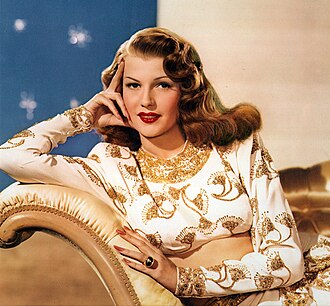
12. Rita Hayworth (Margarita Carmen Cansino ("The Love Goddess"))
Iconic Golden Age Hollywood Actress, Dancer, Glamour Legend & Star of Gilda
Rita Hayworth (born Margarita Carmen Cansino) was the quintessential siren and glamour icon of Hollywood's Golden Age, whose incandescent screen presence, magnetic charisma, and extraordinary dancing redefined twentieth-century cinematic stardom. Born on October 17, 1918, in Brooklyn, New York, into a prominent Spanish-American family of vaudeville flamenco dancers, Hayworth was dancing professionally with her father in Mexico and California before her sixteenth birthday.
Signed by Columbia Pictures and mentored by studio chief Harry Cohn, Hayworth underwent an image transformation, adopting her mother's maiden name and becoming the premiere pin-up girl for millions of American GIs during World War II. Her iconic 1941 Life magazine photograph in a black lace negligee became one of the most famous images of the century, famously affixed to test atomic bombs and embedded in global wartime memory.
Hayworth achieved cinematic immortality in the 1946 film noir masterpiece Gilda, directed by Charles Vidor. Her electric, sultry performance of "Put the Blame on Mame"—wearing a strapless black satin gown designed by Jean Louis—became one of the most famous scenes in cinema history. She starred opposite Fred Astaire in You Were Never Lovelier and Gene Kelly in Cover Girl, with Astaire famously naming Hayworth his favorite dance partner.
Beyond her glamorous public persona, Hayworth was a thoughtful, sensitive woman whose high-profile marriages included visionary filmmaker Orson Welles and Prince Aly Khan. Later in life, her brave battle with Alzheimer's disease brought global awareness to the illness, sparking the creation of the Alzheimer's Association. Hayworth passed away in New York City on May 14, 1987, at age sixty-eight, remembered forever as one of the AFI's greatest female screen legends.
Key Milestones & Notable Works:

13. Montgomery Clift (Edward Montgomery Clift ("Monty"))
4-Time Oscar-Nominated Hollywood Icon, Broadway Prodigy & Method Acting Pioneer
Edward Montgomery Clift was a transformative American stage and screen actor whose intense psychological vulnerability, unconventional beauty, and profound artistic integrity shattered traditional Hollywood machismo and established the foundation of modern film acting. Born on October 17, 1920, in Omaha, Nebraska, Clift was educated by private tutors in Europe and New York, debuting on Broadway at just fourteen years of age and swiftly earning acclaim as one of the theater's most gifted prodigies.
Unlike peers of the studio system who signed multi-year servitude contracts, Clift made history by retaining complete artistic independence, refusing long-term studio commitments so he could choose scripts based strictly on artistic merit. His Hollywood debut in Howard Hawks' classic western Red River (1948) opposite John Wayne, followed by Fred Zinnemann's post-war drama The Search (1948), earned him his first Academy Award nomination and established a new archetype: the sensitive, brooding, deeply human anti-hero.
Clift delivered immortal performances in George Stevens' A Place in the Sun (1951) alongside Elizabeth Taylor—establishing a legendary lifelong friendship—and in Fred Zinnemann's From Here to Eternity (1953) as the defiant private Prewitt. In 1956, while filming Raintree County, Clift suffered a devastating car crash that shattered his facial structure. Despite enduring severe physical pain, depression, and subsequent health struggles, Clift continued acting with breathtaking courage, delivering a masterclass seven-minute testimony in Stanley Kramer's Judgment at Nuremberg (1961) that earned him his fourth Oscar nomination.
Montgomery Clift passed away in New York City on July 23, 1966, at just forty-five years of age. Actors from Al Pacino and Robert De Niro to Daniel Day-Lewis cite Clift's raw emotional honesty as the quintessential turning point in twentieth-century acting.
Key Milestones & Notable Works:

14. Milkha Singh (ਮਿਲਖਾ ਸਿੰਘ ("The Flying Sikh"))
Iconic Indian Olympic Sprinter, Asian & Commonwealth Games Gold Medalist ("The Flying Sikh")
Milkha Singh, revered by hundreds of millions as "The Flying Sikh", was India's greatest and most inspiring track and field athlete, whose life stands as an epic testament to human resilience, physical discipline, and the triumph of the human spirit over incomprehensible tragedy. Born on October 17 in Govindpura (a small village in Muzaffargarh, now Pakistan), young Milkha witnessed the brutal slaughter of his parents and siblings during the horrific communal violence of the 1947 Partition of India. Fleeing on a train covered in blood to Delhi, Milkha lived as a destitute orphan in refugee camps and train stations, turning to petty crime before joining the Indian Army's Electrical Mechanical Engineering (EME) corps in 1951.
In the Army, Milkha discovered his supernatural sprinting talent under the mentorship of Havildar Gurdev Singh. Training with superhuman intensity—often coughing blood, running against moving trains, and running with sandbags on his back until he collapsed unconscious—Milkha became an unstoppable force on the track.
At the 1958 Asian Games in Tokyo, Milkha won gold medals in both the 200m and 400m. Later that year, at the 1958 British Empire and Commonwealth Games in Cardiff, he made history by winning gold in the 400m—becoming the first athlete from independent India to win an individual gold medal at the Commonwealth Games, a record that stood for over fifty years. In 1960, during a goodwill race in Lahore against Pakistani sprint champion Abdul Khaliq, Milkha ran so blazingly fast that Pakistani President Field Marshal Ayub Khan proclaimed: "Milkha, you didn't run today, you flew! We christen you The Flying Sikh."
At the 1960 Rome Olympics, Milkha ran one of the most famous 400m races in Olympic history, breaking the Olympic record in 45.73 seconds, missing bronze by a heartbreaking one-hundredth of a second in a legendary photo-finish. Awarded the Padma Shri in 1959, Milkha Singh's life inspired the acclaimed 2013 biographical film Bhaag Milkha Bhaag. He passed away in Chandigarh on June 18, 2021, at age eighty-five, forever revered as the quintessential symbol of courage and determination.
Key Milestones & Notable Works:

15. Shujeo Shyam (সুজেয় শ্যাম)
Swadhin Bangla Betar Kendra Lyricist & Composer, Freedom Fighter, Ekushey Padak Laureate & National Film Award-Winning Music Director
Shujeo Shyam was a monumental Bangladeshi composer, music director, and cultural freedom fighter whose melodies provided the spiritual soundtrack to Bangladesh's 1971 Liberation War. Born on March 14, 1946, in Sylhet, Shyam developed an innate mastery of Bengali classical music, folk traditions, and orchestral arrangement from childhood.
During the genocide and liberation struggle of 1971, Shujeo Shyam joined the Swadhin Bangla Betar Kendra, the clandestine radio station broadcasting from exile. In those perilous days, Shyam composed and arranged immortal patriotic anthems that galvanized seven crore Bengalis and freedom fighters (Mukti Bahini) battling for independence. His masterpieces—including "Bijoy Nishan Urchhe Oi" (sung by Ajit Roy), "Rokto Diye Naam Likhechi Bangladesher Naam", "Muktir Shongram Cholbei", and "Rokto Shingho Duar Khulo"—became the defiant voice of a nation breaking the chains of tyranny.
Following independence, Shyam contributed prolifically to Bangladeshi cinema and television, composing sublime melodies for acclaimed films such as Hason Raja, Joyjatra, Obujh Bou, and Eki Britte. His artistic versatility earned him three Bangladesh National Film Awards for Best Music Direction and Best Music Composer.
In 2018, the Government of Bangladesh bestowed upon him the prestigious Ekushey Padak, the nation's second-highest civilian honor. After battling cancer and kidney ailments, Maestro Shujeo Shyam passed away on October 17, 2024, at Bangabandhu Sheikh Mujib Medical University in Dhaka at the age of seventy-eight, leaving a legacy eternally woven into the fabric of sovereign Bangladesh.
Key Milestones & Notable Works:

16. Simi Garewal (सिमी गरेवाल ("The Lady in White"))
Two-Time Filmfare Award-Winning Indian Actress, Director & Host of Rendezvous with Simi Garewal
Simi Garewal is an iconic figure in Indian cinema and television broadcasting, celebrated for her patrician elegance, intellectual poise, and trailblazing contributions as both an award-winning actress and the pioneer of celebrity talk-shows in South Asia. Born on October 17, 1947, in Delhi into a distinguished military family of Jats, Garewal grew up in England, absorbing British theater and literature before returning to India driven by a passion for cinema.
In 1962, at just fifteen, Garewal made her English-language screen debut in Tarzan Goes to India. Her striking poise attracted India's greatest cinematic visionaries: master director Satyajit Ray cast her in the immortal Bengali masterpieces Aranyer Din Ratri (Days and Nights in the Forest, 1970) as Dooli, and Ashani Sanket (Distant Thunder, 1973). Showman Raj Kapoor chose her for the pivotal role of Mary, the unattainable schoolteacher in Mera Naam Joker (1970). Garewal won two Filmfare Awards for Best Supporting Actress for Do Badan (1966) and Saathi (1968), and delivered an unforgettable turn in Subhash Ghai's reincarnation thriller Karz (1980) as the villainous Kamini.
In the late 1990s, Garewal reinvented television journalism in India with her signature show Rendezvous with Simi Garewal. Dressed immaculately in her trademark monochromatic white, her intimate, empathetic, and disarming interview style drew unprecedented, candid confessions from prime ministers, maharajas, Bollywood superstars, and international luminaries, establishing the gold standard of Indian talk-show broadcasting.
Key Milestones & Notable Works:
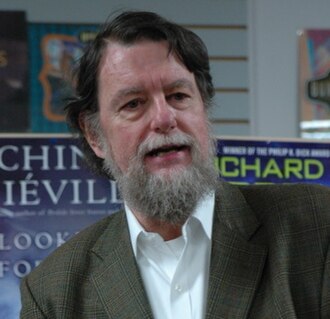
17. Robert Jordan (James Oliver Rigney Jr.)
Master American Epic Fantasy Author & Creator of The Wheel of Time Series
James Oliver Rigney Jr., universally known to millions of avid readers under his pen name Robert Jordan, was an extraordinary American novelist and epic fantasy pioneer whose fourteen-volume magnum opus, The Wheel of Time, stands alongside J.R.R. Tolkien's The Lord of the Rings as the cornerstone of modern fantasy literature. Born on October 17, 1948, in Charleston, South Carolina, Jordan was an avid reader from early childhood who taught himself to read at age four.
Jordan served two tours of duty in the Vietnam War with the United States Army (1968–1970) as a helicopter gunner, receiving the Distinguished Flying Cross, the Bronze Star with "V", and two Vietnamese Crosses of Gallantry. Following military service, he earned a degree in physics from The Citadel, working as a nuclear engineer for the US Navy before dedicating himself entirely to writing.
Beginning in 1990 with The Eye of the World, Jordan introduced the world to an astonishingly intricate universe governed by the turning of the Wheel of Time, the One Power, and the battle between the Dragon Reborn (Rand al'Thor) and the Dark One. Jordan's meticulous world-building, profound philosophical themes of cyclic history, complex gender dynamics, and rich cultural tapestries captivated millions. When diagnosed with cardiac amyloidosis in 2006, Jordan meticulously dictated notes, character outlines, and final scenes so that the series could be completed posthumously by author Brandon Sanderson. Jordan passed away in Charleston on September 16, 2007, leaving a legacy of over 90 million books sold worldwide.
Key Milestones & Notable Works:

18. Smita Patil (स्मिता पाटिल)
Two-Time National Award-Winning Actress & Pioneer of Indian Parallel Cinema
Smita Patil was an incandescent force in Indian cinema, widely regarded alongside Shabana Azmi as the definitive face of the Indian New Wave (Parallel Cinema) movement of the 1970s and 1980s. Born in Pune, Maharashtra, to a prominent politician father and social-worker mother, Smita graduated from the Film and Television Institute of India (FTII) and began her public career as a television newsreader on Doordarshan Mumbai, instantly captivating viewers with her expressive, deep dusky beauty and commanding gaze.
Discovered by legendary director Shyam Benegal, Smita made her film breakthrough in Charandas Chor (1975), followed by Benegal's landmark rural cooperative drama Manthan (1976). At just twenty-one years old, her astonishingly mature performance as an independent-minded 1940s film actress in Bhumika (1977) won her the National Film Award for Best Actress. In 1980, she won her second National Film Award for Chakra, portraying a slum dweller fighting for dignity amid crushing urban destitution.
Smita was deeply committed to women's rights and progressive social causes, serving actively with the Women's Centre in Mumbai. Her roles fearlessly challenged patriarchal exploitation, culminating in Ketan Mehta's Mirch Masala (1987), where her portrayal of Sonbai—a village woman who organizes a fiery collective defense against a tyrannical colonial sub-inspector—is recognized by Forbes as one of the greatest performances in Indian cinema history. Awarded the Padma Shri in 1985, Smita died tragically of childbirth complications on December 13, 1986, at the tender age of thirty-one, leaving a luminous legacy that continues to inspire actors worldwide.
Key Milestones & Notable Works:
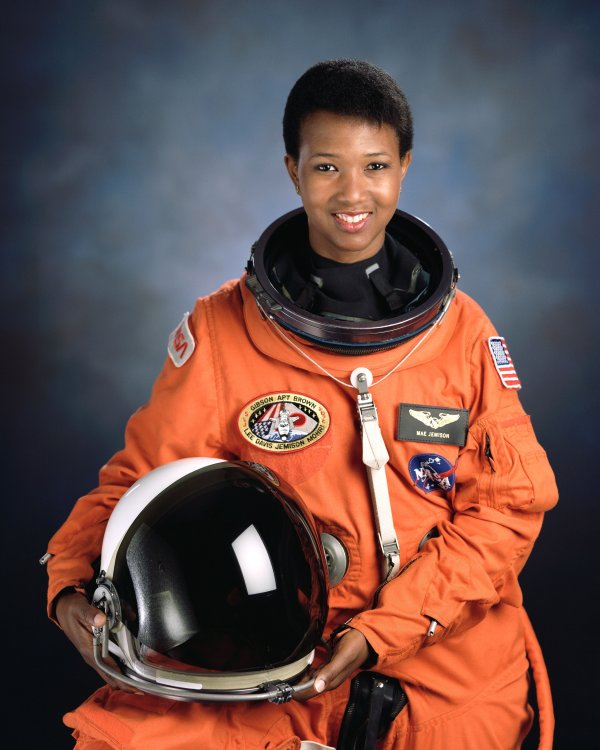
19. Mae Jemison (Mae Carol Jemison)
First African American Woman Astronaut, NASA Physician & STEAM Pioneer
Dr. Mae Carol Jemison is a groundbreaking American physician, engineer, NASA astronaut, and educator who shattered racial and gender barriers on September 12, 1992, when she blasted into orbit aboard Space Shuttle Endeavour (STS-47), becoming the first Black woman in human history to travel into space. Born on October 17, 1956, in Decatur, Alabama, and raised on the South Side of Chicago, Jemison was driven from childhood by an insatiable curiosity for astronomy, dance, and biomedical research.
Entering Stanford University at age sixteen on a National Merit Scholarship, she graduated with dual degrees in chemical engineering and African and Afro-American studies. She then earned her medical degree from Cornell University Medical College in 1981, subsequently serving as a Peace Corps Medical Officer in Liberia and Sierra Leone, where she managed primary healthcare, pharmacy logistics, and disease control.
Inspired by actress Nichelle Nichols' portrayal of Lieutenant Uhura on Star Trek and Sally Ride's pioneering spaceflight, Jemison applied to NASA's astronaut training program in 1987, selected as one of fifteen candidates from over 2,000 applicants. Aboard the eight-day STS-47 Spacelab-J mission, a cooperative venture between NASA and Japan, Dr. Jemison logged over 190 hours in space, conducting breakthrough microgravity experiments on bone cell research. After leaving NASA, she founded The Jemison Group, established the international science camp The Earth We Share, became the first real astronaut to appear on Star Trek: The Next Generation, and leads the visionary 100 Year Starship initiative to enable human interstellar space travel within the next century.
Key Milestones & Notable Works:

20. Ziggy Marley (David Nesta "Ziggy" Marley)
8-Time Grammy & Daytime Emmy-Winning Jamaican Reggae Icon, Songwriter & Philanthropist
David Nesta "Ziggy" Marley is an eight-time Grammy Award-winning Jamaican reggae musician, activist, author, and cultural ambassador who has carried forward the spiritual and musical banner of Rastafari and universal love pioneered by his iconic parents, Bob and Rita Marley. Born on October 17, 1968, in Trenchtown, Kingston, Jamaica, Ziggy grew up immersed in the vibrant creative cauldron of Tuff Gong studios, performing on stage with his father at the legendary One Love Peace Concert in 1978 at just ten years old.
In 1979, Ziggy formed the Melody Makers alongside his siblings Cedella, Stephen, and Sharon Marley. With albums like Conscious Party (1988) and One Bright Day (1989), featuring worldwide smash hits like "Tomorrow People" and "Look Who's Dancing", the group achieved multi-platinum global success, winning three Grammy Awards and introducing reggae to a new generation of listeners worldwide.
Launching a triumphant solo career with 2003's Dragonfly, followed by the Grammy-winning albums Love Is My Religion (2006), Ziggy Marley in Concert (2013), and his self-titled 2016 masterpiece, Marley demonstrated profound songwriting maturity, fusing traditional roots reggae with rock, blues, and world music. Beyond music, Ziggy is a passionate philanthropist through his U.R.G.E. (Unlimited Resources Giving Enlightenment) foundation, supporting education and healthcare for underprivileged children in Jamaica and Africa.
Key Milestones & Notable Works:
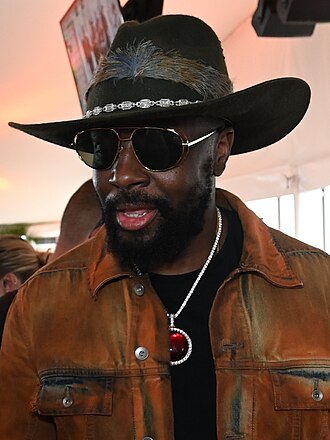
21. Wyclef Jean (Nel Ust Wyclef Jean)
3-Time Grammy-Winning Haitian Musician, Rapper, Record Producer & Fugees Co-Founder
Nel Ust Wyclef Jean is a three-time Grammy Award-winning Haitian musician, producer, songwriter, and humanitarian whose eclectic fusion of hip-hop, reggae, Caribbean soca, and folk has made him one of the most versatile forces in modern popular music. Born on October 17, 1969, in Croix-des-Bouquets, Haiti, Jean immigrated to the United States at age nine, settling in Newark, New Jersey, where he honed his skills on guitar, keyboards, and vocals while absorbing the vibrant urban soundscapes of the East Coast.
In the early 1990s, Jean formed the hip-hop trio The Fugees alongside Pras Michel and Lauryn Hill. Their landmark 1996 album, The Score, became one of the greatest hip-hop albums in history, certified seven-times platinum in the US, winning two Grammy Awards, and featuring timeless classics like "Killing Me Softly" and "Fu-Gee-La".
Jean transitioned effortlessly into a historic solo career, releasing The Carnival in 1997 to critical acclaim and producing the mega-hit "Gone till November". As a master producer, he crafted unforgettable global hits, most notably Shakira's record-shattering "Hips Don't Lie" (2006)—which topped charts in fifty-five countries—as well as hits for Whitney Houston, Carlos Santana, Destiny's Child, and Avicii. Following the devastating 2010 Haiti earthquake, Jean emerged as a prominent humanitarian advocate, utilizing his Yéle Haiti foundation to deliver millions in emergency medical and food relief.
Key Milestones & Notable Works:

22. Anil Kumble (ಅನಿಲ್ ಕುಂಬ್ಳೆ ("Jumbo"))
Legendary Indian Cricket Captain, Hall of Fame Spinner & 619 Test Wickets Icon
Anil Kumble, affectionately known throughout the sporting world as "Jumbo", is an Indian cricket legend, former national captain, and one of the most prolific match-winners in the history of international cricket. Born in Bangalore, Karnataka, Kumble earned a mechanical engineering degree from Rashtreeya Vidyalaya College of Engineering before making his international debut for India in 1990. Unlike conventional wrist-spinners who relied on prodigious side-spin and flight, Kumble revolutionized the art with sheer accuracy, fast trajectory, steep bounce, and deadly flippers.
On February 7, 1999, at Feroz Shah Kotla in Delhi, Kumble carved his name eternally into cricket folklore by taking all ten wickets in the second innings against arch-rivals Pakistan (10 for 74)—becoming only the second bowler in Test history after England's Jim Laker to achieve the "Perfect Ten". In May 2002, during the Antigua Test against the West Indies, after suffering a fractured jaw from a Mervyn Dillon bouncer, Kumble emerged from the pavilion with his face strapped in heavy bandages and bowled fourteen consecutive overs, dismissing the legendary Brian Lara in one of the most heroic displays of courage in cricket history.
Kumble finished his glittering eighteen-year international career with 619 Test wickets and 337 ODI wickets, standing as the fourth-highest wicket-taker in Test history and the highest in Indian history. Appointed Test captain in 2007, his statesmanship famously calmed the volatile Sydney Test controversy in Australia. Inducted into the ICC Cricket Hall of Fame in 2015, Kumble's birthday on October 17 is celebrated across the cricketing world as a monument to discipline, sportsmanship, and mental fortitude.
Key Milestones & Notable Works:

23. Eminem (Marshall Bruce Mathers III (Slim Shady))
15-Time Grammy & Academy Award-Winning Hip-Hop Legend & Songwriter
Marshall Bruce Mathers III, known globally by his stage name Eminem (and alter ego Slim Shady), is a towering cultural icon who revolutionized hip-hop and popular music at the turn of the twenty-first century. Raised in working-class poverty in Detroit, Michigan, amid a turbulent family life along the racially divided 8 Mile Road, young Marshall discovered his sanctuary in the dictionary and the art of rhyming, developing an extraordinary, obsessive mastery of complex multisyllabic rhymes and internal wordplay.
After years of relentless underground freestyle rap battles, Eminem was discovered in 1997 by legendary producer Dr. Dre after placing second at the Rap Olympics in Los Angeles. Their creative partnership yielded The Slim Shady LP (1999) and the monumental The Marshall Mathers LP (2000), which sold an astonishing 1.78 million copies in its first week in the United States, becoming the fastest-selling solo album in American history. Combining blistering satire, visceral vulnerability, and peerless technical flow, Eminem articulated the rage, alienation, and anxieties of a generation.
In 2002, Eminem starred in the semi-autobiographical drama 8 Mile. Its anthem "Lose Yourself" won the Academy Award for Best Original Song—the first hip-hop song in history to achieve the honor. With over 220 million records sold worldwide, fifteen Grammy Awards, an induction into the Rock and Roll Hall of Fame in 2022, and diamond-certified records (The Eminem Show, Recovery), Eminem is universally recognized as one of the greatest lyricists in the history of music.
Key Milestones & Notable Works:

24. Tarkan (Tarkan Tevetoğlu ("Megastar / Prince of Pop"))
World Music Award-Winning Turkish Pop Superstar, Singer-Songwriter & Cultural Icon
Tarkan Tevetoğlu, universally known simply as Tarkan, is a multi-platinum Turkish pop singer, songwriter, and cultural phenomenon who revolutionized Middle Eastern and European pop music. Born on October 17, 1972, in Alzey, West Germany, to Turkish immigrant parents, Tarkan returned with his family to Turkey at age fourteen, pursuing rigorous classical Turkish music education at the Karamürsel Conservatory and later in Istanbul under master musicians.
Exploding onto the Turkish music scene in 1992 with his debut album Yine Sensiz, Tarkan's unique synthesis of traditional Anatolian melodies, modern Western dance-pop beats, and magnetic, sensual stage charisma captivated millions. His 1994 sophomore album A-Acayipsin and 1997 follow-up Ölürüm Sana sold over 7 million copies combined, turning him into a pan-regional megastar.
In 1998, Tarkan achieved a feat virtually unprecedented for a non-English-language artist: his infectious single "Şımarık" (featuring his signature cheeky kissing sound) conquered European charts, reaching the top five in France, Germany, Belgium, and Sweden, and was later adapted into the worldwide hit "Kiss Kiss" by Stella Soleil and Holly Valance. Tarkan won the World Music Award for Best-Selling Middle Eastern Artist in Monaco in 1999. Beyond his music, he is an outspoken environmentalist, partnering with WWF and Nature Association (Doğa Derneği) to protect ancient Anatolian rivers and historical heritage sites like Hasankeyf.
Key Milestones & Notable Works:

25. Bhagwant Mann (ਭਗਵੰਤ ਮਾਨ)
17th Chief Minister of Punjab, Aam Aadmi Party Leader & Renowned Satirist/Artist
Bhagwant Singh Mann is an Indian politician, former comedian, satirist, and actor who has served as the 17th Chief Minister of Punjab since March 2022. Born on October 17, 1973, in the agrarian village of Satoj in Sangrur district, Punjab, Mann was raised by a schoolteacher father, developing a razor-sharp wit and passionate mastery of Punjabi folk poetry, oratory, and cultural satire during his collegiate youth at Shaheed Udham Singh Government College, Sunam.
Throughout the 1990s and 2000s, Mann became a household name across Punjab and the global Punjabi diaspora through his satirical audio cassettes, television programs (Jugnu Kehnda Hai, No Life With Wife), and his stand-up appearance on The Great Indian Laughter Challenge (2008). Unlike conventional comedians, Mann's comedy was fiercely social and political, taking aim at governmental corruption, youth unemployment, agrarian distress, and the scourge of narcotics in rural Punjab.
Entering active politics in 2011, Mann joined Arvind Kejriwal's anti-corruption Aam Aadmi Party (AAP) in 2014, winning election to the Lok Sabha from Sangrur by a historic margin of over 200,000 votes, and winning re-election in 2019 as Punjab's sole AAP MP. In 2022, after winning a decisive public tele-vote to become AAP's chief ministerial candidate, Mann led his party to a landslide victory, winning 92 of 117 assembly seats. Taking his oath of office in Khatkar Kalan—the ancestral village of freedom fighter Bhagat Singh—Mann instituted major policy reforms including free electricity, Aam Aadmi Clinics, anti-corruption helplines, and government employment drives.
Key Milestones & Notable Works:

26. Kimi Räikkönen (Kimi-Matias Räikkönen ("The Iceman"))
Formula One World Champion, Ferrari Icon & Legendary Finnish Motorsport Driver
Kimi-Matias Räikkönen, universally celebrated across the global sporting world as "The Iceman", is one of the most talented, beloved, and fiercely independent drivers in the history of Formula One motor racing. Born on October 17, 1979, in Espoo, Finland, Räikkönen exhibited an extraordinary natural aptitude for vehicle control from early childhood in karting and junior formulas, advancing to Formula One with Sauber in 2001 after just twenty-three car races—an ascent so rapid that the FIA granted him a superlicense on provisional probation.
Räikkönen quickly silenced all skeptics with sensational speed, earning a move to McLaren-Mercedes in 2002. At McLaren, he pushed Michael Schumacher and Fernando Alonso to their limits, finishing as World Championship runner-up in 2003 and 2005. Moving to Scuderia Ferrari in 2007 to succeed Schumacher, Räikkönen achieved the pinnacle of motorsport in dramatic fashion: erasing a seventeen-point deficit over the final two races to claim the 2007 Formula One World Championship by a single point at the Brazilian Grand Prix.
Renowned for his complete disregard for corporate public relations, deadpan radio communications ("Just leave me alone, I know what to do"), and unflappable composure in high-stakes crises, Räikkönen cultivated an unmatched global cult following. Over a historic twenty-year career spanning 349 Grand Prix starts, 21 victories, 103 podium finishes, and 46 fastest laps, he drove for Sauber, McLaren, Ferrari, Lotus, and Alfa Romeo. Räikkönen retired at the end of the 2021 season, leaving an indelible legacy as Ferrari's most recent World Drivers' Champion and one of motorsport's truest originals.
Key Milestones & Notable Works:

27. Keerthy Suresh (കീർത്തി സുരേഷ് / कीर्ति सुरेश)
National Film Award-Winning Indian Actress & South Indian Cinema Star
Keerthy Suresh is one of contemporary Indian cinema's most versatile, critically acclaimed, and commercially successful actresses, renowned for her natural screen presence, expressive emotional depth, and charismatic performances across Malayalam, Tamil, and Telugu film industries. Born on October 17, 1992, in Chennai into a cinematic family—her father G. Suresh Kumar is a renowned Malayalam film producer and her mother Menaka is an acclaimed actress—Keerthy grew up with cinema in her blood, completing a degree in fashion design before transitioning to the silver screen.
After early roles as a child artist, Keerthy made her debut as a lead actress in Priyadarshan's 2013 Malayalam film Geethaanjali. Her effortless charm and radiant acting soon propelled her to stardom in Tamil and Telugu cinema with blockbuster hits such as Nenu Sailaja, Remo, Bairavaa, and Sarkar.
Keerthy achieved career-defining critical immortality in 2018 with Nag Ashwin's biographical drama Mahanati (Nadigaiyar Thilagam), portraying legendary actress Savitri. Her meticulous, emotionally devastating metamorphosis into Savitri—capturing every nuance of her meteoric rise, tragic personal unraveling, and boundless generosity—won unanimous nationwide praise and earned her the coveted National Film Award for Best Actress at the 66th National Film Awards. Continuing to lead groundbreaking female-centric and commercial films like Saani Kaayidham, Dasara, and Baby John, Keerthy remains one of India's most respected young cinematic artists.
Key Milestones & Notable Works:
Chronological Timeline Matrix (1758 – 1992)
27 Icons Across 3 CenturiesA comprehensive comparative overview of all 27 figures celebrated or memorialized on October 17, arranged chronologically by historical era:
| Year | Observance | Personality | Origin | Category | Primary Legacy | Explore Hub |
|---|---|---|---|---|---|---|
| 1806 | Memorial | Haiti | Leadership | The heroic founding father of Haiti, lieutenant of Toussaint Louverture, who routed Napoleon... | Blog Profile Quotes | |
| 1760 | Birthday | France | Philosophy | Pioneer French philosopher, utopian socialist, and political theorist who founded Saint-Simo... | Blog Profile Quotes | |
| 1890 | Memorial | Bangladesh | Philosophy | The supreme mystic saint, baul philosopher, and humanist poet of Bengal, who rejected caste,... | Blog Profile Quotes | |
| 1849 | Memorial | Poland | Music | The immortal Polish composer and virtuoso pianist of the Romantic era, universally heralded ... | Blog Profile Quotes | |
| 1813 | Birthday | Germany | Literature | A revolutionary genius of world drama and political thought whose groundbreaking avant-garde... | Blog Profile Quotes | |
| 1817 | Birthday | India | Leadership | The visionary educator, social reformer, and philosopher who launched the Aligarh Movement, ... | Blog Profile Quotes | |
| 1887 | Memorial | Germany | Science | The brilliant German physicist whose fundamental circuit laws (Current & Voltage Laws) under... | Blog Profile Quotes | |
| 1967 | Memorial | China | Leadership | The twelfth and final emperor of the Qing dynasty, who ascended the Dragon Throne at age two... | Blog Profile Quotes | |
| 1912 | Birthday | Italy | Leadership | Revered as "The Smiling Pope", Albino Luciani was elected the 263rd Pope in August 1978, cap... | Blog Profile Quotes | |
| 1915 | Birthday | United States | Literature | One of the greatest dramatists of the twentieth century, awarded the Pulitzer Prize for Deat... | Blog Profile Quotes | |
| 2017 | Memorial | France | Cinema | One of the greatest luminaries in the history of world cinema, whose breathtaking eighty-yea... | Blog Profile Quotes | |
| 1918 | Birthday | United States | Cinema | One of the most dazzling and celebrated stars of classical Hollywood cinema, universally dub... | Blog Profile Quotes | |
| 1920 | Birthday | United States | Cinema | A pioneer of modern screen naturalism alongside Marlon Brando and James Dean, who redefined ... | Blog Profile Quotes | |
| 1935 | Birthday | India | Sports | The legendary Indian track and field sprinter known universally as "The Flying Sikh", whose ... | Blog Profile Quotes | |
| 2024 | Memorial | Bangladesh | Music | Renowned Bangladeshi composer, music director, and Swadhin Bangla Betar Kendra artist whose ... | Blog Profile Quotes | |
| 1947 | Birthday | India | Cinema | Veteran Indian actress, filmmaker, and talk-show pioneer known as "The Lady in White", celeb... | Blog Profile Quotes | |
| 1948 | Birthday | United States | Literature | One of the most influential epic fantasy world-builders of modern literature, whose sprawlin... | Blog Profile Quotes | |
| 1955 | Birthday | India | Cinema | One of the greatest and most intense screen performers in Indian cinematic history, a fierce... | Blog Profile Quotes | |
| 1956 | Birthday | United States | Science | The trailblazing NASA astronaut, physician, and engineer who made history aboard Space Shutt... | Blog Profile Quotes | |
| 1968 | Birthday | Jamaica | Music | Eldest son of reggae legends Bob and Rita Marley, Ziggy Marley has built an extraordinary mu... | Blog Profile Quotes | |
| 1969 | Birthday | Haiti | Music | Trailblazing Haitian-American rapper, multi-instrumentalist, and producer who co-founded The... | Blog Profile Quotes | |
| 1970 | Birthday | India | Sports | One of the greatest match-winning spin bowlers in cricket history, the legendary Indian capt... | Blog Profile Quotes | |
| 1972 | Birthday | United States | Music | One of the best-selling and most critically acclaimed music artists of all time, the 15-time... | Blog Profile Quotes | |
| 1972 | Birthday | Turkey | Music | Turkey's reigning "Megastar" and "Prince of Pop", who shattered international music barriers... | Blog Profile Quotes | |
| 1973 | Birthday | India | Leadership | The 17th Chief Minister of Punjab and prominent leader of the Aam Aadmi Party, whose journey... | Blog Profile Quotes | |
| 1979 | Birthday | Finland | Sports | Legendary Finnish Formula 1 World Champion (2007 with Ferrari), celebrated for his blisterin... | Blog Profile Quotes | |
| 1992 | Birthday | India | Cinema | Celebrated Indian film actress who predominantly works in Tamil, Telugu, and Malayalam cinem... | Blog Profile Quotes |
Frequently Asked Questions About October 17 in History
- Jean-Jacques Dessalines (1806): Liberator and Founding Father of Haiti.
- Frédéric Chopin (1849): The supreme Romantic composer and "Poet of the Piano".
- Gustav Kirchhoff (1887): Master physicist who formulated Kirchhoff's electrical circuit laws and pioneered spectroscopy.
- Fakir Lalon Shah (1890): The mystic baul saint and humanist philosopher of Bengal.
- Puyi (1967): The Last Emperor of the Qing Dynasty of China.
- Danielle Darrieux (2017): Legendary French cinematic screen icon whose career spanned eight decades.
- Shujeo Shyam (2024): Bangladeshi Swadhin Bangla Betar Kendra musical director and Ekushey Padak recipient.
- Dr. Mae Jemison (born 1956): The first African American woman in space.
- Ziggy Marley (born 1968): Eight-time Grammy-winning reggae icon carrying forward the Marley legacy.
- Wyclef Jean (born 1969): Grammy-winning hip-hop pioneer from The Fugees and Haitian humanitarian.
- Anil Kumble (born 1970): India's highest Test wicket-taker and legendary "Jumbo" of world cricket.
- Eminem (born 1972): Global hip-hop phenomenon, 15-time Grammy winner, and Diamond-certified lyricist.
- Tarkan (born 1972): The undisputed "Prince of Pop" and mega-star of Turkish music.
- Bhagwant Mann (born 1973): Chief Minister of Punjab and renowned satirist.
- Kimi Räikkönen (born 1979): Formula 1 World Champion with Scuderia Ferrari and iconic "Iceman".
- Keerthy Suresh (born 1992): National Film Award-winning leading lady of South Indian cinema.
- Directory Profiles: Located at
/famous-people/{slug}, presenting birth/death dates, country, profession, quick facts, and notable works. - Dedicated Editorial Blog Articles: Located at
/blog/{post_slug}, featuring deep biographical long-form essays examining their philosophy, struggles, seminal achievements, and global impact. - Quotes & Wishes Collections: Located at
/wishes/{wish_slug}, containing hundreds of categorized quotations, birthday messages, memorial tributes, and social media captions.
The Enduring Meaning of October 17: Honoring Heritage, Inspiring the Future
Whether reflecting on the spiritual transcendence of Fakir Lalon Shah at his Kushtia shrine, the heartbreakingly delicate piano nocturnes of Frédéric Chopin in Paris, the sheer athletic grit of The Flying Sikh Milkha Singh, or the razor-sharp lyricism of Eminem, October 17 reminds us that human greatness knows no single nation, discipline, or era.
We invite you to explore each icon's individual blog article, directory profile, and quotes collection linked above. Share these stories of resilience, creativity, and conviction with your loved ones, students, and colleagues as a source of timeless inspiration.


