
Every year, October 19 stands as one of the most intellectually, culturally, and historically extraordinary dates on the global calendar. Across nine centuries and seven continents—from the astrophysics laboratories of Cambridge and Chicago to the sunlit beaches of Rio de Janeiro, the Mayan highlands of Guatemala, the cinematic studios of Paris and Hollywood, the rugged mountains of Bosnia and Mozambique, the Parliament of Runnymede, and the historic independence movements of Bengal and Pakistan—October 19 unites the visionaries who shaped the modern world.
In our authoritative international archive, October 19 commemorates 23 extraordinary global titans representing all seven continents: celebrating the birthdays of 16 pioneers and honoring the solemn memorial anniversaries of 7 eternal legends. Below is your definitive chronicle—showcasing each figure's life trajectory, authentic historical portrait, groundbreaking milestones, and direct connections to their individual biographical blog articles, directory profiles, and curated 50+ quotes and wishes collections.
Quick Navigation: Jump to Any of the 23 Global Figures
Global Continental Representation on October 19
Unlike standard calendars that focus narrowly on one region, our October 19 archive honors 23 visionaries across all 7 continents:
Europe (9 Icons)
Auguste Lumière (France), Sir Michael Gambon (Ireland), John le Carré (UK), Sir Philip Pullman (UK), Umberto Boccioni (Italy), Jonathan Swift (Ireland), Alija Izetbegović (Bosnia), Sir Charles Wheatstone (UK), King John (UK).
Asia (5 Icons)
Subrahmanyan Chandrasekhar (India), Sunny Deol (India), Matangini Hazra (India), Mizanur Rahman Chowdhury (Bangladesh), Mohammad Ali Bogra (Bangladesh).
North America (4 Icons)
Evander Holyfield (USA), Jon Favreau (USA), John Lithgow (USA), Edna St. Vincent Millay (USA).
South & Central America (2 Icons)
Vinicius de Moraes (Brazil - Father of Bossa Nova), Miguel Ángel Asturias (Guatemala - Nobel Literature).
Africa (1 Icon)
Samora Machel (Mozambique - Founding Father & President, Anti-Colonial Revolutionary).
Oceania & Caribbean (2 Icons)
Ernest Rutherford (New Zealand - Father of Nuclear Physics), Peter Tosh (Jamaica - Reggae Legend & The Wailers).
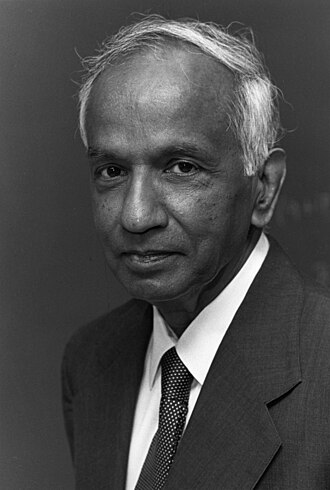
1. Subrahmanyan Chandrasekhar (சுப்பிரமணியன் சந்திரசேகர்)
Nobel Laureate in Physics (1983), Mathematical Astrophysicist & Discoverer of the Chandrasekhar Limit
Subrahmanyan Chandrasekhar was born on October 19, 1910, in Lahore into an illustrious Tamil family of scholars; his paternal uncle was Sir C. V. Raman, the 1930 Nobel Laureate in Physics. Educated at Presidency College in Madras, Chandrasekhar demonstrated astonishing mathematical virtuosity, publishing his first research paper on thermodynamics before turning nineteen.
In 1930, during his steamship journey from India to Cambridge University on a government scholarship, the nineteen-year-old calculated the maximum mass of an electron-degenerate star—the celebrated 'Chandrasekhar Limit'. He mathematically proved that dying stars exceeding 1.44 times the mass of the Sun cannot stabilize as white dwarfs and must collapse under their own gravity, establishing the theoretical bedrock for neutron stars and black holes. Despite vehement early opposition from Sir Arthur Eddington, Chandrasekhar's mathematical rigor stood unshakable.
Moving to the United States in 1937, Chandrasekhar served for over five decades as a legendary professor at the University of Chicago and Yerkes Observatory, editing the Astrophysical Journal for nearly twenty years. In 1983, he was awarded the Nobel Prize in Physics. Following his death in 1995, NASA named its premier flagship space observatory, the Chandra X-ray Observatory, in his eternal honor.
Key Milestones & Notable Works:

2. Matangini Hazra (মাতঙ্গিনী হাজরা)
Iconic Bengali Revolutionary, Freedom Fighter & Martyr of the Quit India Movement ("Gandhi Buri")
Matangini Hazra was born on October 19, 1870, in the rural village of Hogla near Tamluk in the Midnapore district of Bengal. Born into poverty and widowed at the young age of eighteen with no children, she dedicated her long life to selflessly serving the poor, nursing the sick during devastating cholera epidemics, and standing up for the oppressed.
Inspired by Mahatma Gandhi's call for civil disobedience and self-reliance, Matangini joined the Indian national freedom movement with fierce devotion in 1930. She participated in the Salt Satyagraha in Midnapore, manufactured contraband salt, and was repeatedly arrested by colonial police. Known affectionately by villagers and freedom fighters alike as 'Gandhi Buri' (Old Lady Gandhi), her humble cotton saree, quiet resolve, and moral authority made her a beloved beacon of grassroots resistance across rural Bengal.
On September 29, 1942, during the height of the Quit India Movement, the 71-year-old Matangini Hazra led a massive non-violent procession of six thousand freedom fighters toward the Tamluk police station. When British crown police ordered them to halt and opened fire, she stepped forward with the Indian national flag raised high. Even as bullets struck her hands and chest, she continued marching forward, holding the tricolor aloft and chanting 'Vande Mataram' until she collapsed into martyrdom. In 1977, the Government of West Bengal honored her as the first woman to have a memorial statue erected in Kolkata Maidan.
Key Milestones & Notable Works:

3. Mizanur Rahman Chowdhury (মিজানুর রহমান চৌধুরী)
Former Prime Minister of Bangladesh (1986–1988), 1966 Six-Point Movement Key Leader & Veteran Parliamentarian
Mizanur Rahman Chowdhury was born on October 19, 1928, in Chandpur, East Bengal (now Bangladesh). Becoming politically engaged during his student days at Chandpur College and Dhaka University, he joined the Awami League during the historic 1952 Language Movement, quickly distinguishing himself as an eloquent orator and organizer.
In 1966, following the arrest of Bangabandhu Sheikh Mujibur Rahman and senior leaders during the historic Six-Point Movement, Mizanur Rahman Chowdhury stepped up courageously as Acting General Secretary of the Awami League. He steered the party through brutal state suppression, organizing nationwide strikes that mobilized millions and cemented the Six-Point Charter as the Magna Carta of Bengali emancipation.
Elected to the Pakistan National Assembly in 1962 and 1970, he actively supported the 1971 Liberation War. In post-independence Bangladesh, he held ministerial portfolios under Bangabandhu and later served as the 5th Prime Minister of Bangladesh from 1986 to 1988, advocating legislative consensus, constitutional continuity, and rural infrastructure modernization until his death in 2006.
Key Milestones & Notable Works:

4. Mohammad Ali Bogra (মোহাম্মদ আলী বগুড়া)
3rd Prime Minister of Pakistan (1953–1955), Renowned Bengali Diplomat, Ambassador to the United States & Author of the Bogra Formula
Mohammad Ali Bogra was born on October 19, 1909, in Barisal into the prominent aristocratic Nawab family of Bogra. Educated at the prestigious Presidency College in Calcutta, he entered public life in the 1930s, serving in the Bengal Legislative Assembly and as parliamentary secretary to Chief Minister H. S. Suhrawardy in 1946.
Following the partition in 1947, Mohammad Ali transitioned into diplomacy, serving as ambassador to Burma, high commissioner to Canada, and ambassador to the United States (1952–1953). In April 1953, he was appointed the 3rd Prime Minister of Pakistan. In this role, he introduced the famous 'Bogra Formula' in October 1953—a constitutional compromise designed to achieve legislative parity between East and West Pakistan and resolve the bitter national language deadlock by elevating Bengali to national language status alongside Urdu.
On the international stage, Mohammad Ali Bogra played a pivotal role as co-sponsor of the landmark 1955 Bandung Asian-African Conference, where he engaged directly with Chinese Premier Zhou Enlai, helping establish early Sino-Pakistani relations. Later serving as Foreign Minister in 1962, he cemented regional non-alignment diplomacy until his premature death in Dhaka in 1963.
Key Milestones & Notable Works:

5. Sunny Deol (ਸੰਨੀ ਦਿਓਲ (Ajay Singh Deol))
Bollywood Action Superstar, Two-Time National Film Award Winner & Cultural Icon
Sunny Deol (born Ajay Singh Deol) was born on October 19, 1956, in Sahnewal, Punjab, the eldest son of legendary Hindi cinema megastar Dharmendra. After training in acting and theatre at Birmingham's Old Rep Theatre in the United Kingdom, Sunny made his explosive Bollywood debut in the 1983 romantic blockbuster 'Betaab', which earned him widespread critical acclaim and an instant mass following.
Over the 1980s and 1990s, Sunny Deol redefined Indian action cinema, transforming the archetype of the righteous, indomitable everyman fighting institutional corruption. His searing performance in Rajkumar Santoshi's 'Ghayal' (1990) won the National Film Award – Special Jury Award and the Filmfare Best Actor Award. In 1993, his electrifying portrayal of Advocate Govind in 'Damini' earned him the prestigious National Film Award for Best Supporting Actor, immortalizing iconic dialogues like 'Dhai Kilo Ka Haath' and 'Tareekh Pe Tareekh'.
In 2001, Sunny starred as Tara Singh in Anil Sharma's patriotic epic 'Gadar: Ek Prem Katha', which shattered all previous box-office records to become one of the highest-grossing films in Indian cinema history. Demonstrating astonishing longevity and cross-generational appeal, his 2023 sequel 'Gadar 2' grossed over ₹690 crore worldwide, reasserting his status as Bollywood's eternal action titan.
Key Milestones & Notable Works:

6. Vinicius de Moraes (Marcus Vinicius da Cruz de Melo Moraes)
Brazilian Poet, Diplomat, Lyricist & Founding Father of Bossa Nova ("The Girl from Ipanema")
Vinicius de Moraes was born on October 19, 1913, in Rio de Janeiro, Brazil. A brilliant literary prodigy, he studied law and literature at Oxford University before embarking on a career in the Brazilian diplomatic corps, serving in Los Angeles, Paris, and Montevideo while publishing acclaimed modernist lyric poetry.
In 1956, Moraes adapted the Greek myth of Orpheus into a Brazilian favela setting for his stage play 'Orfeu da Conceição', collaborating with a young pianist named Antônio Carlos Jobim. Their musical partnership ignited the Bossa Nova movement, fusing delicate samba syncopation with sophisticated cool-jazz harmonies. In 1959, the French cinematic adaptation 'Black Orpheus' won the Palme d'Or at Cannes and the Academy Award for Best Foreign Language Film.
In 1962, sitting at the Veloso bar overlooking the sands of Ipanema, Vinicius and Jobim composed 'Garota de Ipanema' ('The Girl from Ipanema'). Recorded by Astrud Gilberto and Stan Getz, the song became the second most recorded popular song in human history after 'Yesterday', captivating the globe. Beloved across Brazil simply as 'O Poetinha' (The Little Poet), Vinicius wrote hundreds of timeless sambas and sonnets before his death in 1980.
Key Milestones & Notable Works:

7. Miguel Ángel Asturias (Miguel Ángel Asturias Rosales)
Nobel Laureate in Literature (1967), Pioneer of Magical Realism & Master of the Dictator Novel
Miguel Ángel Asturias was born on October 19, 1899, in Guatemala City. Deeply shaped by childhood exile to the rural highlands of Baja Verapaz during the brutal dictatorship of Manuel Estrada Cabrera, he developed an abiding empathy for the Mayan indigenous peoples. In Paris during the 1920s, he studied Mayan mythology at the Sorbonne and translated the sacred Mayan k'iche' text 'Popol Vuh' into Spanish.
Asturias became a seminal precursor and pioneer of the Latin American literary Boom and magical realism ('lo real maravilloso'). In his 1946 masterpiece 'El Señor Presidente' (The President), he drew upon surrealist techniques and auditory prose to expose the psychological terror and moral decay wrought by totalitarian dictatorship, creating the definitive prototype of the Latin American 'dictator novel'.
In 1949, he published 'Hombres de maíz' (Men of Maize), celebrated as his greatest novel, which interweaves indigenous Mayan cosmology with anti-imperialist resistance against commercial exploitation. For his 'colorful writings, deeply rooted in the national traits and traditions of the indigenous peoples of Latin America', Asturias was awarded the 1967 Nobel Prize in Literature, becoming only the second Latin American to receive the honor.
Key Milestones & Notable Works:
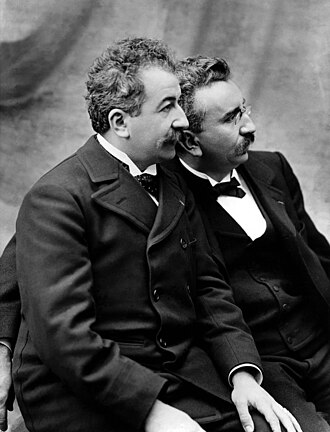
8. Auguste Lumière (Auguste Marie Louis Nicolas Lumière)
Pioneer of World Cinema, Co-Inventor of the Cinématographe & Medical Research Scientist
Auguste Lumière was born on October 19, 1862, in Besançon, France. The elder son of portrait painter and photographic entrepreneur Antoine Lumière, Auguste was educated at the prestigious La Martinière technical school in Lyon, demonstrating equal brilliance in chemistry, physics, and photographic engineering.
Working alongside his younger brother Louis in their Lyon photographic manufacturing factory, the Lumière brothers patented the 'Cinématographe' in February 1895—an ingenious, lightweight, hand-cranked device that served simultaneously as camera, film printer, and projector. On December 28, 1895, at the Grand Café on Boulevard des Capucines in Paris, they hosted the world's first commercial public screening of projected motion pictures, debuting historic shorts including 'Workers Leaving the Lumière Factory' and 'The Arrival of a Train'.
The December 1895 Parisian screening is universally recognized by film historians as the birth of world cinema. Viewing cinema primarily as a scientific curiosity, Auguste later shifted his visionary talents to medical and pharmacological research, establishing the Lumière Laboratories in Lyon and publishing groundbreaking monographs on tuberculosis, cancer, and wound cicatrization until his death in 1954 at age ninety-one.
Key Milestones & Notable Works:

9. Sir Michael Gambon (Sir Michael John Gambon)
Legendary Irish-British Actor, Four-Time BAFTA Winner & Beloved Albus Dumbledore of the Harry Potter Franchise
Sir Michael Gambon was born on October 19, 1940, in Cabra, Dublin, Ireland. Moving to London as a child, he qualified as a toolmaker and mechanical engineer before pursuing his true calling in the theatre. Auditioning for Sir Laurence Olivier, he became one of the founding members of the Royal National Theatre at the Old Vic in 1963.
Dubbed 'The Great Gambon' by Sir Ralph Richardson, he dominated the British stage for four decades, winning three Laurence Olivier Awards for his searing performances in Shakespeare, Harold Pinter, and Arthur Miller. On television, his breakout performance as Philip Marlow in Dennis Potter's 1986 BBC miniseries 'The Singing Detective' earned him international acclaim and the first of four BAFTA Television Awards for Best Actor.
Globally, Gambon achieved immortal cultural renown when he stepped into the iconic role of Hogwarts Headmaster Professor Albus Dumbledore in six Harry Potter films (from 2004's Prisoner of Azkaban through 2011's Deathly Hallows Part 2). Bringing whimsical eccentricity, towering gravitas, and ferocious moral authority to the character, he enchanted hundreds of millions worldwide. Knighted by Queen Elizabeth II in 1998, he passed away in 2023.
Key Milestones & Notable Works:

10. John le Carré (David John Moore Cornwell)
Literary Giant of Cold War Espionage Fiction, Creator of George Smiley & Master of Moral Ambiguity
John le Carré was the pen name of David John Moore Cornwell, born on October 19, 1931, in Poole, Dorset, England. Educated at the University of Bern in Switzerland and Lincoln College, Oxford, he taught at Eton College before being recruited into the British Foreign Service, serving undercover in the domestic intelligence agency MI5 and the foreign intelligence service MI6 in Cold War Germany.
Drawing upon his authentic, clandestine espionage experience, le Carré rejected the glamorous fantasy of Ian Fleming's James Bond, crafting instead a gritty, psychologically complex, and morally ambiguous universe populated by weary bureaucrats, deceptive double agents, and flawed human beings. In 1963, his international breakthrough novel 'The Spy Who Came in from the Cold' earned universal acclaim from Graham Greene as 'the best spy story I have ever read'.
His celebrated 'Karla Trilogy'—comprising 'Tinker Tailor Soldier Spy' (1974), 'The Honourable Schoolboy' (1977), and 'Smiley's People' (1979)—cemented his quiet, relentless spymaster George Smiley as one of the immortal characters of twentieth-century literature. Le Carré elevated espionage fiction into transcendent, mainstream literary art, exploring betrayal, bureaucratic rot, and institutional duplicity across twenty-five bestselling novels until his death in 2020.
Key Milestones & Notable Works:

11. Sir Philip Pullman (Sir Philip Nicholas Outram Pullman)
Visionary English Author, Creator of the "His Dark Materials" Fantasy Trilogy & Advocate of Secular Humanism
Sir Philip Pullman was born on October 19, 1946, in Norwich, England. Traveling widely during his youth in Southern Rhodesia and Australia before settling in North Wales, he studied English literature at Exeter College, Oxford, and taught middle school English for twelve years while honing his imaginative storytelling crafts.
Pullman achieved global literary immortality with his epic fantasy trilogy 'His Dark Materials', comprising 'Northern Lights' (published in North America as 'The Golden Compass', 1995), 'The Subtle Knife' (1997), and 'The Amber Spyglass' (2000). Set across parallel universes where human souls manifest as animal companions called dæmons, the narrative follows young Lyra Belacqua and Will Parry as they unravel the cosmic mystery of 'Dust' and challenge theological tyranny.
In 2001, 'The Amber Spyglass' made publishing history by becoming the first children's book ever to win the prestigious Whitbread Book of the Year Award. Ranked by The Times as one of the '50 greatest British writers since 1945', Pullman was knighted in the 2019 New Year Honours. His continuing companion trilogy 'The Book of Dust' and prolific essays champion literacy, storytelling, and free human inquiry.
Key Milestones & Notable Works:
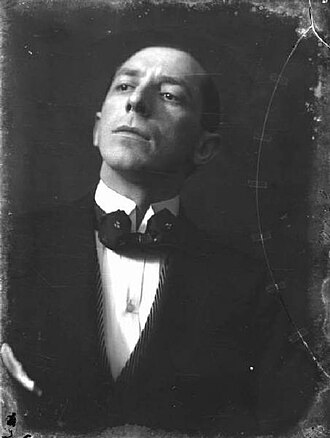
12. Umberto Boccioni (Umberto Boccioni)
Pioneering Italian Futurist Painter and Sculptor, Theorist of Modernist Dynamic Motion
Umberto Boccioni was born on October 19, 1882, in Reggio Calabria, Italy. Studying art in Rome and Milan and traveling to Paris and Russia, he was captivated by the sensory speed, industrial machinery, and electricity of early twentieth-century modern metropolitan cities.
In 1910, Boccioni joined poet Filippo Tommaso Marinetti to co-author the 'Manifesto of Futurist Painters' and the 'Technical Manifesto of Futurist Painting'. Boccioni formulated the concept of 'physical transcendentalism'—seeking to portray not static objects, but the dynamic trajectory of motion, energy, and atmosphere through space.
His 1913 bronze sculpture, 'Unique Forms of Continuity in Space' (Forme uniche della continuità nello spazio), is universally celebrated as the supreme masterpiece of Futurist sculpture—a striding, aerodynamic figure embodying motion itself, which is famously depicted on the Italian 20-cent euro coin. Tragically killed in a military cavalry accident in 1916 at age thirty-three, his revolutionary aesthetic profoundly influenced Cubism, Constructivism, and modern abstraction.
Key Milestones & Notable Works:
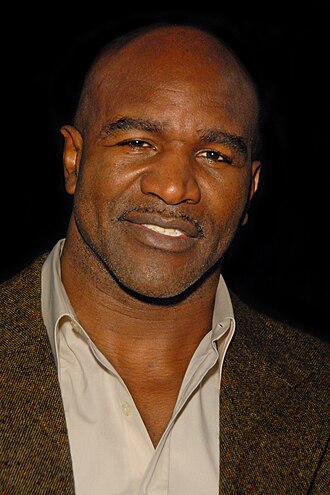
13. Evander Holyfield (Evander Holyfield ("The Real Deal"))
Hall of Fame Boxer, Undisputed Cruiserweight and Only 4-Time World Heavyweight Champion
Evander Holyfield was born on October 19, 1962, in Atmore, Alabama, and raised in Atlanta, Georgia. Beginning boxing at age eight at the Warren Memorial Boys Club, he won the Bronze medal at the 1984 Los Angeles Olympic Games before turning professional.
Holyfield began his professional reign by dominating the cruiserweight division, unifying the WBA, WBC, and IBF belts in 1988 to become the first undisputed cruiserweight champion in history. Moving up to heavyweight, he knocked out Buster Douglas in 1990 to become the Undisputed World Heavyweight Champion.
Nicknamed 'The Real Deal', Holyfield cemented his legend through historic ring wars against Riddick Bowe, George Foreman, and Larry Holmes. In 1996, entering as a 25-to-1 underdog against Mike Tyson, Holyfield scored a stunning 11th-round technical knockout, later surviving the infamous 'Bite Fight' in their 1997 rematch. He remains the only boxer in history to win the World Heavyweight Championship four separate times and was inducted into the International Boxing Hall of Fame in 2017.
Key Milestones & Notable Works:

14. Jon Favreau (Jonathan Kolia Favreau)
Visionary Director, Producer, Actor, Founding Architect of the Marvel Cinematic Universe & Creator of The Mandalorian
Jon Favreau was born on October 19, 1966, in Flushing, Queens, New York. After performing improvisational comedy in Chicago with The Second City and ImprovOlympic, he wrote and starred in the 1996 cult comedy classic 'Swingers', establishing his comedic warmth and sharp dialogue.
In 2003, Favreau directed the holiday classic 'Elf' starring Will Ferrell, proving his mastery of big-budget studio storytelling. In 2008, Marvel Studios took a monumental gamble by hiring Favreau to direct 'Iron Man' and casting Robert Downey Jr. The film's wit, kinetic pacing, and character-driven heart launched the Marvel Cinematic Universe (MCU), which grew into the highest-grossing film franchise in box office history.
Pioneering digital filmmaking with photorealistic virtual production techniques in Disney's 'The Jungle Book' (2016) and 'The Lion King' (2019), Favreau revolutionized television by creating and showrunning the Star Wars live-action series 'The Mandalorian' (2019–present). Introducing the cultural phenomenon Grogu ('Baby Yoda') and the StageCraft virtual LED Volume technology, Favreau stands as one of the most transformative creative forces in 21st-century entertainment.
Key Milestones & Notable Works:
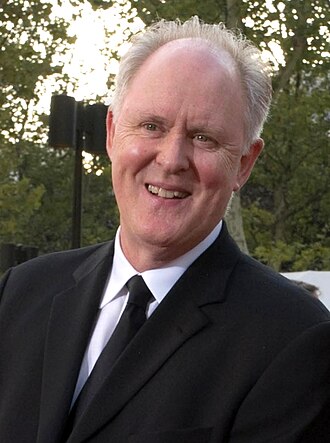
15. John Lithgow (John Arthur Lithgow)
Acclaimed American Actor, Six-Time Emmy Winner, Two-Time Tony Winner & Master of Dramatic Range
John Lithgow was born on October 19, 1945, in Rochester, New York, into a theatrical family; his father was an actor and theatrical producer. Educated at Harvard College and the London Academy of Music and Dramatic Art (LAMDA) on a Fulbright Fellowship, Lithgow built an early reputation as a prodigious stage actor.
Lithgow won his first Tony Award within three weeks of his Broadway debut in 1973 for 'The Changing Room'. In cinema, he earned back-to-back Academy Award nominations for Best Supporting Actor for 'The World According to Garp' (1982) and 'Terms of Endearment' (1983), alongside chilling villainous roles in 'Blow Out' and 'Cliffhanger'.
On television, Lithgow demonstrated peerless versatility. He won three Primetime Emmy Awards as the eccentric High Commander Dick Solomon in NBC's hit sitcom '3rd Rock from the Sun' (1996–2001), won a fourth Emmy for his terrifying turn as the Trinity Killer in 'Dexter' (2009), and won a fifth Emmy for his monumental portrayal of Sir Winston Churchill in Netflix's 'The Crown' (2016). One of the rare performers to achieve the Triple Crown of Acting, he was inducted into the American Theater Hall of Fame in 2005.
Key Milestones & Notable Works:

16. Peter Tosh (Winston Hubert McIntosh)
Reggae Pioneer, Co-Founder of The Wailers, Militant Anti-Apartheid Activist & Voice of "Equal Rights"
Peter Tosh was born Winston Hubert McIntosh on October 19, 1944, in Grange Hill, Westmoreland, Jamaica. Moving to the impoverished Kingston community of Trenchtown in his teens, he taught himself guitar and keyboard and developed a deep spiritual devotion to Rastafari.
In 1963, Tosh co-founded The Wailers alongside Bob Marley and Bunny Wailer. Tosh's aggressive rhythm guitar, organ riffs, and rebellious baritone voice helped define early ska, rocksteady, and reggae, co-writing eternal anthems such as 'Get Up, Stand Up' and '400 Years'. Departing the group in 1974 to pursue a solo career, he debuted with his explosive 1976 album 'Legalize It'.
Known as the 'Stepping Razor' for his sharp intellect and militant fearlessness, Tosh's 1977 opus 'Equal Rights' remains one of the greatest political protest albums ever recorded, boldly proclaiming: 'I don't want no peace; I want equal rights and justice!' He was a ferocious opponent of South African apartheid, headlining anti-apartheid concerts globally before his tragic death in 1987. In 1988, he posthumously won the Grammy Award for Best Reggae Album for 'No Nuclear War'.
Key Milestones & Notable Works:

17. Ernest Rutherford (Ernest Rutherford, 1st Baron Rutherford of Nelson)
"Father of Nuclear Physics", Nobel Laureate in Chemistry (1908) & Discoverer of the Atomic Nucleus & Proton
Ernest Rutherford was born on August 30, 1871, in Brightwater near Nelson, New Zealand. A student of extraordinary aptitude at Canterbury College, he won a scholarship to the Cavendish Laboratory at Cambridge University to conduct research under J. J. Thomson, the discoverer of the electron.
At McGill University in Canada, Rutherford proved that radioactivity involves the spontaneous transmutation of one chemical element into another, a revolutionary discovery that earned him the 1908 Nobel Prize in Chemistry. Moving to the University of Manchester, he orchestrated the famous Geiger-Marsden gold foil experiment in 1909, which proved that virtually all atomic mass and positive charge is concentrated in a tiny central core—the atomic nucleus.
In 1917, Rutherford achieved the first artificial nuclear reaction, splitting a nitrogen atom with alpha particles and discovering the proton. Later serving as Cavendish Professor at Cambridge, he mentored twelve future Nobel Prize laureates, including James Chadwick, Niels Bohr, and John Cockcroft. Rutherford passed away on October 19, 1937, and was laid to rest near Sir Isaac Newton in Westminster Abbey.
Key Milestones & Notable Works:
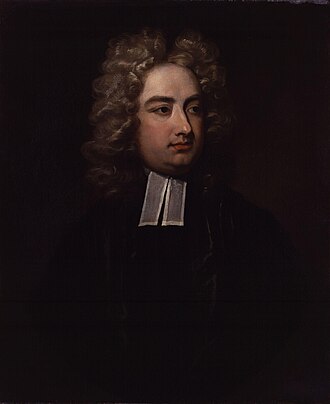
18. Jonathan Swift (Jonathan Swift (Dean Swift))
Dean of St Patrick's Cathedral, Greatest Prose Satirist in the English Language & Author of "Gulliver's Travels"
Jonathan Swift was born on November 30, 1667, in Dublin, Ireland. Educated at Kilkenny College and Trinity College, Dublin, he worked in England as secretary to statesman Sir William Temple before being ordained as an Anglican priest and appointed Dean of St Patrick's Cathedral in Dublin in 1713.
Swift became the undisputed master of prose satire in the English language, using razor-sharp irony, deadpan earnestness, and parodic allegory to expose human hypocrisy, political corruption, and colonial exploitation. In 1729, his satirical masterpiece 'A Modest Proposal' shocked readers by suggesting with mock-seriousness that poor Irish parents sell their babies as food to wealthy English landlords.
In 1726, Swift published his enduring masterpiece 'Gulliver's Travels' (Travels into Several Remote Nations of the World). Depicting Lemuel Gulliver's voyages to Lilliput, Brobdingnag, Laputa, and the land of the Houyhnhnms, the novel skewers human vanity, intellectual pretension, and political factionalism. Swift died on October 19, 1745, leaving his estate to found St Patrick's Hospital for the mentally ill, Ireland's first psychiatric hospital.
Key Milestones & Notable Works:
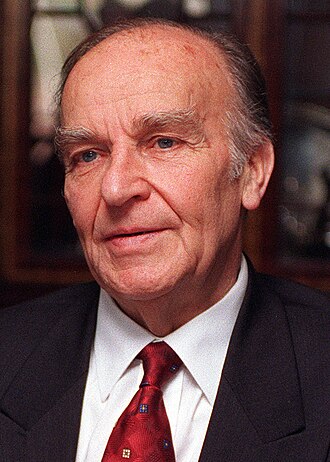
19. Alija Izetbegović (Alija Izetbegović)
First President of Independent Bosnia and Herzegovina, Philosopher, Lawyer & Signatory of the Dayton Accords
Alija Izetbegović was born on August 8, 1925, in Bosanski Šamac in northern Bosnia. Raised in Sarajevo, he trained in law and worked for decades as a legal advisor while writing philosophical and political essays on Islamic thought, democracy, and European identity under the communist Yugoslav regime, enduring two lengthy political imprisonments.
In 1990, during the collapse of Yugoslavia, Izetbegović founded the Party of Democratic Action (SDA) and was elected Chairman of the Presidency of Bosnia and Herzegovina. When Bosnian citizens voted overwhelmingly for sovereignty in a 1992 democratic referendum, Izetbegović proclaimed the independence of Bosnia and Herzegovina, immediately facing brutal aggression and a four-year genocidal siege of Sarajevo.
Refusing to flee his beleaguered capital, Izetbegović rallied Bosnian defense forces, championed a multi-ethnic, democratic Bosnia, and tirelessly rallied international diplomatic support. In November 1995, he signed the Dayton Peace Agreement, bringing an end to the war and preserving Bosnia and Herzegovina's sovereign territorial integrity. He passed away on October 19, 2003, in Sarajevo, where more than 150,000 citizens gathered for his funeral.
Key Milestones & Notable Works:
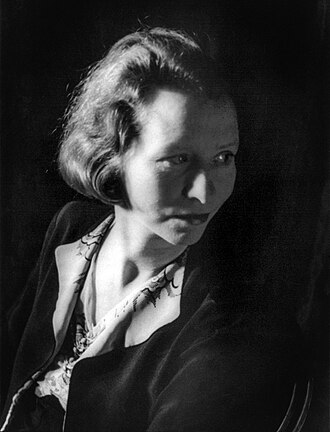
20. Edna St. Vincent Millay (Edna St. Vincent Millay ("Vincent"))
First Woman to Win the Pulitzer Prize for Poetry (1923), Master of the Modern Sonnet & Bohemian Feminist Icon
Edna St. Vincent Millay was born on February 22, 1892, in Rockland, Maine. Raised by an independent single mother who nurtured her daughters' artistic talents, Millay vaulted into national literary prominence at age nineteen when her stunning poem 'Renascence' was published in 1912, winning her a scholarship to Vassar College.
Moving to Greenwich Village in New York City after graduation, Millay became the dazzling, charismatic voice of the Roaring Twenties bohemian culture, living openly as a bisexual feminist pioneer. Her 1920 four-line poem 'First Fig' captured the spirit of an entire generation: 'My candle burns at both ends; / It will not last the night; / But ah, my foes, and oh, my friends— / It gives a lovely light!'
In 1923, Millay made history as the first woman to be awarded the Pulitzer Prize for Poetry for her collection 'The Ballad of the Harp-Weaver'. Renowned for her technical mastery of the traditional Petrarchan and Shakespearean sonnet forms, she infused classical meter with rebellious modern themes of female autonomy, romantic disillusionment, and pacifism until her death on October 19, 1950, at her Steepletop estate in upstate New York.
Key Milestones & Notable Works:

21. Sir Charles Wheatstone (Sir Charles Wheatstone)
English Physicist, Pioneer of the Electric Telegraph, Inventor of the Stereoscope & Concertina (Born & Died Oct 19)
Charles Wheatstone was born on October 19, 1802, in Barnwood, Gloucester, England, the son of a musical instrument maker. Self-taught in natural philosophy, mathematics, and acoustics, young Wheatstone patented the English concertina in 1829 and became Professor of Experimental Philosophy at King's College London in 1834.
Wheatstone made monumental contributions to optics in 1838 by inventing the stereoscope, demonstrating that binocular vision combines two slightly different flat images into a single three-dimensional perception—a discovery that laid the scientific foundation for modern 3D photography, cinema, and virtual reality. In 1843, he recognized the utility of Samuel Hunter Christie's bridge circuit and championed it for precision electrical resistance measurement, cementing the 'Wheatstone bridge' as an enduring tool in electrical engineering.
In telecommunications, Wheatstone partnered with William Fothergill Cooke in 1837 to patent the Cooke and Wheatstone five-needle telegraph, the first commercial electrical telecommunications system in the world. He also invented the Playfair cipher (the first literal digram substitution cipher used by British forces) and early dynamos. In a remarkable historical coincidence, Sir Charles Wheatstone died on his seventy-third birthday, October 19, 1875, while in Paris presenting his research to the French Academy of Sciences.
Key Milestones & Notable Works:
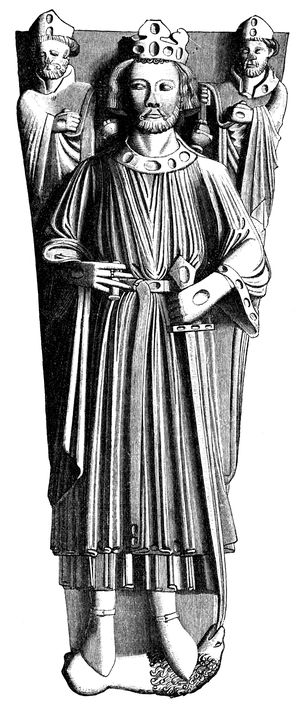
22. King John of England (John Lackland (House of Plantagenet))
King of England (1199–1216) & Granter of Magna Carta (1215), the Bedrock of Constitutional Liberty and Rule of Law
King John was born on December 24, 1166, in Beaumont Palace, Oxford, the youngest son of King Henry II and Eleanor of Aquitaine. Nicknamed 'Lackland' because he was initially expected to inherit no substantial land, he succeeded his elder brother King Richard the Lionheart to the throne of England in 1199.
John's reign was marked by bitter conflicts with King Philip II of France, resulting in the loss of Normandy and most Angevin continental territories in 1204, and an excommunication by Pope Innocent III. Facing a full-scale armed rebellion by his English barons over heavy taxation and arbitrary justice, King John met the rebel barons at Runnymede meadow near Windsor on June 15, 1215, affixing the Great Seal to Magna Carta (The Great Charter).
Magna Carta established the foundational constitutional principle that the sovereign is not above the law. Clauses 39 and 40—guaranteeing that no free man shall be imprisoned or stripped of rights except by lawful judgment of his peers and that justice shall not be sold or delayed—became the cornerstone of the English common law, habeas corpus, the United States Constitution, and the Universal Declaration of Human Rights. King John died of dysentery on October 19, 1216, at Newark Castle during the First Barons' War.
Key Milestones & Notable Works:

23. Samora Machel (Samora Moisés Machel)
Founding Father & First President of Independent Mozambique, Anti-Colonial Revolutionary & Pan-African Hero
Samora Moisés Machel was born on September 29, 1933, in the village of Chilembene in southern Mozambique. Witnessing firsthand the exploitation and forced labor imposed under Portuguese colonial rule, Machel trained as a medical nurse in Lourenço Marques (now Maputo). In 1962, he joined the newly founded Mozambique Liberation Front (FRELIMO) led by Eduardo Mondlane, traveling to Algeria for military training.
Displaying extraordinary organizational acumen and charisma, Machel rose rapidly to become Commander-in-Chief of FRELIMO's guerrilla army. Under his leadership, the liberation forces liberated extensive territories in northern Mozambique, creating people's schools and clinics. Following the Portuguese Carnation Revolution of 1974, Machel led Mozambique to full independence on June 25, 1975, becoming the young nation's first President.
As head of state, Machel prioritized sweeping public healthcare and nationwide literacy campaigns while fearlessly transforming Mozambique into a vital rear base for freedom fighters battling apartheid in South Africa (ANC) and minority rule in Rhodesia (ZANU). On October 19, 1986, President Machel tragically died when his presidential aircraft crashed in the Lebombo Mountains at Mbuzini. His immortal revolutionary rallying cry, 'A Luta Continua!' (The Struggle Continues!), remains an enduring international anthem of justice and freedom.
Key Milestones & Notable Works:
October 19 Chronological Timeline: 900 Years of World History
Follow the chronological trajectory of the 23 titans commemorated on October 19, arranged from the 12th century to modern times:
| Year | Historical Figure | Milestone | Continent & Nation | Field | Core Achievement & Legacy | Direct Hub |
|---|---|---|---|---|---|---|
| 1216 |
King John of England
1166 – 1216 (Age 49)
|
Memorial | United Kingdom | history | King of England who affixed the Great Seal to Magna Carta at Runnymede in 1215, establishing the bedrock principle of the rule of law, due process, and constitutional liberty. | Blog Profile Quotes |
| 1745 |
Jonathan Swift
1667 – 1745 (Age 77)
|
Memorial | Ireland | literature | Dean of St Patrick's Cathedral in Dublin and supreme prose satirist in English literature who authored "Gulliver's Travels" and "A Modest Proposal". | Blog Profile Quotes |
| 1802 |
Sir Charles Wheatstone
1802 – 1875 (Age 73)
|
Birthday | United Kingdom | science | English experimental physicist who was both born and died on October 19, famed for inventing the stereoscope (father of 3D displays), popularizing the Wheatstone bridge, and co-inventing the electric telegraph. | Blog Profile Quotes |
| 1862 |
Auguste Lumière
1862 – 1954 (Age 91)
|
Birthday | France | cinema | French photographic inventor who, alongside brother Louis, invented the Cinématographe in 1895 and hosted the world's first public commercial movie screening, birthing modern cinema. | Blog Profile Quotes |
| 1870 |
Matangini Hazra
1870 – 1942 (Age 71)
|
Birthday | India | history | Heroic Bengali freedom fighter affectionately known as "Gandhi Buri" who was martyred at age 71 leading a 6,000-strong Quit India procession, holding the national flag aloft. | Blog Profile Quotes |
| 1882 |
Umberto Boccioni
1882 – 1916 (Age 33)
|
Birthday | Italy | art | Italian Futurist painter and sculptor who revolutionized twentieth-century art by capturing dynamic movement and speed in works like "Unique Forms of Continuity in Space". | Blog Profile Quotes |
| 1899 |
Miguel Ángel Asturias
1899 – 1974 (Age 74)
|
Birthday | Guatemala | literature | Guatemalan Nobel laureate in Literature who pioneered magical realism, translated the sacred Mayan Popol Vuh, and authored the foundational dictator novel "El Señor Presidente". | Blog Profile Quotes |
| 1909 |
Mohammad Ali Bogra
1909 – 1963 (Age 53)
|
Birthday | Bangladesh | diplomacy | Bengali statesman and diplomat who served as 3rd Prime Minister of Pakistan, authored the Bogra Formula constitutional compromise, and co-sponsored the historic 1955 Bandung Conference. | Blog Profile Quotes |
| 1910 |
Subrahmanyan Chandrasekhar
1910 – 1995 (Age 84)
|
Birthday | India | science | Nobel astrophysicist who mathematically calculated the Chandrasekhar Limit (1.44 solar masses), unlocking the physics of dying stars, white dwarfs, neutron stars, and black holes. | Blog Profile Quotes |
| 1913 |
Vinicius de Moraes
1913 – 1980 (Age 66)
|
Birthday | Brazil | music | Beloved Brazilian poet, diplomat, and founding father of Bossa Nova whose lyrics to "The Girl from Ipanema", "Chega de Saudade", and "Black Orpheus" reshaped global music. | Blog Profile Quotes |
| 1928 |
Mizanur Rahman Chowdhury
1928 – 2006 (Age 77)
|
Birthday | Bangladesh | leadership | Former Prime Minister of Bangladesh and heroic Awami League leader who courageously steered the 1966 Six-Point Movement when Bangabandhu and top leaders were jailed. | Blog Profile Quotes |
| 1931 |
John le Carré
1931 – 2020 (Age 89)
|
Birthday | United Kingdom | literature | British literary master and former MI6 spy who transformed Cold War espionage fiction into high literature through George Smiley in "The Spy Who Came in from the Cold" and "Tinker Tailor Soldier Spy". | Blog Profile Quotes |
| 1937 |
Ernest Rutherford
1871 – 1937 (Age 66)
|
Memorial | New Zealand | science | "Father of Nuclear Physics" and Nobel laureate who discovered the atomic nucleus, classified alpha and beta radiation, discovered the proton, and first split the atom. | Blog Profile Quotes |
| 1940 |
Sir Michael Gambon
1940 – 2023 (Age 82)
|
Birthday | Ireland | cinema | Immortal Irish-British actor and 4-time BAFTA winner revered as Professor Albus Dumbledore in Harry Potter, star of The Singing Detective, and titan of the Royal National Theatre. | Blog Profile Quotes |
| 1944 |
Peter Tosh
1944 – 1987 (Age 42)
|
Birthday | Jamaica | music | Reggae revolutionary and co-founder of The Wailers with Bob Marley, who co-wrote "Get Up, Stand Up" and recorded the iconic protest albums "Legalize It" and "Equal Rights". | Blog Profile Quotes |
| 1945 |
John Lithgow
1945 – Present
|
Birthday | United States | cinema | Six-time Emmy and two-time Tony winner celebrated for his extraordinary range: from Winston Churchill in The Crown and the Trinity Killer in Dexter to Dick Solomon in 3rd Rock from the Sun. | Blog Profile Quotes |
| 1946 |
Sir Philip Pullman
1946 – Present
|
Birthday | United Kingdom | literature | Visionary English author of "His Dark Materials" (The Golden Compass, The Subtle Knife, The Amber Spyglass), whose parallel universes and animal dæmons redefined modern literature. | Blog Profile Quotes |
| 1950 |
Edna St. Vincent Millay
1892 – 1950 (Age 58)
|
Memorial | United States | literature | Trailblazing American poet and feminist icon who became the first woman to win the Pulitzer Prize for Poetry (1923) and penned the immortal lines "My candle burns at both ends". | Blog Profile Quotes |
| 1956 |
Sunny Deol
1956 – Present
|
Birthday | India | cinema | Bollywood action superstar and two-time National Film Award winner whose thunderous portrayals in Ghayal, Damini, Border, and Gadar redefined heroic Indian cinema. | Blog Profile Quotes |
| 1962 |
Evander Holyfield
1962 – Present
|
Birthday | United States | sports | Hall of Fame boxing icon nicknamed "The Real Deal", the only fighter in history to win the World Heavyweight Championship 4 times and undisputed champion in two weight classes. | Blog Profile Quotes |
| 1966 |
Jon Favreau
1966 – Present
|
Birthday | United States | cinema | Visionary filmmaker and actor who founded the Marvel Cinematic Universe by directing Iron Man, directed Elf, and revitalized Star Wars by creating The Mandalorian. | Blog Profile Quotes |
| 1986 |
Samora Machel
1933 – 1986 (Age 53)
|
Memorial | Mozambique | leadership | Anti-colonial military strategist and founding President of independent Mozambique who championed regional African liberation against apartheid with the rallying cry "A Luta Continua!". | Blog Profile Quotes |
| 2003 |
Alija Izetbegović
1925 – 2003 (Age 78)
|
Memorial | Bosnia and Herzegovina | leadership | Founding Father and first President of independent Bosnia and Herzegovina who led his nation through the Bosnian War and 1,425-day siege of Sarajevo, co-signing the 1995 Dayton Accords. | Blog Profile Quotes |
Frequently Asked Questions About October 19 in World History
- Subrahmanyan Chandrasekhar (Nobel Prize in Physics, 1983): Formulated the Chandrasekhar limit (1.44 solar masses), laying the theoretical foundation for white dwarfs, neutron stars, and black holes.
- Ernest Rutherford (Nobel Prize in Chemistry, 1908): Discovered alpha and beta rays, proved radioactive transmutation, discovered the atomic nucleus in 1911, and achieved the first artificial splitting of the atom in 1917.
- Miguel Ángel Asturias (Nobel Prize in Literature, 1967): Pioneered magical realism and the Latin American dictator novel through El Señor Presidente and translated the Mayan Popol Vuh.
- Sir Charles Wheatstone (born & died October 19): Invented the stereoscope (father of 3D displays), popularized the Wheatstone bridge for precision electrical measurement, and co-invented the commercial electric telegraph.
- Vinicius de Moraes (born 1913): Brazilian poet and diplomat who co-founded Bossa Nova and penned lyrics for The Girl from Ipanema and Black Orpheus.
- Sir Michael Gambon (born 1940): Four-time BAFTA winner revered as Hogwarts Headmaster Albus Dumbledore in six Harry Potter films.
- John le Carré (born 1931): Legendary master of Cold War espionage fiction, creator of George Smiley and author of The Spy Who Came in from the Cold.
- Sir Philip Pullman (born 1946): Visionary author of His Dark Materials (The Golden Compass, The Subtle Knife, The Amber Spyglass).
- Sunny Deol (born 1956): Bollywood action icon and two-time National Film Award winner famous for Ghayal, Damini, and Gadar.
- Jon Favreau (born 1966): Visionary director who launched the Marvel Cinematic Universe with Iron Man and created The Mandalorian.
- John Lithgow (born 1945): Six-time Emmy and two-time Tony winner celebrated for The Crown, Dexter, and 3rd Rock from the Sun.
- Peter Tosh (born 1944): Reggae pioneer and Wailers co-founder who co-wrote Get Up, Stand Up and recorded Equal Rights.
- Umberto Boccioni (born 1882): Italian Futurist painter and sculptor who sculpted Unique Forms of Continuity in Space.
- Matangini Hazra (born 1870): Revered as "Gandhi Buri" (Old Lady Gandhi), this heroic 71-year-old freedom fighter led a 6,000-strong Quit India procession in Tamluk in 1942, refusing to lower the Indian national tricolor even as British police bullets struck her, dying a martyr.
- Mizanur Rahman Chowdhury (born 1928): Courageous Awami League leader who stepped forward as Acting General Secretary during the critical 1966 Six-Point Movement when Bangabandhu Sheikh Mujibur Rahman was imprisoned, and later served as Prime Minister of Bangladesh (1986–1988).
- Mohammad Ali Bogra (born 1909): Eminent Bengali diplomat and 3rd Prime Minister of Pakistan who authored the 1953 "Bogra Formula" to achieve parliamentary parity and grant Bengali official national language status, as well as co-sponsoring the historic 1955 Bandung Conference.
- Directory Profiles: Located at
/famous-people/{slug}, presenting birth/death dates, country, profession, quick facts, and notable works. - Dedicated Editorial Blog Articles: Located at
/blog/{post_slug}, featuring deep biographical long-form essays examining their philosophy, struggles, seminal achievements, and global impact. - Quotes & Wishes Collections: Located at
/wishes/{wish_slug}, containing 50+ categorized quotations, birthday messages, memorial tributes, and social media captions.
The Enduring Meaning of October 19: Courage, Genius, and Global Emancipation
From the mathematical determination of Subrahmanyan Chandrasekhar and the atomic breakthroughs of Ernest Rutherford to the lyrical poetry of Vinicius de Moraes, the magical realism of Miguel Ángel Asturias, the cinematic brilliance of Auguste Lumière and Michael Gambon, the constitutional bedrock of King John's Magna Carta, and the liberation struggles of Samora Machel and Matangini Hazra, October 19 demonstrates that human brilliance transcends all national boundaries.
We invite you to explore each icon's individual blog article, directory profile, and curated 50+ quotes collection linked above. Share these stories of courage, innovation, and artistic mastery with your family, friends, students, and colleagues as a wellspring of daily inspiration.


