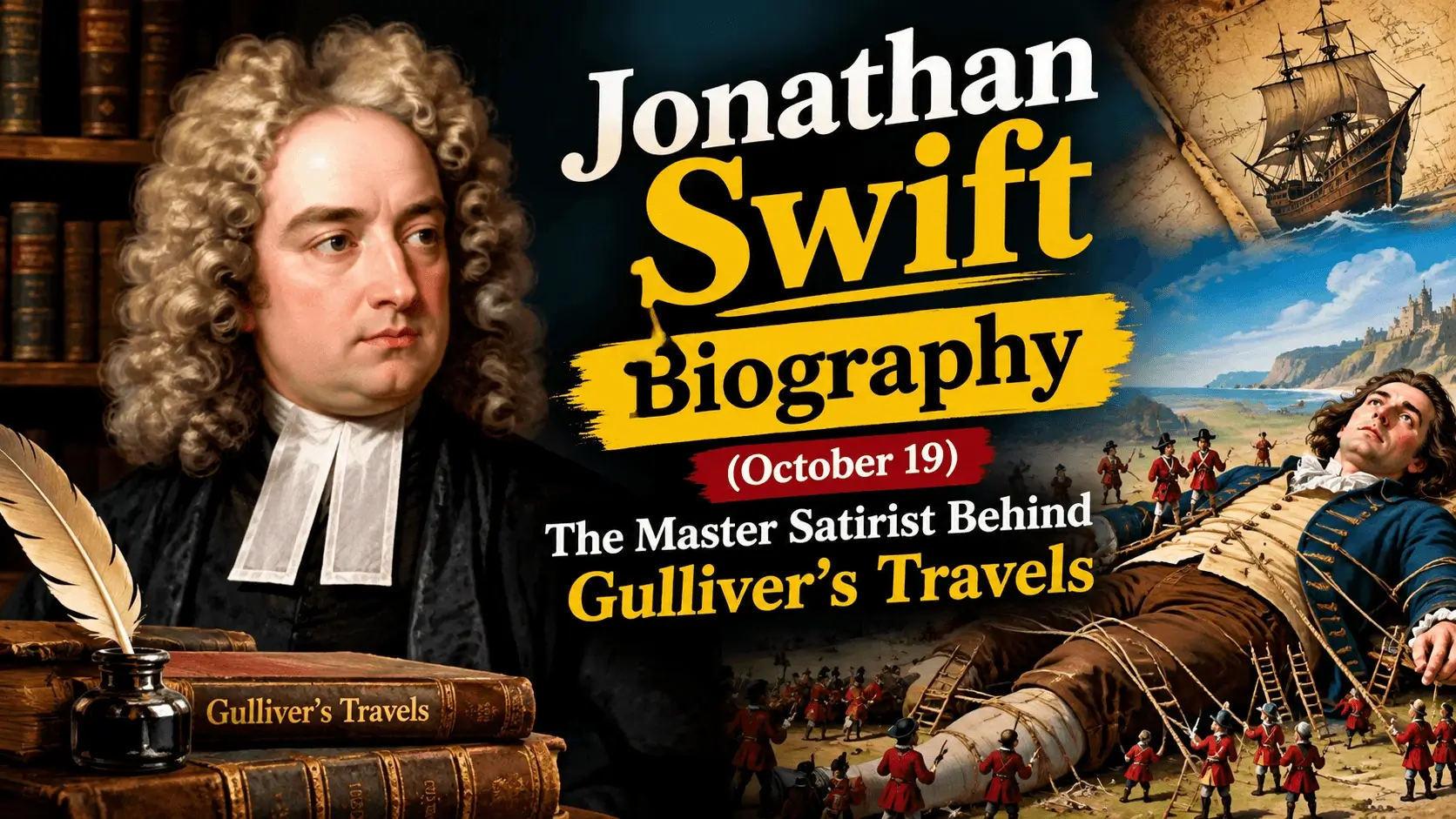
Every year on October 19, the global community commemorates Jonathan Swift (1667–1745), Anglo-Irish Literary Satirist, Essayist, Poet & Author of Gulliver's Travels. Renowned across Ireland and globally for revolutionary contributions to Literature, their life work remains an enduring testament to human courage, creative vision, and excellence.
1. Early Foundations, Background & Formative Years
Jonathan Swift was born on November 30, 1667, in Dublin, Ireland. Educated at Kilkenny College and Trinity College Dublin, he served as secretary to diplomat Sir William Temple, where he sharpened his intellect, political philosophy, and mastery of classic literature.
Growing up in Ireland, Jonathan Swift displayed exceptional focus and dedication from an early age. Formative experiences nurtured an unwavering commitment to truth, discipline, and pushing beyond conventional boundaries.
2. Groundbreaking Breakthroughs & Monumental Achievements
Ordained as an Anglican priest, Swift was appointed Dean of St. Patrick's Cathedral in Dublin in 1713. There, he became an outspoken champion of Irish economic and political rights against British exploitation, most famously through the pseudonym M. B. Drapier in The Drapier's Letters and his shocking 1729 satire A Modest Proposal.
The impact of Jonathan Swift's seminal work transformed our understanding of Literature. Through unyielding perseverance against institutional skepticism and complex obstacles, they produced historic milestones that redefined the standards of the discipline.
3. Cultural Resonance, Philosophy & World Impact
In 1726, Swift published his immortal masterpiece Travels into Several Remote Nations of the World (known everywhere as Gulliver's Travels). Disguised as a traveler's fantasy voyage through Lilliput, Brobdingnag, Laputa, and the land of the Houyhnhnms, the book delivered a scorching philosophical critique of human vanity, political corruption, and irrational hubris. Swift passed away on October 19, 1745, leaving his fortune to found St. Patrick's Hospital for mental disorders.
The greatest prose satirist in the English language, author of Gulliver's Travels and A Modest Proposal, and Dean of St. Patrick's Cathedral in Dublin, revered for his razor-sharp moral wit and defense of Irish liberty.
4. Key Milestones & Notable Works
- Gulliver's Travels (Masterpiece of World Satire & Adventure, 1726)
- A Modest Proposal (Pinnacle of Satirical Irony, 1729)
- A Tale of a Tub & The Battle of the Books (1704)
- The Drapier's Letters (Rallied Irish National Resistance, 1724)
- Dean of St. Patrick's Cathedral, Dublin (1713–1745)
- Founder of St. Patrick's Hospital for Mental Health in Dublin
5. Enduring Legacy for Future Generations
Generations of practitioners, scholars, and admirers worldwide continue to draw inspiration from the life of Jonathan Swift. On October 19, we reflect upon a legacy that transcends national frontiers, reminding humanity that visionary purpose and integrity endure across the centuries.
6. Frequently Asked Questions (FAQ) About Jonathan Swift
When and where was Jonathan Swift born?
Jonathan Swift was born on 1667-11-30 in Dublin, Ireland.
What is Jonathan Swift most famous for?
Jonathan Swift is globally celebrated for: Anglo-Irish Literary Satirist, Essayist, Poet & Author of Gulliver's Travels.
What are the primary honors and achievements of Jonathan Swift?
Key achievements include Gulliver's Travels (Masterpiece of World Satire & Adventure, 1726) and A Modest Proposal (Pinnacle of Satirical Irony, 1729).
Why is October 19 significant for Jonathan Swift?
October 19 marks the historic solemn memorial anniversary of Jonathan Swift, observed worldwide by historians, admirers, and students of Literature.


