
Asia
12 IconsEurope
16 IconsNorth America
16 IconsSouth America
4 IconsAfrica
2 IconsOceania
4 IconsNovember 4 Global Icons Directory (All 54 Luminaries)
| # | Figure | Continent & Nation | Domain | Core Historical Milestone | Explore |
|---|---|---|---|---|---|
| 1 |

Charles K. Kao
1933 – 2018
|
Hong Kong / China | science | Nobel Laureate in Physics (2009), "Father of Fiber Optics" & Electrical Engineer | |
| 2 |

Shakuntala Devi
1929 – 2013
|
India | science | World-Renowned Mental Calculator ("Human Computer"), Astrologer & Author | |
| 3 |

Tabu
Born 1971 (Living Legend)
|
India | entertainment | National Film Award-Winning Actress, Padma Shri Recipient & Cinema Icon | |
| 4 |

Carlos P. Garcia
1896 – 1971
|
Philippines | politics | 8th President of the Philippines, Statesman & Champion of the "Filipino First" Policy | |
| 5 |

Hara Takashi
1856 – 1921
|
Japan | politics | 10th Prime Minister of Japan ("Commoner Prime Minister") & Political Reformer | |
| 6 |

Kyōka Izumi
1873 – 1939
|
Japan | literature | Celebrated Japanese Novelist, Short-Story Writer & Master of Surrealism | |
| 7 |

Hu Zongxian
1512 – 1565
|
China | military | Ming Dynasty Grand Commander, Coastal Strategist & Military Scholar | |
| 8 |

Botong Francisco
1912 – 1969
|
Philippines | arts | National Artist of the Philippines for Visual Arts, Legendary Muralist & Painter | |
| 9 |

Sun Yingsha
Born 2000 (Living Legend)
|
China | sports | World No. 1 Table Tennis Champion, Multi-Olympic Gold Medalist & World Cup Champion | |
| 10 |
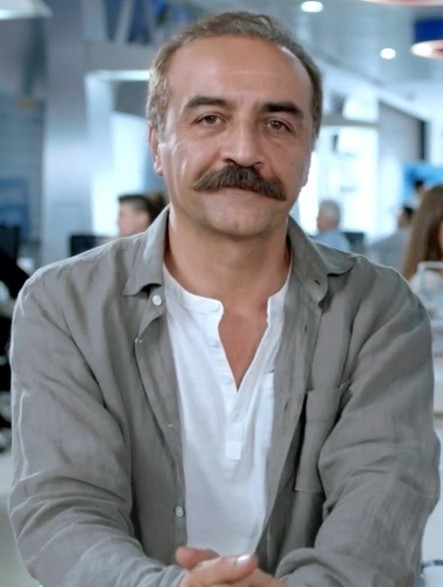
Yılmaz Erdoğan
Born 1967 (Living Legend)
|
Turkey | entertainment | Award-Winning Turkish Filmmaker, Actor, Screenwriter & Poet | |
| 11 |
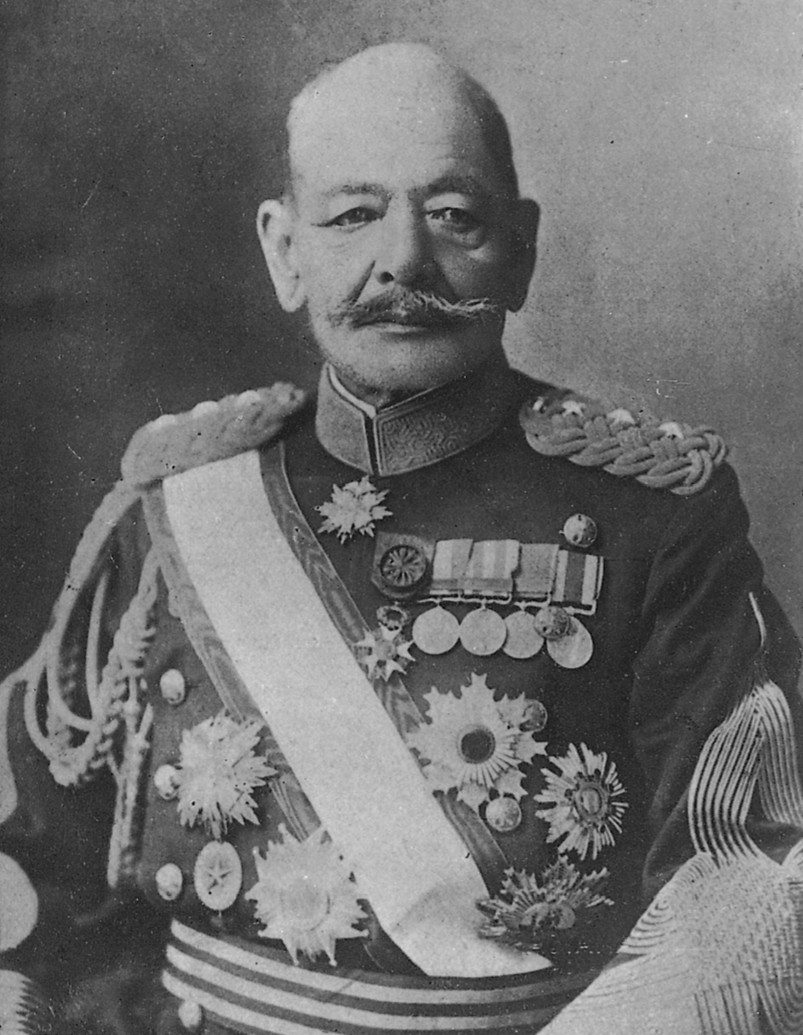
Akiyama Yoshifuru
1859 – 1930
|
Japan | military | General in the Imperial Japanese Army & "Father of Modern Japanese Cavalry" | |
| 12 |
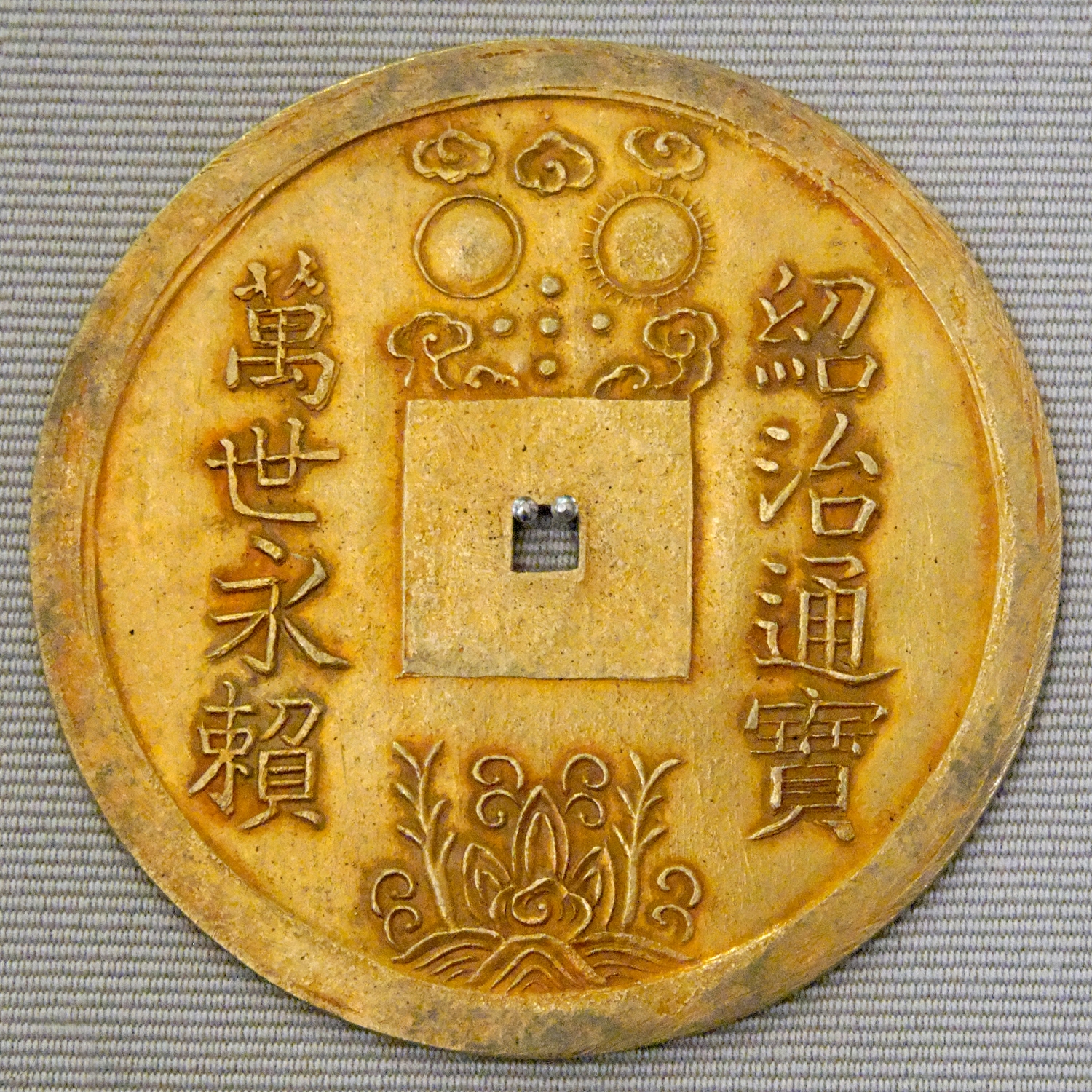
Thiệu Trị
1807 – 1847
|
Vietnam | politics | 3rd Emperor of the Nguyễn Dynasty of Vietnam, Scholar & Imperial Poet | |
| 13 |

Carlos Marighella
1911 – 1969
|
Brazil | politics | Brazilian Marxist Political Leader, Anti-Dictatorship Revolutionary & Author | |
| 14 |

Bruno Junqueira
Born 1976 (Living Legend)
|
Brazil | sports | Formula 3000 World Champion, 3-Time Indy 500 Pole Winner & IndyCar Driver | |
| 15 |

Natalie Pérez
Born 1986 (Living Legend)
|
Argentina | entertainment | Acclaimed Argentine Singer-Songwriter, Television & Musical Theatre Actress | |
| 16 |

Ricardo Ehrlich
Born 1948 (Living Legend)
|
Uruguay | politics | Uruguayan Biochemist, Minister of Education and Culture & Mayor of Montevideo | |
| 17 |

Amadou Toumani Touré
1948 – 2020
|
Mali | politics | President of Mali (2002–2012), Military General & "Soldier of Democracy" | |
| 18 |

Chukwuemeka Odumegwu Ojukwu
1933 – 2011
|
Nigeria | politics | Nigerian Military Leader, President of the Republic of Biafra & Igbo Statesman | |
| 19 |

Tony Abbott
Born 1957 (Living Legend)
|
Australia | politics | 28th Prime Minister of Australia, Rhodes Scholar & Leader of the Liberal Party | |
| 20 |

Jerry Collins
1980 – 2015
|
New Zealand / Samoa | sports | Legendary All Blacks Flanker & Captain, Rugby World Cup Star & Hurricanes Icon | |
| 21 |

Laura Geitz
Born 1987 (Living Legend)
|
Australia | sports | Australian Netball Diamonds Captain, World Champion & Commonwealth Games Gold Medalist | |
| 22 |
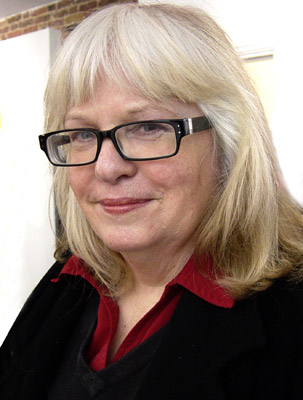
Alexis Hunter
1948 – 2014
|
New Zealand | arts | Pioneering Contemporary Feminist Artist, Photographer & Visual Educator | |
| 23 |

Luís Figo
Born 1972 (Living Legend)
|
Portugal | sports | Ballon d'Or Winner (2000), FIFA World Player of the Year & Portuguese Football Legend | |
| 24 |
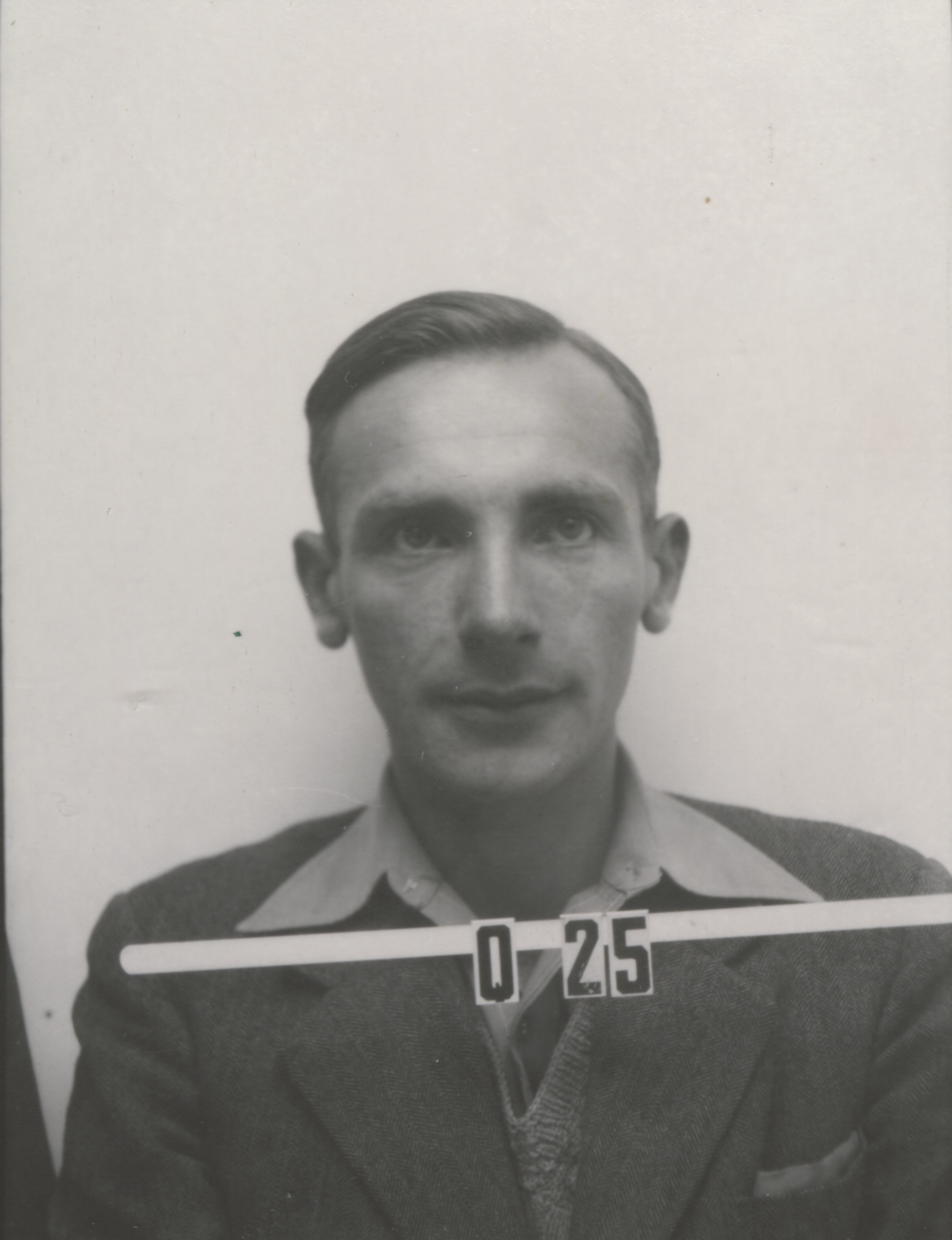
Joseph Rotblat
1908 – 2005
|
Poland / United Kingdom | peace | Nobel Peace Prize Laureate (1995), Nuclear Physicist & Founder of Pugwash Conferences | |
| 25 |

Guido Reni
1575 – 1642
|
Italy | arts | Master High-Baroque Painter of the Bolognese School & Classical Draftsman | |
| 26 |

Gerard van Honthorst
1592 – 1656
|
Netherlands | arts | Dutch Golden Age Master Painter & Leader of the Utrecht Caravaggisti ("Gherardo delle Notti") | |
| 27 |

G. E. Moore
1873 – 1958
|
United Kingdom | philosophy | Pioneering British Analytical Philosopher, Author of Principia Ethica & Cambridge Professor | |
| 28 |

Charles Borromeo
1538 – 1584
|
Italy | religion | Archbishop of Milan, Cardinal, Catholic Saint & Leading Reformer of the Council of Trent | |
| 29 |
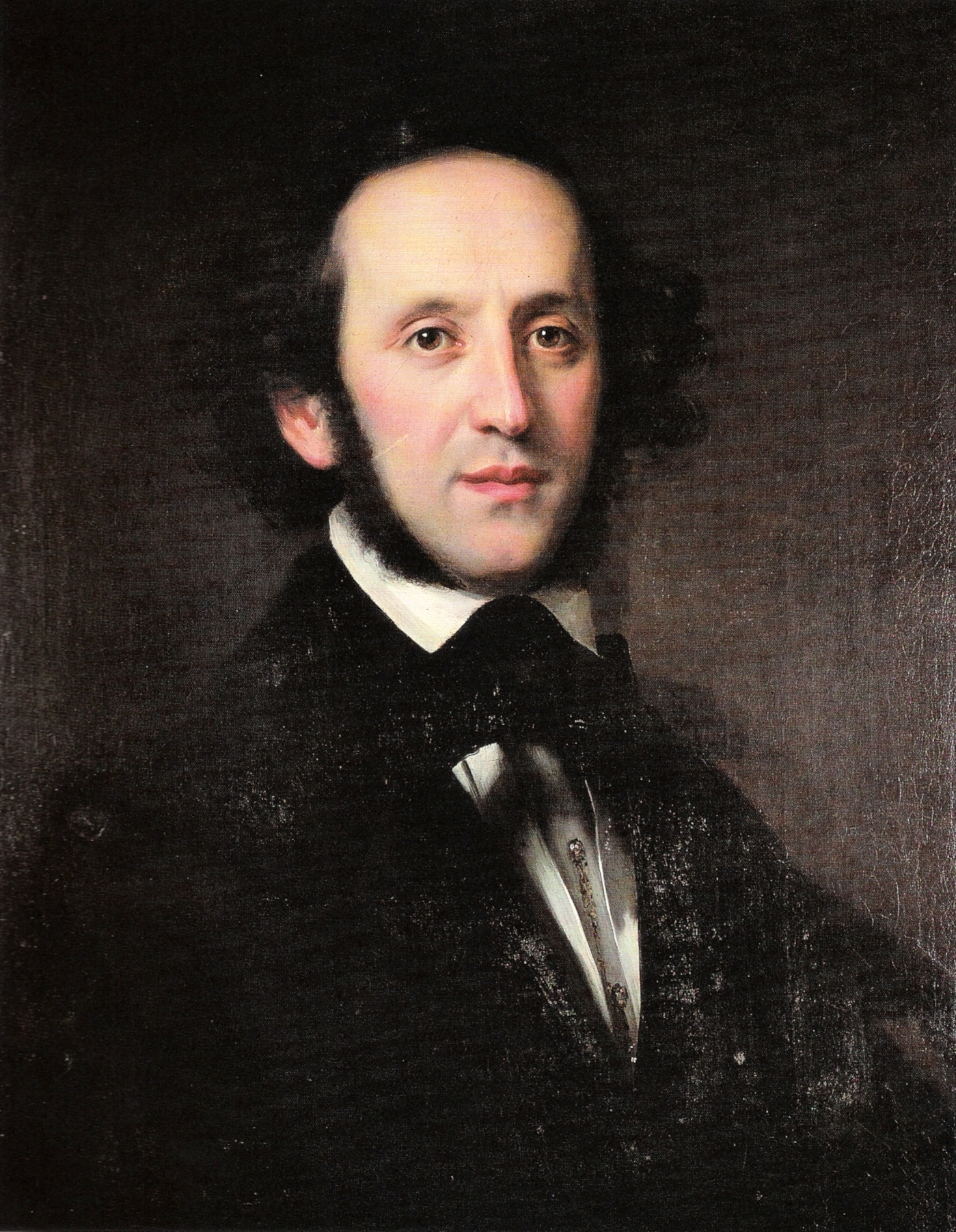
Felix Mendelssohn
1809 – 1847
|
Germany | music | Early Romantic Era Master Composer, Pianist, Organist & Conductor | |
| 30 |

Gabriel Fauré
1845 – 1924
|
France | music | Master French Composer, Organist, Pianist & Director of the Conservatoire de Paris | |
| 31 |

Wilfred Owen
1893 – 1918
|
United Kingdom | literature | Foremost English War Poet of World War I, Soldier & Author of "Dulce et Decorum Est" | |
| 32 |
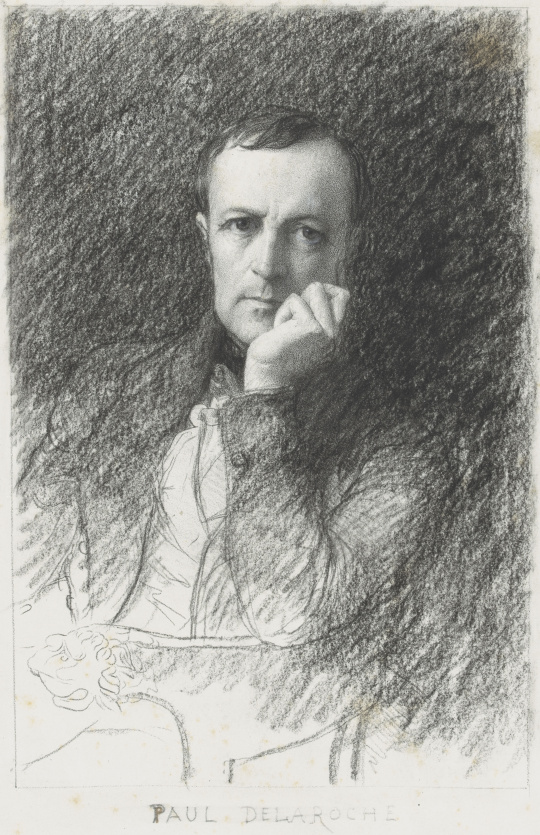
Paul Delaroche
1797 – 1856
|
France | arts | Leading French Academic Historical Painter (*The Execution of Lady Jane Grey*) | |
| 33 |

Spyridon Marinatos
1901 – 1974
|
Greece | science | Eminent Greek Archaeologist & World-Famous Excavator of Bronze Age Akrotiri on Santorini | |
| 34 |

Pierre-Simon Girard
1765 – 1836
|
France | science | French Mathematician, Hydraulic Engineer & Chief Director of Canal de l'Ourcq | |
| 35 |

Edmund Kean
1787 – 1833
|
United Kingdom | entertainment | Celebrated British Shakespearean Tragedian & Drury Lane Theatre Legend | |
| 36 |

Dragutin Tadijanović
1905 – 2007
|
Croatia | literature | Doyen of Croatian Modernist Poetry, Literary Translator & Academician | |
| 37 |

Augustus Toplady
1740 – 1778
|
United Kingdom | religion | Anglican Cleric, Theologian & Immortal Hymnwriter of "Rock of Ages" | |
| 38 |

Alfonso II of Naples
1448 – 1495
|
Italy | politics | King of Naples (1494–1495), Renaissance Military Commander & Architectural Patron | |
| 39 |
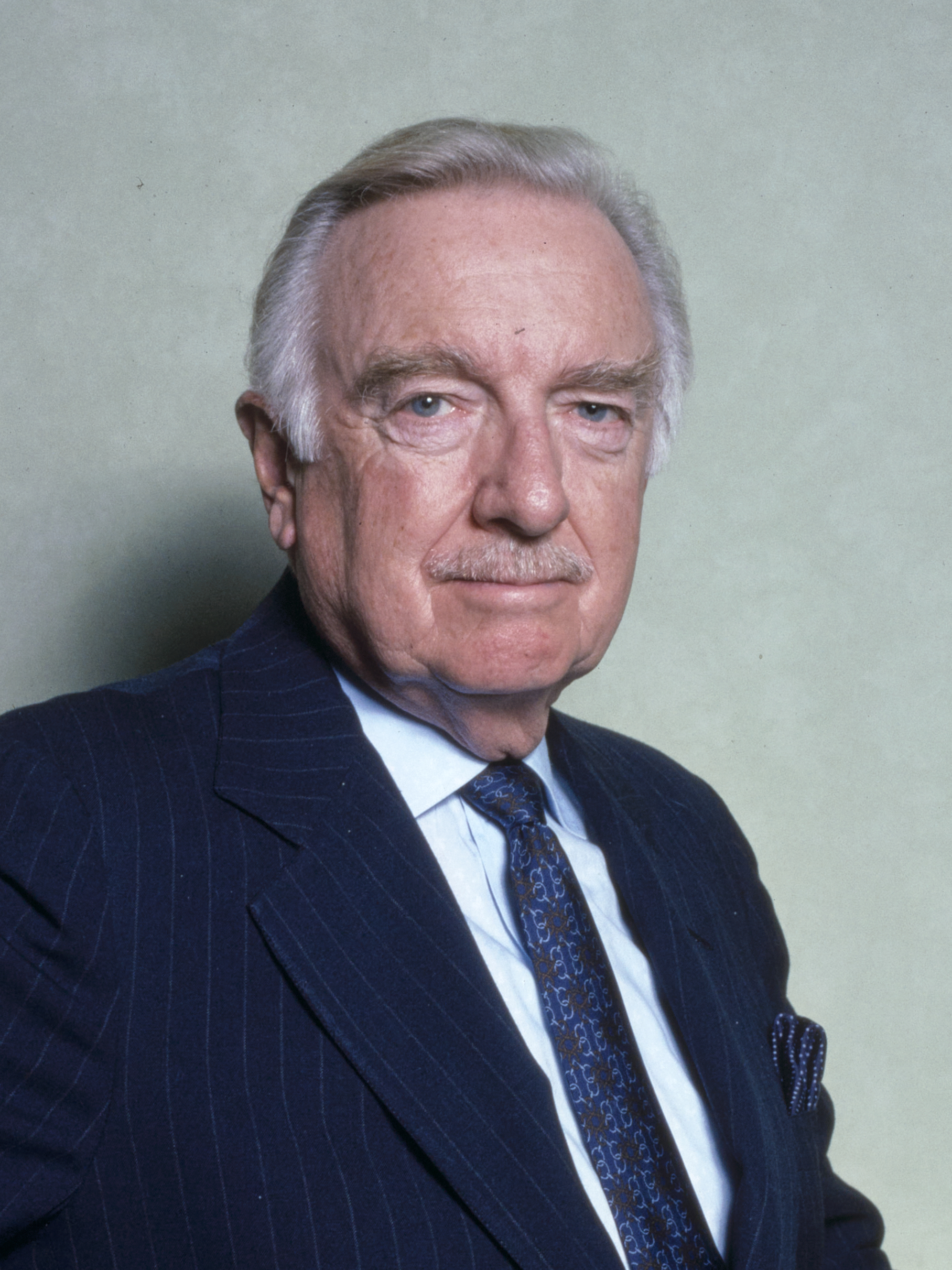
Walter Cronkite
1916 – 2009
|
United States | journalism | Legendary CBS Evening News Anchor & "The Most Trusted Man in America" | |
| 40 |

Will Rogers
1879 – 1935
|
United States | entertainment | Cherokee-American Humorist, Vaudeville Star, Social Philosopher & Columnist | |
| 41 |

Ruth Handler
1916 – 2002
|
United States | business | Business Icon, Co-Founder of Mattel & Creator of the Worldwide Phenomenon Barbie Doll | |
| 42 |

Matthew McConaughey
Born 1969 (Living Legend)
|
United States | actor | Academy Award-Winning Actor, Producer, Author of Greenlights & Philanthropist | |
| 43 |

Laura Bush
Born 1946 (Living Legend)
|
United States | public figure | First Lady of the United States (2001–2009), Educator & Literacy Advocate | |
| 44 |

Ralph Macchio
Born 1961 (Living Legend)
|
United States | actor | Actor & Producer, Star of The Karate Kid and Cobra Kai | |
| 45 |

Art Carney
1918 – 2003
|
United States | actor | Academy Award- & 6-Time Emmy Award-Winning Actor & Comedian (The Honeymooners) | |
| 46 |
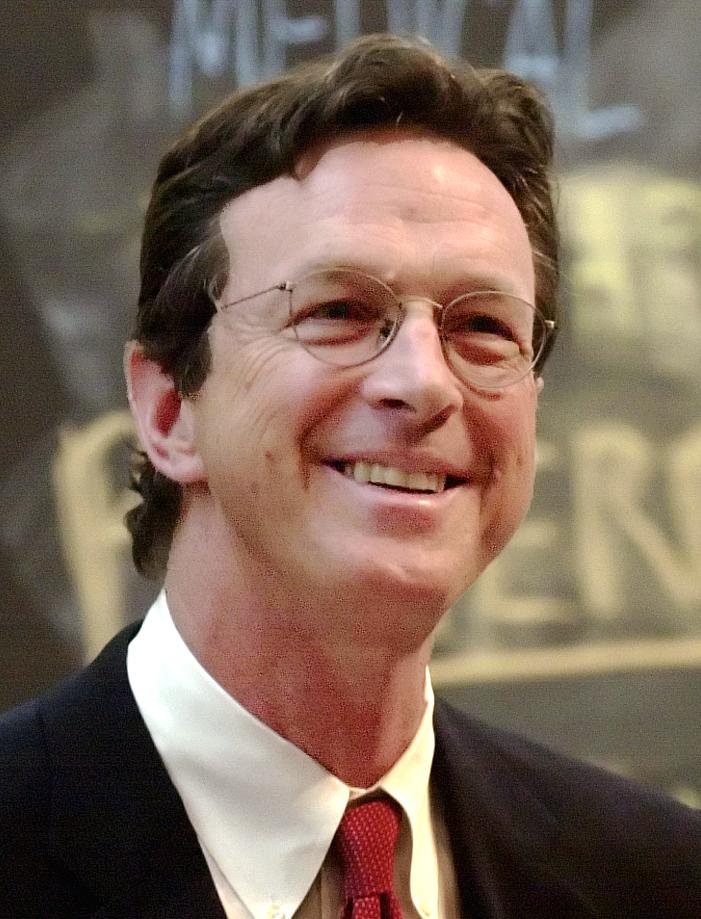
Michael Crichton
1942 – 2008
|
United States | author | Bestselling Author, Physician, Screenwriter & Creator of Jurassic Park and ER | |
| 47 |

Robert Mapplethorpe
1946 – 1989
|
United States | artist | Fine-Art Photographer & Master of Classical Composition and Light | |
| 48 |

Patricia Bath
1942 – 2019
|
United States | scientist | Ophthalmologist, Inventor of the Laserphaco Probe & First Black Female Doctor to Win a Medical Patent | |
| 49 |

Bert Patenaude
1909 – 1974
|
United States | athlete | Soccer Forward & Scorer of the First Hat-Trick in FIFA World Cup History (1930) | |
| 50 |

Benjamin Robbins Curtis
1809 – 1874
|
United States | jurist | Associate Justice of the U.S. Supreme Court & Author of the Historic Dred Scott Dissent | |
| 51 |

Stanley Cortez
1908 – 1997
|
United States | filmmaker | Cinematographer & Master of Chiaroscuro (The Magnificent Ambersons, The Night of the Hunter) | |
| 52 |

Loretta Swit
Born 1937 (Living Legend)
|
United States | actor | Two-Time Emmy Award-Winning Actress (Margaret "Hot Lips" Houlihan on M*A*S*H) & Animal Activist | |
| 53 |

Kathy Griffin
Born 1960 (Living Legend)
|
United States | comedian | Two-Time Emmy- & Grammy Award-Winning Stand-Up Comedian, Actress & LGBTQ+ Advocate | |
| 54 |
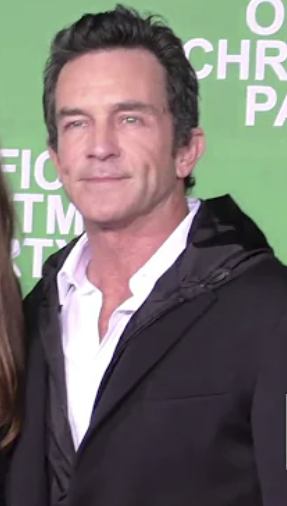
Jeff Probst
Born 1961 (Living Legend)
|
United States | television host | Four-Time Emmy Award-Winning Television Host, Executive Producer of Survivor & Author |
In-Depth Profiles of All 54 November 4 Luminaries
Charles K. Kao (1933 – 2018)
Hong Kong / ChinaNobel Laureate in Physics (2009), "Father of Fiber Optics" & Electrical Engineer
Sir Charles Kuen Kao was a Hong Kong-British-American electrical engineer and physicist who pioneered the development and use of fiber optics in telecommunications, earning the 2009 Nobel Prize in Physics as the "Father of Fiber Optics".
Born in Shanghai on November 4, 1933, Charles Kuen Kao moved with his family to Hong Kong in 1948 before pursuing his higher education in electrical engineering in London. In 1966, while working at Standard Telecommunication Laboratories (STL) in Harlow, England, Kao and his colleague George Hockham published a groundbreaking research paper calculating that the high attenuation in existing optical fibers was caused by impurities in the silica glass rather than fundamental physical limitations.
Kao boldly theorized that if glass could be purified to reduce attenuation below 20 decibels per kilometer, optical fibers would become an extraordinarily efficient transmission medium for telephony and digital data. His pioneering insights inspired materials scientists globally to manufacture ultra-pure fused silica fibers, catalyzing the modern telecommunications revolution that underpinned the global internet and undersea communication cables.
Beyond his laboratory breakthroughs, Kao served as Vice-Chancellor of The Chinese University of Hong Kong (CUHK) from 1987 to 1996, modernizing higher education and scientific research infrastructure across East Asia. In 2009, he was awarded half of the Nobel Prize in Physics for "groundbreaking achievements concerning the transmission of light in fibers for optical communication", cementing his legacy as the visionary who connected the world at the speed of light.
Key Historical Milestones:
- 1966 landmark paper: "Dielectric-fibre surface waveguides for optical frequencies"
- Nobel Prize in Physics (2009) for pioneering optical fiber communications
- Vice-Chancellor of The Chinese University of Hong Kong (1987–1996)
- Co-founding the Independent Schools Foundation Academy in Hong Kong
- Faraday Medal (1989) & IEEE Alexander Graham Bell Medal (1985)
Shakuntala Devi (1929 – 2013)
IndiaWorld-Renowned Mental Calculator ("Human Computer"), Astrologer & Author
Shakuntala Devi was a legendary Indian mental calculator and writer, celebrated universally as the "Human Computer" for her astonishing ability to mentally solve complex mathematical equations and 13-digit multiplications faster than supercomputers.
Born on November 4, 1929, in Bangalore into a Kannada Brahmin family, Shakuntala Devi displayed prodigy-level arithmetic abilities at the tender age of three. When her father noticed her uncanny memory while performing card tricks, he left the circus to organize public demonstrations of his daughter’s breathtaking calculation speed. By age six, she was demonstrating her mathematical genius at the University of Mysore without any formal schooling.
Devi toured the world throughout the 1950s, 60s, and 70s, dazzling audiences at universities and on television networks across Europe, North America, and Asia. On June 18, 1980, at Imperial College London, she mentally multiplied two randomly selected 13-digit numbers (7,686,369,774,870 × 2,465,099,745,779) in just 28 seconds, an awe-inspiring intellectual feat that earned her a permanent place in the Guinness Book of Records.
Beyond mental arithmetic, Shakuntala Devi was a prolific author of puzzles, cookbooks, and novels. In 1977, she authored The World of Homosexuals, the very first published study of homosexuality in India, calling for compassion, legal decriminalization, and social acceptance decades ahead of her time. Her vibrant legacy remains a testament to the boundless computational power and empathetic potential of the human brain.
Key Historical Milestones:
- Guinness World Record for multiplying two 13-digit numbers in 28 seconds (1980)
- The World of Homosexuals (1977 landmark pioneer study in India)
- Figuring: The Joy of Numbers (popular mathematics guide)
- Puzzles to Puzzle You & More Puzzles to Puzzle You
- Astrology for You & Perfect Murder (bestselling diverse literature)
Tabu (Born 1971 (Living Legend))
IndiaNational Film Award-Winning Actress, Padma Shri Recipient & Cinema Icon
Tabu (Tabassum Fatima Hashmi) is one of Indian cinema’s most revered and versatile actors, celebrated for her nuanced, intensely emotional performances across Hindi, Telugu, Tamil, and international cinema, winning two National Film Awards and the Padma Shri.
Born on November 4, 1971, in Hyderabad into a cultured Hyderabadi Muslim family, Tabassum Fatima Hashmi was educated at St. Ann's High School in Hyderabad before moving to Mumbai to study at St. Xavier's College. Breaking into films in the early 1990s, she quickly bypassed conventional glamorous tropes to establish herself as an actor of formidable dramatic depth, gravitas, and introspective power.
Tabu earned her first National Film Award for Best Actress for Gulzar’s political drama Maachis (1996), portraying a Punjabi woman trapped in the vortex of militancy. She won her second National Film Award for Madhur Bhandarkar’s acclaimed Chandni Bar (2001), delivering a heartbreaking masterclass as a bar dancer fighting for her children's future. Her critically lauded roles in Virasat, Astitva, Haider, Andhadhun, and Drishyam showcase an unmatched range spanning tragedy, dark comedy, and gripping suspense.
Internationally recognized for her performances in Mira Nair’s The Namesake (2006) and Ang Lee’s Oscar-winning Life of Pi (2012), Tabu has garnered global acclaim for her understated emotional resonance. Honored with the Padma Shri by the Government of India in 2011, she remains a definitive benchmark of artistic integrity, longevity, and timeless screen magnetism.
Key Historical Milestones:
- Two National Film Awards for Best Actress (Maachis in 1996, Chandni Bar in 2001)
- Padma Shri (2011), India's fourth-highest civilian honour
- Haider (2014) & Andhadhun (2018) Filmfare Award-winning performances
- The Namesake (2006) as Ashima Ganguli directed by Mira Nair
- Life of Pi (2012) directed by Academy Award-winner Ang Lee
Carlos P. Garcia (1896 – 1971)
Philippines8th President of the Philippines, Statesman & Champion of the "Filipino First" Policy
Carlos P. Garcia was the 8th President of the Philippines (1957–1961), a revered teacher, poet, lawyer, and statesman famous for his "Filipino First" economic policy that prioritized domestic industries and Philippine economic self-reliance.
Born in Talibon, Bohol, on November 4, 1896, Carlos Polestico Garcia earned his law degree as valedictorian from the Philippine Law School in 1923. Known early as the "Prince of Visayan Poets" and "Bard from Bohol", Garcia channeled his literary eloquence into public service, serving as Bohol governor, wartime guerrilla resistance leader against Japanese occupation, and three-term senator.
As Vice President and Secretary of Foreign Affairs under Ramon Magsaysay, Garcia represented the Philippines at the historic 1954 Geneva Conference and 1955 Bandung Conference. Following Magsaysay’s tragic death in a plane crash in March 1957, Garcia assumed the presidency and subsequently won a full term, launching an administration defined by economic nationalism and cultural revivalism.
Garcia’s defining achievement was the "Filipino First" policy (Resolution No. 204), which gave Filipino entrepreneurs and domestic manufacturers priority over foreign investors in commerce, currency exchange, and industrial development. He renegotiated the US-Philippine Military Bases Agreement, reducing the lease from 99 to 25 years. Shortly before his passing in 1971, he was elected President of the 1971 Constitutional Convention, enshrining his status as a titan of Philippine sovereignty.
Key Historical Milestones:
- Filipino First Policy (National Economic Council Resolution No. 204)
- Renegotiation of the 1947 US Military Bases Agreement (Bohlen-Serrano Agreement)
- Revival of Philippine Folk Culture and National Heritage Program
- President of the 1971 Philippine Constitutional Convention
- Establishment of the Republic Cultural Heritage Awards
Hara Takashi (1856 – 1921)
Japan10th Prime Minister of Japan ("Commoner Prime Minister") & Political Reformer
Hara Takashi (also known as Hara Kei) was the 10th Prime Minister of Japan (1918–1921) and the first commoner to hold the office, celebrated for establishing Japan’s first true party cabinet and advancing modern democratic governance during the Taishō era.
Born on March 15, 1856, in Morioka, Mutsu Province, into a former samurai family of the Nanbu clan, Hara Takashi initially worked as a journalist and diplomat before entering national politics. Rising through the Ministry of Foreign Affairs, he aligned with Ito Hirobumi in 1900 to co-found the Rikken Seiyūkai (Constitutional Association of Political Friends), quickly emerging as the party’s master strategist and organizational leader.
In September 1918, in the wake of the nationwide Rice Riots, Emperor Taishō appointed Hara as Prime Minister. Hara made history as the very first untitled commoner (heimin) to lead the Japanese government, refusing aristocratic peerage throughout his life. His administration established the first true party-based cabinet in Japanese history, breaking the traditional oligopoly of the Meiji genrō (elder statesmen) and Chōshū-Satsuma military clans.
As Prime Minister, Hara expanded public higher education, modernized rail infrastructure, reduced the tax requirement for male suffrage, and pursued a cooperative, non-aggressive foreign policy. On November 4, 1921, while boarding a train at Tokyo Station to attend a party rally in Kyoto, Hara was assassinated by a right-wing railway switchman. His martyrdom marked a tragic milestone in Japan’s Taishō Democracy, remembering him as the courageous "Commoner Prime Minister" who opened Japan’s political system to its people.
Key Historical Milestones:
- Establishment of the first true party cabinet in Japanese history (1918)
- Electoral reform lowering tax qualifications for voting, doubling the electorate (1919)
- University Order of 1918 granting university status to major private institutions (Waseda, Keio)
- Leadership of the Rikken Seiyūkai party through the zenith of Taishō Democracy
- Hara Takashi Nikki (The Diaries of Hara Takashi, monumental historical chronicle)
Kyōka Izumi (1873 – 1939)
JapanCelebrated Japanese Novelist, Short-Story Writer & Master of Surrealism
Kyōka Izumi (Kyōtarō Izumi) was a preeminent Japanese author of novels, short stories, and kabuki plays whose surreal, romantic, and supernatural tales bridged Edo-period aesthetic folklore with modern Japanese psychological literature.
Born Kyōtarō Izumi on November 4, 1873, in Kanazawa, Ishikawa Prefecture, to a family of traditional metal carvers and Noh actors, Kyōka was steeped in traditional Japanese performing arts from early childhood. Following the premature death of his mother when he was just nine—a loss that haunted and inspired his literature for life—he moved to Tokyo in 1890 to apprentice under literary master Ozaki Kōyō.
Refusing to submit to the rising European-inspired Naturalist movement that dominated Meiji literature, Kyōka developed a dazzling, highly stylized romantic aesthetic. His masterpieces, including The Holy Man of Mount Kōya (Kōya Hijiri, 1900), Demon Pond (Yashagaike, 1913), and The Castle Tower (Tenshudai, 1917), seamlessly blended gothic fantasy, Buddhist mysticism, erotic longing, and folkloric specters.
Celebrated by Akutagawa Ryūnosuke, Tanizaki Jun'ichirō, and Mishima Yukio as one of the greatest stylists in the history of the Japanese language, Kyōka’s baroque syntax and evocative prose established a unique canon of Japanese magical realism. In 1973, the City of Kanazawa established the prestigious Izumi Kyōka Prize for Literature in his honor, ensuring his timeless enchantments continue to inspire modern storytellers worldwide.
Key Historical Milestones:
- The Holy Man of Mount Kōya (Kōya Hijiri, 1900 classic gothic tale)
- Demon Pond (Yashagaike, 1913 legendary play and novel)
- The Castle Tower (Tenshu Monogatari, 1917 masterpiece of supernatural romance)
- The Operating Room (Gekashitsu, 1895 poignant tragedy)
- One Day in Spring (Shunchū, 1906 collection of lyrical surrealism)
Hu Zongxian (1512 – 1565)
ChinaMing Dynasty Grand Commander, Coastal Strategist & Military Scholar
Hu Zongxian was a supreme military commander and Supreme Commander of Coastal Defense (Zongdu) during the Jiajing reign of the Ming dynasty, renowned for successfully pacifying the devastating wokou coastal pirate crises and mentoring military legends Qi Jiguang and Yu Dayou.
Born on November 4, 1512, in Jixi, Huizhou (modern Anhui province), Hu Zongxian achieved the prestigious imperial degree of Jinshi in 1538. Renowned for his piercing intellect and administrative acumen, he was appointed to coordinate the defense of coastal Zhejiang and Jiangsu during the peak of the mid-16th-century Wokou pirate incursions, which threatened the economic heartland of the Ming Empire.
As Supreme Commander, Hu instituted a brilliant dual-track strategy combining political negotiation, psychological warfare, and rigorous military restructuring. Recognizing that the pirate syndicates were led largely by rebellious Chinese maritime merchants like Wang Zhi alongside Japanese corsairs, Hu used diplomacy and trade amnesties to divide pirate factions while unleashing brilliant field commanders Qi Jiguang and Yu Dayou to decisively crush pirate strongholds in coastal battles.
Hu commissioned and co-authored the monumental Chouhai Tubian (Treatise on Coastal Defense, 1562), an authoritative thirteen-volume encyclopedia detailing coastal geography, naval warfare tactics, ship construction, and island cartography (including early records of the Diaoyu Islands). Despite later falling victim to imperial factional purges, history honors Hu Zongxian as the visionary strategist who secured China’s maritime frontiers and forged the military brilliance of the Ming dynasty.
Key Historical Milestones:
- Chouhai Tubian (Illustrated Treatise on Coastal Defense, 1562 landmark naval military encyclopedia)
- Pacification of the catastrophic mid-16th century Wokou coastal piracy crisis
- Sponsorship and promotion of legendary Ming military heroes Qi Jiguang and Yu Dayou
- Supreme Commander of Coastal Defense (Zongdu) for Zhejiang, Fujian, and Southern Zhili
- Reorganization of Ming coastal garrisons, naval fleet logistics, and firearms doctrine
Botong Francisco (1912 – 1969)
PhilippinesNational Artist of the Philippines for Visual Arts, Legendary Muralist & Painter
Carlos "Botong" Francisco was a legendary Filipino muralist and painter, proclaimed National Artist of the Philippines for Visual Arts in 1973, renowned for single-handedly reviving the art of murals in the Philippines and immortalizing national history and folk traditions.
Born in the artistic lakeside town of Angono, Rizal, on November 4, 1912, Carlos "Botong" Modesto Villaluz Francisco studied at the University of the Philippines School of Fine Arts. Along with Victorio Edades and Galo Ocampo, Botong formed the pioneering "Triumvirate" of modern art in the Philippines, rebelling against conservative academic romanticism to introduce bold lines, dynamic modernist compositions, and earthy tropical colors.
Botong is celebrated as the undisputed master of Philippine historical mural painting. His magnum opus, Filipino Struggles Through History (1964), created for Manila City Hall, is a monumental series depicting pre-colonial life, the Spanish conquest, the execution of José Rizal, and the Philippine Revolution with operatic rhythm, heroic figurative anatomy, and emotional intensity. He also famously discovered the prehistoric Angono Petroglyphs in 1965, the oldest known artwork in the Philippines dating to 3000 BC.
Francisco lived modestly in his beloved Angono throughout his life, deriving deep inspiration from fishermen, farmers, and village fiestas. Posthumously declared a National Artist in 1973, his sweeping panoramic compositions and celebration of indigenous heritage transformed Philippine art, earning him an immortal place in the pantheon of Southeast Asian visual culture.
Key Historical Milestones:
- Filipino Struggles Through History (History of Manila mural, 1964 National Cultural Treasure)
- Discovery of the prehistoric Angono Petroglyphs (1965, dating to ~3000 BC)
- First Mass at Limasawa (1950 masterwork of colonial history)
- Harana, Blood Compact, and Invasion of Limahong murals
- Co-founder of the Modernist Triumvirate of Philippine Art with Edades and Ocampo
Sun Yingsha (Born 2000 (Living Legend))
ChinaWorld No. 1 Table Tennis Champion, Multi-Olympic Gold Medalist & World Cup Champion
Sun Yingsha is a Chinese table tennis superstar, undisputed World No. 1 women’s singles player, multiple Olympic gold medalist, and World Champion renowned for her explosive forehand, calm composure under pressure, and global sportsmanship.
Born in Shijiazhuang, Hebei province, on November 4, 2000, Sun Yingsha began playing table tennis at age five and joined the Chinese national second team by 2015. She exploded onto the senior international scene at the 2017 ITTF World Tour Japan Open, winning both women’s singles and doubles titles as an unranked 16-year-old qualifier in a sensational debut.
With her aggressive, modern attacking game characterized by venomous forehand loops, seamless backhand counters, and exceptional footwork, Sun rose rapidly to the pinnacle of world table tennis. At the Tokyo 2020 Olympic Games, she captured gold in the women’s team event and silver in singles. At the 2024 Paris Olympics, she secured double gold in the mixed doubles (partnering Wang Chuqin) and women’s team event, alongside another Olympic singles silver.
As a multiple-time World Table Tennis Champion in singles, doubles, and mixed doubles, and winner of consecutive WTT Finals titles, Sun Yingsha has maintained an iron grip on the ITTF World No. 1 ranking. Beloved by fans worldwide for her cheerful demeanor, humility, and fierce competitive spirit, she represents the pinnacle of modern athletic excellence.
Key Historical Milestones:
- Olympic Gold Medalist (Tokyo 2020 Team, Paris 2024 Mixed Doubles & Team)
- World Table Tennis Champion (Singles Durban 2023, Multi-time Doubles Champion)
- ITTF World No. 1 Women's Singles Ranking (held consecutively for multiple years)
- World Cup Champion & Multi-time WTT Champions and Finals victor
- Asian Games Multi-Gold Medalist (Hangzhou 2022 quadruple champion)
Yılmaz Erdoğan (Born 1967 (Living Legend))
TurkeyAward-Winning Turkish Filmmaker, Actor, Screenwriter & Poet
Yılmaz Erdoğan is a preeminent Turkish filmmaker, screenwriter, poet, and actor of Kurdish origin, celebrated for his record-breaking satirical comedy dramas and poignant historical epics such as *Vizontele*, *The Butterfly’s Dream*, and *Bir Demet Tiyatro*.
Born on November 4, 1967, in the mountainous southeastern province of Hakkâri, Turkey, Yılmaz Erdoğan moved to Istanbul to study civil engineering before completely dedicating his life to theater and literature. In the mid-1990s, he revolutionized Turkish television comedy by creating and starring in Bir Demet Tiyatro (A Bunch of Theater), a beloved long-running sitcom that captured the bittersweet everyday absurdities of Turkish urban life.
Erdoğan made his cinematic directorial debut with Vizontele (2001), a poignant comedy-drama inspired by his childhood memories of the arrival of television in a remote Anatolian town in 1974. Co-starring Demet Akbağ and Cem Yılmaz, the film shattered national box-office records and inaugurated a modern golden age in Turkish popular cinema. He followed with acclaimed works including Vizontele Tuuba (2004), Magic Carpet Ride (Organize İşler, 2005), and The Butterfly's Dream (Kelebeğin Rüyası, 2013), an exquisite period drama about two doomed young poets during World War II that was Turkey's official Oscar submission.
Internationally, Erdoğan won the Best Supporting Actor award at the 4th AACTA Awards in Australia for his moving portrayal of Major Hasan in Russell Crowe’s directorial debut The Water Diviner (2014). Beyond cinema, he is a celebrated poet and founder of the BKM (Beşiktaş Kültür Merkezi) theater academy, which has trained multiple generations of Turkey’s leading comedic actors and playwrights.
Key Historical Milestones:
- Vizontele (2001, record-breaking classic Turkish comedy-drama)
- The Butterfly's Dream (Kelebeğin Rüyası, 2013 acclaimed poetic epic, Oscar submission)
- Bir Demet Tiyatro (groundbreaking satirical television theater series)
- The Water Diviner (2014, AACTA Award for Best Supporting Actor)
- Organize İşler (Magic Carpet Ride, 2005 box-office smash hit and Netflix sequel)
Akiyama Yoshifuru (1859 – 1930)
JapanGeneral in the Imperial Japanese Army & "Father of Modern Japanese Cavalry"
Akiyama Yoshifuru was a distinguished general in the Imperial Japanese Army, celebrated as the "Father of Modern Japanese Cavalry" for his tactical brilliance during the Russo-Japanese War, and later revered for turning down political power to serve as a humble high school principal.
Born into an impoverished samurai family in Matsuyama, Iyo Province (modern Ehime Prefecture), on February 9, 1859, Akiyama Yoshifuru studied at the Imperial Japanese Army Academy before being sent to France to study cavalry tactics at the École Spéciale Militaire de Saint-Cyr in the late 1880s. Recognizing that Japanese horses and riders could not match European counterparts in raw bulk, Akiyama pioneered a flexible, mobile doctrine integrating dismounted cavalry tactics with machine guns.
During the Russo-Japanese War (1904–1905), Akiyama commanded the 1st Cavalry Brigade. At the pivotal Battle of Sandepu and Battle of Mukden, his heavily outnumbered cavalry brigade confronted and repelled the legendary Russian Cossacks by utilizing mobile Hotchkiss machine-gun squads and innovative entrenchment maneuvers, securing critical flanks for the main Japanese armies and earning him international military renown.
Promoted to full general in 1916, Akiyama was notable for his legendary stoicism, personal asceticism, and disdain for political intrigue. Upon retiring from active military duty in 1923, he astonished Tokyo's elite by refusing prestigious government posts and high-paying corporate directorships to return to his hometown of Matsuyama, where he served as principal of Hokuyō Middle School for the remainder of his life. He passed away on November 4, 1930, immortalized alongside his younger brother, naval strategist Akiyama Saneyuki, in Shiba Ryōtarō’s epic historical novel Saka no Ue no Kumo (Clouds Above the Hill).
Key Historical Milestones:
- Father of Modern Japanese Cavalry doctrine integrating machine guns with mobility
- Heroic defensive stand against Russian Cossack forces at the Battle of Mukden (1905)
- Battle of Sandepu commander, anchoring the Japanese line under brutal winter conditions
- Principal of Hokuyō Middle School in Matsuyama (1924–1930) after declining high office
- Central protagonist of Shiba Ryōtarō’s national epic novel Saka no Ue no Kumo
Thiệu Trị (1807 – 1847)
Vietnam3rd Emperor of the Nguyễn Dynasty of Vietnam, Scholar & Imperial Poet
Thiệu Trị (born Nguyễn Phúc Miên Tông) was the third Emperor of the Nguyễn Dynasty of Vietnam (reigned 1841–1847), revered for his classical Confucian scholarship, prolific imperial poetry, and defense of Vietnamese administrative traditions during a pivotal pre-colonial era.
Born on June 16, 1807, in the imperial capital of Huế, Nguyễn Phúc Miên Tông was the eldest son of Emperor Minh Mạng. Ascending the Dragon Throne upon his father’s death in February 1841 under the reign title Thiệu Trị ("Inheritor of Prosperity"), he inherited an administratively consolidated but diplomatically pressured empire stretching from the Red River Delta to the Mekong basin.
In contrast to his father’s aggressive military centralism, Thiệu Trị favored a more moderate and intellectually refined approach to governance. He was a deeply cultured monarch, widely regarded as one of the finest poets of the Nguyễn dynasty. He composed celebrated cycles of court verse, including poems extolling the natural scenery of Huế (Thần kinh nhị thập cảnh) that were engraved onto stone steles and bronze urns in the Imperial City.
Thiệu Trị’s reign was increasingly shadowed by European naval encroachments, culminating in the 1847 Bombardment of Tourane (modern Da Nang) by French warships demanding the release of imprisoned Catholic missionaries. Despite these brewing geopolitical storms, Thiệu Trị prioritized agrarian reforms, dike restorations, and the completion of official dynastic historical compilations before his death on November 4, 1847. He was interred in the magnificent Xương Lăng tomb complex in Huế, remembered as a monarch of profound literary grace and devotion to ancestral customs.
Key Historical Milestones:
- Thần kinh nhị thập cảnh (Twenty Scenic Views of the Imperial Capital Huế, imperial poetry cycle)
- Imperial commission and compilation of the Đại Nam thực lục (Veritable Records of Đại Nam)
- Agrarian relief reforms and extensive hydraulic dike restorations along the Red River
- Construction of imperial monuments and scholarly pavilions in the Imperial City of Huế
- Xương Lăng (Tomb of Thiệu Trị, UNESCO World Heritage site of Huế Monuments)
Carlos Marighella (1911 – 1969)
BrazilBrazilian Marxist Political Leader, Anti-Dictatorship Revolutionary & Author
Carlos Marighella was an Afro-Brazilian politician, writer, and revolutionary leader who fiercely resisted the Brazilian military dictatorship of 1964–1985, co-founding the Action for National Liberation (ALN) and authoring the influential *Minimanual of the Urban Guerrilla*.
Born in Salvador, Bahia, on December 5, 1911, Carlos Marighella was the son of an Italian immigrant worker and an Afro-Brazilian woman descended from enslaved Hausa people. Imbued with an unyielding sense of social justice, he studied civil engineering at the Polytechnic School of Bahia before dedicating his life to the Brazilian Communist Party (PCB), enduring multiple imprisonments and severe torture under the Getúlio Vargas dictatorship in the 1930s.
Elected as a federal deputy for Bahia to the Constituent Assembly of 1946, Marighella drafted progressive constitutional proposals protecting workers' rights before his party was outlawed. Following the US-backed 1964 military coup that overthrew democratic President João Goulart, Marighella broke with orthodox communist leadership over their refusal to actively resist the dictatorship, founding the armed revolutionary group Ação Libertadora Nacional (ALN) in 1968.
Marighella became the intellectual and tactical leader of urban resistance against state authoritarianism. In 1969, he authored the world-famous Minimanual of the Urban Guerrilla, which was translated into dozens of languages. On the evening of November 4, 1969, Marighella was ambushed and assassinated by police forces led by notorious torturer Sérgio Fleury on Alameda Casa Branca in São Paulo. Today, he is widely commemorated in Brazil as an immortal symbol of defiance against military tyranny and racial oppression.
Key Historical Milestones:
- Minimanual of the Urban Guerrilla (1969 internationally translated tactical treatise)
- Federal Deputy for Bahia in the 1946 Brazilian Constituent Assembly
- Co-founder and supreme leader of Ação Libertadora Nacional (ALN)
- Por que resisti à prisão (Why I Resisted Arrest, 1964 political essay)
- Poems of struggle and imprisonment celebrating Afro-Brazilian identity and liberty
Bruno Junqueira (Born 1976 (Living Legend))
BrazilFormula 3000 World Champion, 3-Time Indy 500 Pole Winner & IndyCar Driver
Bruno Junqueira is an accomplished Brazilian racing driver, winner of the 2000 International Formula 3000 Championship, Williams F1 test driver, and three-time Indianapolis 500 front-row starter renowned for his incredible speed on oval and street circuits.
Born in Belo Horizonte, Minas Gerais, on November 4, 1976, Bruno Junqueira started karting in Brazil before winning the South American Formula Three Championship in 1997. Moving to Europe, he joined Petrobras Junior Team in the highly competitive International Formula 3000 Championship, winning the World Championship in 2000 after a fierce title duel against future F1 stars Mark Webber and Fernando Alonso.
After serving as official test driver for the Williams Formula One team, Junqueira transitioned to North American open-wheel racing in the CART / Champ Car World Series with Target Chip Ganassi Racing and Newman/Haas Racing. Driving alongside Cristiano da Matta and Sébastien Bourdais, Junqueira won eight races and finished as Championship Runner-up three times (2002, 2003, and 2004), demonstrating exceptional technical finesse and wheel-to-wheel tenacity.
Junqueira earned a legendary reputation at the Indianapolis Motor Speedway, securing pole position for the Indianapolis 500 in 2002 as a rookie contender. Revered across the motorsport paddock for his resilience following severe spinal injuries in 2005, he returned to compete at the highest levels in IndyCar, ALMS sports cars, and Brazilian Stock Car racing, embodying Brazilian motorsport grit and passion.
Key Historical Milestones:
- International Formula 3000 Champion (2000, defeating Alonso and Webber)
- Indianapolis 500 Pole Winner (2002) and multi-time front row qualifier
- Three-time Champ Car World Series Runner-up (2002, 2003, 2004)
- Eight Champ Car World Series race victories (including Road America, Denver, Montreal)
- South American Formula Three Champion (1997) & Williams F1 Test Driver
Natalie Pérez (Born 1986 (Living Legend))
ArgentinaAcclaimed Argentine Singer-Songwriter, Television & Musical Theatre Actress
Natalie Pérez is an acclaimed Argentine singer, songwriter, and actress celebrated for her versatile roles in television and musical theater, as well as her chart-topping pop and folk-infused solo albums *Un Té de Tilo Por Favor* and *Detox*.
Born on November 4, 1986, in the Villa Urquiza neighborhood of Buenos Aires, Natalie Pérez began her acting career as a child performer in 1999 on the hit youth television series Chiquititas. Growing up in the Buenos Aires arts scene, she demonstrated exceptional stage presence, vocal range, and comedic timing, becoming a prominent fixture of Argentine television and musical theater.
Pérez earned widespread acclaim for starring in iconic musical productions, notably portraying Wendy in Peter Pan and staging acclaimed runs in Camila and Cenicienta. Her television breakout roles in blockbuster telenovelas including Graduados, Guapas, Esperanza Mía, and Las Estrellas established her as one of Argentina’s most charismatic and beloved screen personalities.
In 2017, Pérez launched her music career with her self-penned single "Algo Tiene", followed by her critically praised debut album Un Té de Tilo Por Favor (2018), blending Latin pop, cumbia, and indie folk. Her subsequent albums Detox (2020) and De Fiesta (2023) earned Gardel Award nominations, cementing her status as a dynamic singer-songwriter who represents the vibrant, independent creative voice of contemporary Argentine women.
Key Historical Milestones:
- Un Té de Tilo Por Favor (2018 acclaimed debut studio album featuring "Algo Tiene")
- Detox (2020 hit studio album exploring personal transformation and Latin rhythms)
- Las Estrellas (2017 award-winning primetime television series as Carla Estrella)
- Lead theatrical roles in Peter Pan, Camila: Nuestra Historia de Amor, and Cenicienta
- Gardel Award nominations for Best Pop Album and extensive national concert tours
Ricardo Ehrlich (Born 1948 (Living Legend))
UruguayUruguayan Biochemist, Minister of Education and Culture & Mayor of Montevideo
Ricardo Ehrlich is a distinguished Uruguayan biochemist, academic, and statesman who served as Mayor (Intendant) of Montevideo (2005–2010) and Minister of Education and Culture of Uruguay (2010–2015), bridging scientific research with progressive public policy.
Born in Montevideo on November 4, 1948, into a Jewish-Uruguayan family, Ricardo Ehrlich studied chemistry and biochemistry at the University of the Republic (UdelaR). During the civic-military dictatorship of Uruguay, he was imprisoned for his political activism as a member of the MLN-Tupamaros movement, enduring harsh political confinement before going into exile in France, where he earned his doctorate in molecular biochemistry from the University of Paris VII.
Returning to Uruguay with the restoration of democracy in 1987, Ehrlich became a leading figure in the scientific renaissance of the nation. He was appointed Director of the Institute of Biology and Dean of the Faculty of Sciences at UdelaR, spearheading high-level genomic research and international scientific cooperation, and helping found the Institut Pasteur de Montevideo in 2006.
In 2005, Ehrlich was elected Intendant of Montevideo on the Broad Front (Frente Amplio) ticket, spearheading urban decentralization, cultural heritage restoration, and social inclusion across the capital. In 2010, President José Mujica appointed Ehrlich as Minister of Education and Culture of Uruguay, where he championed Plan Ceibal (universal digital laptops for schoolchildren), scientific literacy, and educational equity nationwide.
Key Historical Milestones:
- Minister of Education and Culture of Uruguay (2010–2015 under President José Mujica)
- Intendant (Mayor) of Montevideo (2005–2010, progressive municipal administration)
- Co-founder and Honorary President of Institut Pasteur de Montevideo
- Dean of the Faculty of Sciences at the University of the Republic (UdelaR)
- Doctoral molecular biology research in protein-DNA interactions at University of Paris VII
Amadou Toumani Touré (1948 – 2020)
MaliPresident of Mali (2002–2012), Military General & "Soldier of Democracy"
Amadou Toumani Touré (known affectionately across West Africa as "ATT") was a Malian military general and President of Mali (2002–2012) celebrated as the "Soldier of Democracy" for overthrowing military dictator Moussa Traoré in 1991 and peacefully handing power to a democratically elected civilian government.
Born in Mopti on November 4, 1948, Amadou Toumani Touré initially trained as a teacher before entering the Inter-Service Military Academy in Kati and undergoing elite commando and paratrooper training in France and the Soviet Union. Rising to command Mali’s Presidential Guard, Touré achieved historic distinction in March 1991 when, amidst popular pro-democracy uprisings, he led a bloodless military coup to oust military dictator Moussa Traoré.
Rather than clinging to power, General Touré led a Transitional Committee for the Salvation of the People, organized a National Conference that drafted a progressive democratic constitution, held free multi-party elections, and in June 1992 voluntarily stepped down and handed power to elected President Alpha Oumar Konaré. This extraordinary selfless act earned him universal acclaim across Africa as the "Soldier of Democracy".
During his decade out of office, Touré established the Children’s Foundation and spearheaded global campaigns to eradicate Guinea worm disease alongside the Carter Center. In 2002, he ran for the presidency as an independent, winning two terms as President of Mali (2002–2012) under a platform of consensus politics, infrastructure expansion, and regional peace. He passed away on November 10, 2020, remembered as one of modern Africa’s most honorable and principled military statesmen.
Key Historical Milestones:
- Architect of the 1991–1992 democratic transition in Mali (peaceful voluntary transfer of power)
- President of the Republic of Mali (2002–2012, two democratically elected terms)
- Fondation pour l'Enfance (major humanitarian foundation improving maternal and child health in the Sahel)
- Leadership in the Carter Center's international Guinea worm eradication campaign
- Pioneering "Consensus Democracy" governance model uniting diverse political parties in Mali
Chukwuemeka Odumegwu Ojukwu (1933 – 2011)
NigeriaNigerian Military Leader, President of the Republic of Biafra & Igbo Statesman
Chukwuemeka Odumegwu Ojukwu was an Oxford-educated Nigerian military officer, military governor of the Eastern Region, and leader of the breakaway Republic of Biafra during the Nigerian Civil War (1967–1970), revered by millions as the "Ikemba of Nnewi" and champion of Igbo survival.
Born on November 4, 1933, in Zungeru, northern Nigeria, Chukwuemeka Odumegwu Ojukwu was the son of Sir Louis Odumegwu Ojukwu, one of the wealthiest transport magnates in colonial West Africa. Educated at King’s College in Lagos and Epsom College in England, he earned his master’s degree in modern history from Lincoln College, Oxford. Defying his father’s commercial expectations, Ojukwu enlisted in the newly formed Queen’s Own Nigeria Regiment, rising to become one of Nigeria’s most articulate and intellectually formidable military commanders.
Appointed military governor of the Eastern Region in 1966 in the tumultuous aftermath of military coups and horrific anti-Igbo pogroms in northern cities, Lieutenant-Colonel Ojukwu led negotiations at the Aburi Accord in Ghana seeking a decentralized confederation to prevent national disintegration. When the federal military government reneged on the accord, Ojukwu proclaimed the independence of the Republic of Biafra on May 30, 1967, to shield his people from existential destruction.
For nearly three brutal years, Ojukwu rallied the blockaded Biafran population against overwhelming odds in the Nigerian Civil War, inspiring astonishing homegrown engineering breakthroughs and heroic international humanitarian airlifts. Following Biafra’s capitulation in 1970 and a decade of exile in Côte d’Ivoire, he was granted an official state pardon in 1982, returning to Nigeria as the revered "Ezeigbo Gburugburu" (Supreme Leader of the Igbos) and championing national reconciliation and democratic justice until his passing in 2011.
Key Historical Milestones:
- Proclamation of the Republic of Biafra (May 30, 1967) and Head of State (1967–1970)
- The Ahiara Declaration (1969 landmark political and philosophical blueprint for Biafra)
- Because I Am Involved (1989 influential book on Nigerian political history and ethnic federalism)
- Negotiation and defense of the Aburi Accord (Ghana, 1967 confederal agreement)
- Ikemba Nnewi and Ezeigbo Gburugburu (symbol of Igbo pride and constitutional justice)
Tony Abbott (Born 1957 (Living Legend))
Australia28th Prime Minister of Australia, Rhodes Scholar & Leader of the Liberal Party
Tony Abbott AC is an Australian politician who served as the 28th Prime Minister of Australia (2013–2015) and Leader of the Liberal Party, renowned for his robust conservative advocacy, major Asian free trade agreements, volunteer firefighting, and dedication to Indigenous recognition.
Born in London on November 4, 1957, to an Australian father and British mother, Tony Abbott moved to Sydney as a child and was educated at St Ignatius’ College, Riverview, and the University of Sydney, where he excelled as a varsity boxer. He earned a Rhodes Scholarship to The Queen’s College, Oxford, completing master’s studies in philosophy, politics, and economics before working as a journalist for *The Australian* and political adviser to John Hewson.
Elected to the Australian Parliament for Warringah in 1994, Abbott held major ministerial portfolios under John Howard, including Employment and Health and Ageing. Elected Leader of the Liberal Party and Leader of the Opposition in 2009, he waged an extraordinarily formidable and disciplined political campaign against the incumbent Labor governments, leading the Liberal-National Coalition to a decisive landslide victory at the 2013 federal election to become the 28th Prime Minister of Australia.
As Prime Minister, Abbott repealed the carbon tax and minerals resource rent tax, instituted Operation Sovereign Borders, and successfully finalized landmark bilateral Free Trade Agreements with China (ChAFTA), Japan (JAEPA), and South Korea (KAFTA). Known for his hands-on volunteer community service as an active surf lifesaver and Rural Fire Service volunteer, and his annual week-long working visits to remote Aboriginal communities, Abbott remains an influential statesman and voice in global geopolitical and conservative affairs.
Key Historical Milestones:
- 28th Prime Minister of Australia (2013–2015, winning decisive 2013 federal election victory)
- Signing landmark Free Trade Agreements with China (ChAFTA), Japan (JAEPA), and South Korea (KAFTA)
- Establishment and successful execution of Operation Sovereign Borders border security framework
- Volunteer service with the NSW Rural Fire Service and Queenscliff Surf Life Saving Club
- Author of Battlelines (2009 influential political philosophy book)
Jerry Collins (1980 – 2015)
New Zealand / SamoaLegendary All Blacks Flanker & Captain, Rugby World Cup Star & Hurricanes Icon
Jerry Collins was a legendary New Zealand rugby union player of Samoan descent, celebrated as one of the most ferocious, bone-crunching flankers and inspirational captains in All Blacks and Wellington Hurricanes history.
Born in Apia, Samoa, on November 4, 1980, Jerry Collins moved with his family to Porirua, New Zealand, growing up in the rugby-mad suburb of Cannons Creek. Attending St Patrick’s College, Silverstream, his raw physical power, devastating tackling technique, and natural leadership quickly marked him out as a generational talent, captaining the New Zealand Under-19 team to a World Championship in 1999.
Collins debuted for Wellington at 18 and became the beating physical heart of the Hurricanes in Super Rugby, earning 85 caps and legendary status for his iconic bleached-blonde hair and thunderous defensive hits. He made his All Blacks debut in 2001 at age 20, going on to earn 48 caps (scoring 5 tries) and captaining the national team on three occasions. Revered as the "Hitman", his bruising defensive presence at blindside flanker was feared and respected by rugby nations worldwide.
Beyond his fearsome on-field reputation, Collins was renowned for his extraordinary humility, warmth, and deep connection to grassroots rugby, famously playing for an amateur amateur Devon club side, Barnstaple, while on vacation in 2007. Tragically, Collins and his partner Alana Madill were killed in a car accident in France on June 5, 2015, with Collins shielding his infant daughter Ayla with his body to save her life. His memory endures as an immortal icon of Pacific and New Zealand rugby brotherhood.
Key Historical Milestones:
- 48 Test caps for the New Zealand All Blacks (including 3 matches as Test captain)
- 85 Super Rugby caps for the Wellington Hurricanes (team legend and captain)
- IRB Under-19 Player of the Year (1999, World Championship captain)
- Tri-Nations Championship winner with the All Blacks (2003, 2005, 2006, 2007)
- Jerry Collins Stadium (renamed in his honor in Porirua, New Zealand)
Laura Geitz (Born 1987 (Living Legend))
AustraliaAustralian Netball Diamonds Captain, World Champion & Commonwealth Games Gold Medalist
Laura Geitz is one of Australia’s most celebrated netballers and captains, leading the Australian Netball Diamonds to Netball World Cup (2015) and Commonwealth Games (2014) gold medals and captaining the Queensland Firebirds to three ANZ Championship titles.
Born on November 4, 1987, in the small rural farming town of Allora on Queensland's Darling Downs, Laura Geitz grew up with a relentless work ethic instilled on her family’s cattle property. Combining towering height (185 cm) with extraordinary agility, anticipation, and fearless intercepting ability at Goal Keeper, she quickly rose through Queensland state ranks to join the Queensland Firebirds in 2008.
Geitz revolutionized defensive netball, captaining the Firebirds to historic ANZ Championship titles in 2011 (an undefeated 15–0 season), 2015, and 2016, becoming the most decorated captain in the league's history. Her iconic leaping intercepts and commanding leadership in the defensive circle made her an idol across Australian women’s sport, earning her a bronze statue outside the Brisbane Entertainment Centre.
Debuting for the Australian Netball Diamonds in 2008, Geitz was appointed national team captain in 2013. She led the Diamonds to a historic Commonwealth Games Gold Medal in Glasgow in 2014 (Australia's first in 12 years) and capped her international captaincy by winning the 2015 Netball World Cup on home soil in Sydney. Renowned as a passionate advocate for regional youth, women’s leadership, and grassroots sport, Geitz is an immortal legend of Australian athletics.
Key Historical Milestones:
- Captain of the Australian Diamonds winning the 2015 Netball World Cup in Sydney
- Captain of the Australian Diamonds winning the 2014 Commonwealth Games Gold Medal (Glasgow)
- Three-time ANZ Championship winning captain with the Queensland Firebirds (2011, 2015, 2016)
- Liz Ellis Diamond winner (2011, the highest individual accolade in Australian netball)
- Statue erected in her honor at the Brisbane Entertainment Centre in Queensland
Alexis Hunter (1948 – 2014)
New ZealandPioneering Contemporary Feminist Artist, Photographer & Visual Educator
Alexis Hunter was an influential New Zealand contemporary painter and photographer based in London, celebrated for her radical feminist conceptual photography in the 1970s that deconstructed gender roles, commercial fetishism, and the patriarchal gaze.
Born on November 4, 1948, in Auckland, New Zealand, alongside her twin sister, fellow artist Alyson Hunter, Alexis studied at the Elam School of Fine Arts at the University of Auckland, graduating in 1969. In 1972, she moved to London, plunging directly into the vanguard of the British feminist art movement and collaborating with the radical Artists' Union and Women’s Workshop.
During the mid-to-late 1970s, Hunter created groundbreaking conceptual photographic series, including Approach to Fear, Sexual Warfare, and Violence: Destruction of Evidence. Utilizing sequential photographic panels depicting close-up hands interacting with objects of consumer desire and violence, she exposed the mechanisms by which media, advertising, and capitalism fetishize women and police feminine autonomy.
In the 1980s and 1990s, Hunter transitioned back to expressive, mythologically charged oil painting, exploring environmental degradation, animality, and psychoanalytic themes. Her artworks are housed in major international collections including Tate Britain, the Scottish National Gallery of Modern Art, the Museum of New Zealand Te Papa Tongarewa, and the Auckland Art Gallery. Passing away in London on February 24, 2014, Hunter is commemorated as a courageous trailblazer who dismantled visual stereotypes and transformed international feminist art history.
Key Historical Milestones:
- Approach to Fear series (1977 landmark sequential conceptual photography)
- Sexual Warfare and Violence: Destruction of Evidence series (Tate Britain collection)
- The Model's Revenge (1974 iconic photographic sequence deconstructing the male gaze)
- Represented in permanent collections of Tate Britain and Te Papa Tongarewa
- Pioneering member of the Women's Free Arts Alliance and Artists' Union in London
Luís Figo (Born 1972 (Living Legend))
PortugalBallon d'Or Winner (2000), FIFA World Player of the Year & Portuguese Football Legend
Luís Figo is an iconic Portuguese footballer, winner of the Ballon d'Or (2000) and FIFA World Player of the Year (2001), renowned as one of the greatest wingers in football history, earning 127 caps for Portugal and starring for Sporting CP, Barcelona, Real Madrid, and Inter Milan.
Born on November 4, 1972, in Almada, across the Tagus River from Lisbon, Luís Filipe Madeira Caeiro Figo joined Sporting CP’s famed academy at age eleven. As the shining jewel of Portugal’s "Golden Generation", he won the 1991 FIFA World Youth Championship alongside Rui Costa and João Pinto, showcasing an exquisite dribbling technique, blistering pace down the right flank, and pinpoint crossing ability.
Moving to FC Barcelona in 1995 under Johan Cruyff and later Louis van Gaal, Figo became the captain and undisputed creative talisman of the Catalan club, winning two La Liga titles and two Copas del Rey. In July 2000, his sensational, world-record €62 million transfer to fierce rivals Real Madrid marked the dramatic inaugurating moment of the "Galácticos" era alongside Zinedine Zidane, Ronaldo, and Roberto Carlos, winning the UEFA Champions League (2002) and two more La Liga titles while earning the 2000 Ballon d'Or and 2001 FIFA World Player of the Year.
Concluding his stellar playing career at Inter Milan with four consecutive Serie A titles (2006–2009), Figo also led the Portugal national team to the final of UEFA Euro 2004 and the semi-finals of the 2006 FIFA World Cup as captain. With 106 assists in La Liga (second all-time behind Lionel Messi) and a lifelong commitment to humanitarian youth development through the Luís Figo Foundation, he remains an immortal titan of world football.
Key Historical Milestones:
- Ballon d'Or winner (2000, best football player in Europe)
- FIFA World Player of the Year (2001, global pinnacle award)
- UEFA Champions League winner with Real Madrid (2001–02)
- 127 international caps for Portugal (leading Golden Generation to Euro 2004 Final)
- Four La Liga titles (Barcelona & Real Madrid) and four Serie A titles (Inter Milan)
Joseph Rotblat (1908 – 2005)
Poland / United KingdomNobel Peace Prize Laureate (1995), Nuclear Physicist & Founder of Pugwash Conferences
Sir Joseph Rotblat was a Polish-British nuclear physicist who resigned from the Manhattan Project on moral grounds in 1944 when it became clear Nazi Germany had abandoned its atomic program, co-founding the Pugwash Conferences on Science and World Affairs and winning the 1995 Nobel Peace Prize for nuclear disarmament advocacy.
Born into a Polish-Jewish family in Warsaw on November 4, 1908, Józef Rotblat worked as an electrician while pursuing night studies in physics, eventually earning his doctorate from the University of Warsaw in 1938. Working under James Chadwick at the University of Liverpool when World War II broke out, Rotblat realized early that nuclear fission could produce weapons of catastrophic destructive power. Believing the Allies needed a deterrent against potential Nazi atomic capability, he joined the Manhattan Project at Los Alamos in 1944.
In late 1944, upon learning through Allied intelligence that Germany had abandoned its atomic weapon development, Rotblat made the extraordinary, singular decision to resign from Los Alamos on moral grounds—the only scientist to do so before Hiroshima and Nagasaki. Falsely suspected by US security officials of being a spy, he returned to Britain, swore off military physics, and dedicated the rest of his career to medical physics and radiation biology at St Bartholomew's Hospital in London.
In 1955, Rotblat was the youngest signatory of the historic Russell-Einstein Manifesto, calling upon scientists worldwide to assemble and prevent nuclear annihilation. He co-founded the Pugwash Conferences on Science and World Affairs, serving as its Secretary-General for decades and providing an indispensable backchannel for American and Soviet scientists during the tensest days of the Cold War. In 1995, fifty years after Hiroshima, Rotblat and the Pugwash Conferences were awarded the Nobel Peace Prize, with Rotblat delivering his immortal moral plea to humanity: "Remember your humanity, and forget the rest."
Key Historical Milestones:
- Nobel Peace Prize laureate (1995, jointly with Pugwash Conferences)
- Only scientist to resign from the Manhattan Project at Los Alamos on moral grounds (1944)
- Signatory of the Russell-Einstein Manifesto (1955, calling for global nuclear abolition)
- Co-founder and Secretary-General of Pugwash Conferences on Science and World Affairs
- Pioneer of medical physics and linear accelerators in cancer radiotherapy at St Bartholomew's
Guido Reni (1575 – 1642)
ItalyMaster High-Baroque Painter of the Bolognese School & Classical Draftsman
Guido Reni was a preeminent Italian painter of the High-Baroque era and leading master of the Bolognese School, celebrated across 17th-century Europe as "The Divine Guido" (*Il Divino*) for his exquisite classical grace, harmonious color palettes, and devotional ceiling frescoes.
Born in Bologna on November 4, 1575, to a family of musicians, Guido Reni was apprenticed at age nine to the Flemish painter Denis Calvaert before entering the groundbreaking Accademia degli Incamminati founded by the Carracci brothers (Annibale, Agostino, and Ludovico). Absorbing the Carracci synthesis of High Renaissance drawing and Venetian colorism, Reni moved to Rome around 1601.
In Rome, under the patronage of Cardinal Scipione Borghese and Pope Paul V, Reni absorbed the dramatic chiaroscuro of Caravaggio while steadfastly refining his own classical, idealized aesthetic modeled on Raphael and ancient Roman sculpture. In 1614, he completed his undisputed masterpiece, the celestial ceiling fresco of Aurora in the Casino dell'Aurora at Palazzo Pallavicini-Rospigliosi, capturing Apollo in his sun chariot guided by Aurora with rhythmic choreography, transcendent light, and Olympian majesty.
Returning to Bologna as the undisputed prince of the local artistic guild, Reni established a prolific workshop. His religious and mythological masterpieces—such as The Massacre of the Innocents, Atalanta and Hippomenes, and Saint Michael Archangel Defeating Satan—combined emotional pathos with divine serenity. Adored by collectors from Madrid to Paris and London, Reni’s classical idealism profoundly shaped French Academic painting and the evolution of European Baroque art.
Key Historical Milestones:
- Aurora (1614 ceiling fresco masterpiece in Casino dell'Aurora, Rome)
- The Massacre of the Innocents (1611 dramatic masterpiece, Pinacoteca Nazionale di Bologna)
- Saint Michael the Archangel Defeating Satan (1636, Santa Maria della Concezione, Rome)
- Atalanta and Hippomenes (Prado Museum, Madrid / Capodimonte, Naples)
- Ecce Homo and Crucifixion of Saint Peter (Vatican Museums and global galleries)
Gerard van Honthorst (1592 – 1656)
NetherlandsDutch Golden Age Master Painter & Leader of the Utrecht Caravaggisti ("Gherardo delle Notti")
Gerard van Honthorst (Gerrit van Honthorst) was a leading Dutch Golden Age painter and foremost master of the Utrecht Caravaggisti, famous throughout Europe as "Gherardo delle Notti" (Gerard of the Nights) for his atmospheric, candlelit night scenes and courtly portraits.
Born in Utrecht on November 4, 1592, to a family of decorative painters, Gerard van Honthorst trained under Abraham Bloemaert before traveling to Rome around 1616. In Rome, Honthorst fell deeply under the spell of Caravaggio’s radical realism and tenebrism, but developed a brilliant and unique signature style: illuminating nocturnal religious and genre scenes with artificial light sources such as concealed candles, torches, and lanterns.
His atmospheric, glowingly warm night scenes earned him phenomenal acclaim in Italy, where he was dubbed "Gherardo delle Notti" (Gerard of the Nights) by prominent patrons including Cardinal Scipione Borghese, the Grand Duke of Tuscany Cosimo II, and Vincenzo Giustiniani. His nocturnal masterpiece The Adoration of the Shepherds (1620, Uffizi) captured the Christ Child glowing as the miraculous, radiant light source illuminating the awestruck faces of Mary and the shepherds.
Returning to Utrecht in 1620, Honthorst established the Utrecht Caravaggisti alongside Hendrick ter Brugghen and Dirck van Baburen, profoundly influencing Rembrandt van Rijn and Georges de La Tour. Later recruited as court painter to Charles I of England, King Christian IV of Denmark, and the House of Orange-Nassau at The Hague, Honthorst was celebrated across Europe for his lively musical genre scenes, court portraits, and mastery of theatrical shadow and light.
Key Historical Milestones:
- The Adoration of the Shepherds (1620 nocturnal masterwork, Uffizi Gallery, Florence)
- The Matchmaker (1625 iconic candlelit genre painting, Centraal Museum, Utrecht)
- Christ Before the High Priest (National Gallery, London)
- The Concert (1623 festive musical masterwork, National Gallery of Art, Washington)
- Court portraits for King Charles I of England and the Prince of Orange at The Hague
G. E. Moore (1873 – 1958)
United KingdomPioneering British Analytical Philosopher, Author of Principia Ethica & Cambridge Professor
George Edward Moore was one of the founding fathers of modern analytic philosophy alongside Bertrand Russell and Ludwig Wittgenstein, renowned for his ethical treatise *Principia Ethica* (1903), his concept of the "naturalistic fallacy", and his famous common-sense defense of external reality.
Born in Upper Norwood, London, on November 4, 1873, G. E. Moore was educated at Dulwich College before entering Trinity College, Cambridge, in 1892 to study classics and philosophy. At Cambridge, Moore formed a legendary intellectual partnership with Bertrand Russell. Together, they led the historic rebellion that shattered British Idealism (the dominant Hegelian philosophy of F. H. Bradley and J. M. E. McTaggart), establishing the realism and precision that founded modern 20th-century analytic philosophy.
In 1903, Moore published his magnum opus, Principia Ethica. In it, he revolutionized moral philosophy by arguing that "good" is a simple, non-natural, indefinable property—analogous to the color yellow—and that any attempt to define moral goodness in terms of natural properties (such as pleasure, utility, or evolutionary fitness) commits the "naturalistic fallacy". Moore concluded that the greatest intrinsic goods in human existence are the enjoyment of beautiful objects and the pleasures of human friendship, ideas that deeply influenced the Bloomsbury Group (including Virginia Woolf, John Maynard Keynes, and Lytton Strachey).
As Professor of Philosophy at Cambridge and long-time editor of the philosophical journal Mind (1921–1947), Moore was renowned for his celebrated "Here is one hand" defense of common sense against philosophical skepticism. Known for his extraordinary intellectual honesty, moral sweetness, and relentless clarity, Moore was awarded the Order of Merit in 1951, cementing his legacy as a titan of modern philosophical thought.
Key Historical Milestones:
- Principia Ethica (1903 landmark treatise defining meta-ethics and the naturalistic fallacy)
- "A Defence of Common Sense" (1925 influential epistemological essay)
- "Proof of an External World" (1939 famous "Here is one hand" paper against skepticism)
- "The Refutation of Idealism" (1903 pioneering paper founding modern philosophical realism)
- Editor of the premier philosophy journal Mind (1921–1947) & Order of Merit (1951)
Charles Borromeo (1538 – 1584)
ItalyArchbishop of Milan, Cardinal, Catholic Saint & Leading Reformer of the Council of Trent
Saint Charles Borromeo was the Archbishop of Milan and a towering Counter-Reformation reformer whose leadership in concluding the Council of Trent, establishing modern seminaries, and fearlessly ministering to victims during the Great Plague of Milan in 1576 made him an immortal model of pastoral care.
Born into nobility at the castle of Arona on October 2, 1538, Carlo Borromeo earned doctorates in civil and canon law at the University of Pavia. When his uncle was elected Pope Pius IV in 1559, young Borromeo was summoned to Rome and created Cardinal-Deacon and Secretary of State at just twenty-one years old. Despite his youth and aristocratic privilege, he was driven by intense personal piety, austerity, and administrative brilliance.
Borromeo played an indispensable role in successfully reconvening and concluding the third and final period of the Council of Trent (1562–1563), supervising the drafting of the Roman Catechism and liturgical reforms. Appointed Archbishop of Milan in 1564, he became the first resident bishop of the archdiocese in eighty years, enforcing strict moral discipline, founding the Confraternity of Christian Doctrine (Sunday School system), and establishing dedicated seminaries for clergy training that became the global standard for the Catholic Church.
His pastoral heroism reached legendary heights during the devastating Plague of Milan (1576–1578). While civic authorities fled, Borromeo remained in the city, using his personal fortune to feed up to 70,000 plague victims daily, personally administering the sacraments in quarantine pesthouses, and leading barefoot penitential processions. Worn out by relentless asceticism and pastoral labor, he passed away on November 4, 1584, at age forty-six, canonized in 1610 as the patron saint of bishops, catechists, and spiritual directors.
Key Historical Milestones:
- Concluded the Council of Trent (1562–1563) and directed the compilation of the Roman Catechism
- Pastoral heroism and relief feeding during the Great Plague of Milan (1576–1578)
- Founding of the first modern diocesan seminaries and the Oblates of Saint Ambrose
- Establishment of the Confraternity of Christian Doctrine (CCD Sunday school framework)
- Canonized as a Roman Catholic Saint (1610) by Pope Paul V
Felix Mendelssohn (1809 – 1847)
GermanyEarly Romantic Era Master Composer, Pianist, Organist & Conductor
Felix Mendelssohn Bartholdy was an early Romantic master composer, pianist, and conductor celebrated for his exquisite melodic lyricism, dazzling orchestral brilliance, revival of J. S. Bach’s *St Matthew Passion*, and timeless compositions including the *Violin Concerto in E minor*, the *Italian Symphony*, and *A Midsummer Night’s Dream*.
Born in Hamburg on February 3, 1809, into a prominent Jewish-German family—the grandson of the Enlightenment philosopher Moses Mendelssohn and son of banker Abraham Mendelssohn—Felix was recognized alongside his sister Fanny as a musical prodigy rivaling Mozart. At age seventeen, he composed the immortal concert overture to Shakespeare’s A Midsummer Night's Dream (1826), showcasing astonishing orchestral inventiveness, ethereal fairy lightness, and mature formal mastery.
In March 1829, at the age of twenty, Mendelssohn conducted a historic Berlin performance of J.S. Bach’s St Matthew Passion, rescuing Bach’s vocal masterpieces from nearly a century of neglect and initiating the worldwide Bach Renaissance. Appointed musical director of the Leipzig Gewandhaus Orchestra in 1835, he revolutionized orchestral conducting by introducing the modern baton, raising performance standards, and championing both contemporary and historic masters.
In 1843, Mendelssohn founded the Leipzig Conservatory (now the University of Music and Theatre Leipzig), establishing the first modern music academy in Germany. His monumental outputs include five symphonies (notably the Italian and Scottish), the sublime Violin Concerto in E minor, the oratorios St. Paul and Elijah, and eight volumes of intimate piano miniatures, Songs Without Words (Lieder ohne Worte). Shattered by the sudden death of his beloved sister Fanny, Mendelssohn suffered a series of strokes and passed away in Leipzig on November 4, 1847, at age thirty-eight, mourned across Europe as one of the most gifted, culturally unifying musical geniuses of all time.
Key Historical Milestones:
- A Midsummer Night's Dream (Overture and Incidental Music, featuring the iconic "Wedding March")
- Violin Concerto in E minor, Op. 64 (one of the greatest violin concertos in classical repertoire)
- Symphony No. 4 in A major, Op. 90 ("Italian") & Symphony No. 3 ("Scottish")
- Revival of J.S. Bach's St Matthew Passion (1829, inaugurating the modern Bach revival)
- Elijah (Elias, 1846 monumental oratorio) & Songs Without Words (Lieder ohne Worte)
Gabriel Fauré (1845 – 1924)
FranceMaster French Composer, Organist, Pianist & Director of the Conservatoire de Paris
Gabriel Fauré was one of the foremost French composers of his generation, whose exquisite harmonic subtlety, aristocratic melodic refinement, and masterworks such as the *Requiem in D minor*, *Pavane*, and *Clair de lune* linked late Romanticism to 20th-century modernism.
Born on May 12, 1845, in Pamiers, Ariège, in southwestern France, Gabriel Urbain Fauré displayed musical talent as a boy and was sent to Paris to study at the École Niedermeyer, an academy specializing in church music and Renaissance polyphony. Under the mentorship of Camille Saint-Saëns, who introduced him to contemporary masters like Schumann and Liszt, Fauré developed an intensely personal harmonic vocabulary characterized by modal inflections, subtle modulations, and understated emotional intimacy.
For decades, Fauré earned his living as a church organist, serving as choirmaster and eventually titular organist at the prestigious Church of the Madeleine in Paris. It was for the Madeleine that he composed his sublime Requiem, Op. 48 (1888). Unlike the terrifying, thunderous Day of Wrath settings of Berlioz or Verdi, Fauré envisioned death not as a horrific judgment, but as "a happy deliverance, an aspiration towards happiness above, rather than as a painful experience," creating a choral sanctuary of serene peace culminating in the heavenly "In Paradisum".
Appointed Professor of Composition at the Conservatoire de Paris in 1896, and serving as its transformative Director from 1905 to 1920 (where his sweeping curriculum modernizations earned him the nickname "Robespierre"), Fauré mentored a dazzling generation of modern composers, including Maurice Ravel, Nadia Boulanger, and George Enescu. Despite total deafness in his later years, he composed some of his most profound chamber music before passing away in Paris on November 4, 1924, commemorated with a state funeral at the Madeleine as the supreme master of French musical elegance.
Key Historical Milestones:
- Requiem in D minor, Op. 48 (1888 sublime choral masterwork featuring "Pie Jesu" and "In Paradisum")
- Pavane, Op. 50 (exquisite orchestral and choral miniature)
- Cantique de Jean Racine, Op. 11 & Clair de lune (mélodies setting Paul Verlaine)
- Director of the Conservatoire de Paris (1905–1920, mentor to Ravel and Nadia Boulanger)
- Chamber masterworks including two Piano Quartets, two Violin Sonatas, and the String Quartet, Op. 121
Wilfred Owen (1893 – 1918)
United KingdomForemost English War Poet of World War I, Soldier & Author of "Dulce et Decorum Est"
Wilfred Owen MC was the foremost English poet of the First World War, renowned for his searing, unsparing verses—including *Dulce et Decorum Est*, *Anthem for Doomed Youth*, and *Strange Meeting*—that exposed the brutal pity and horrors of trench warfare before his tragic death in action on November 4, 1918, exactly one week before the Armistice.
Born in Oswestry, Shropshire, on March 18, 1893, Wilfred Edward Salter Owen was deeply influenced by the Romantic poetry of Keats and Shelley as a youth. Teaching English in Bordeaux, France, when World War I erupted, Owen felt a moral obligation to return to England and enlist in the Artists' Rifles in 1915, eventually being commissioned as a lieutenant in the Manchester Regiment.
Sent to the Western Front in early 1917, Owen experienced the unspeakable slaughter of trench warfare, suffering severe shell shock (neurasthenia) after surviving days trapped in a frozen shell hole beside the dismembered body of a fellow officer. Sent to Craiglockhart War Hospital in Edinburgh to recuperate, Owen met the celebrated anti-war poet Siegfried Sassoon, who recognized Owen’s extraordinary poetic genius and encouraged him to channel his wartime trauma into verse.
In an explosive burst of creative maturity between 1917 and 1918, Owen created a revolutionary poetic voice utilizing innovative half-rhyme (pararhyme) and raw visceral realism to expose what he termed "the Pity of War." Defiantly returning to the front to lead his men, Owen was awarded the Military Cross for gallantry. On the foggy morning of November 4, 1918—while leading his troops across the Sambre–Oise Canal at Ors in northern France—Owen was killed by German machine-gun fire at age twenty-five. The telegram announcing his death arrived at his mother’s home in Shrewsbury on November 11, 1918, just as church bells across Britain were ringing to celebrate the Armistice.
Key Historical Milestones:
- Dulce et Decorum Est (the definitive anti-war poem exposing "the old Lie")
- Anthem for Doomed Youth ("What passing-bells for these who die as cattle?")
- Strange Meeting ("I am the enemy you killed, my friend")
- Futility & Insensibility (masterpieces of pararhyme and psychological devastation)
- Military Cross (MC, awarded for conspicuous gallantry and leadership in action)
Paul Delaroche (1797 – 1856)
FranceLeading French Academic Historical Painter (*The Execution of Lady Jane Grey*)
Hippolyte-Paul Delaroche was one of the most celebrated and commercially successful French painters of the mid-19th century, renowned for his emotionally gripping, hyper-detailed historical narrative canvases including *The Execution of Lady Jane Grey* and the monumental *Hémicycle* at the École des Beaux-Arts.
Born in Paris on July 17, 1797, into a wealthy family of art experts and print dealers, Paul Delaroche studied landscape painting under Louis Étienne Watelet before entering the studio of history painter Antoine-Jean Gros. Rejecting both the cold, rigid classicism of Jacques-Louis David and the feverish, chaotic romanticism of Eugène Delacroix, Delaroche pioneered a wildly popular "juste milieu" (middle ground) style that married classical draftsmanship and meticulous archival realism with intensely melodramatic, accessible historical narratives.
Delaroche captivated European audiences with dramatic episodes from English and French royal history. His 1833 salon sensation, The Execution of Lady Jane Grey (National Gallery, London), is one of the most famous paintings in British art history, depicting the blindfolded, seventeen-year-old "Nine Days' Queen" in a pristine white silk gown groping toward the executioner's block with heartbreaking pathos and hyper-realistic texture.
Between 1837 and 1841, Delaroche completed his epic 27-meter-long panoramic fresco, The Hémicycle of the École des Beaux-Arts, depicting seventy-five great artists of history seated in classical harmony. Famously declaring upon seeing an early daguerreotype, "From today, painting is dead," Delaroche nonetheless deeply understood the intersection of photographic realism and historical drama. He passed away in Paris on November 4, 1856, leaving an indelible imprint on historical painting, Victorian visual culture, and early cinematic composition.
Key Historical Milestones:
- The Execution of Lady Jane Grey (1833 masterpiece, National Gallery, London)
- The Hémicycle of the École des Beaux-Arts (1841 monumental 27-meter panoramic fresco in Paris)
- Princes in the Tower (1830 tragic portrayal of the doomed sons of Edward IV, Louvre)
- Bonaparte Crossing the Alps (1850 realistic counter-composition to David's idealized portrait)
- Master teacher at the École des Beaux-Arts training Jean-Léon Gérôme and Jean-François Millet
Spyridon Marinatos (1901 – 1974)
GreeceEminent Greek Archaeologist & World-Famous Excavator of Bronze Age Akrotiri on Santorini
Spyridon Nikolaou Marinatos was a premier Greek archaeologist whose 1967 discovery and excavation of the buried Minoan-era city of Akrotiri on the island of Thera (Santorini)—preserved under volcanic ash like a prehistoric Pompeii—revolutionized Aegean Bronze Age archaeology.
Born in Lixouri on the Ionian island of Cephalonia on November 4, 1901, Spyridon Marinatos studied archaeology at the University of Athens before pursuing postgraduate research in Berlin and Halle. Appointed Ephor of Antiquities for Crete at the young age of twenty-eight, he oversaw extensive excavations across the island, including Amnisos, the ancient naval port of Knossos.
In 1939, Marinatos published a bold, visionary hypothesis in the journal *Antiquity*, proposing that the cataclysmic volcanic eruption of Thera (Santorini) around 1600 BC had generated catastrophic tsunamis, earthquakes, and ash falls that crippled the Minoan civilization on Crete, inspiring the legendary myth of Atlantis recorded by Plato. To prove his theory, Marinatos began targeted excavations on Santorini in 1967 at the southern site of Akrotiri.
His discoveries at Akrotiri stunned the global scientific community. Buried beneath dozens of meters of volcanic pumice, Marinatos unearthed an intact, multi-story Bronze Age city featuring sophisticated paved streets, indoor plumbing and drainage networks, and breathtaking frescoes depicting boxing youths, blue monkeys, sailing flotillas, and springtime swallows in vibrant mineral pigments. Serving as Professor of Archaeology at the University of Athens and General Inspector of Antiquities for Greece, Marinatos tragically died at his beloved excavation site on October 1, 1974, when a wall collapsed during fieldwork. He was buried on-site at Akrotiri, resting forever amidst the ancient civilization he resurrected from the ashes.
Key Historical Milestones:
- Discovery and excavation of the Minoan Bronze Age city of Akrotiri on Thera (Santorini, 1967–1974)
- Pioneering 1939 hypothesis linking the Thera volcanic eruption to the collapse of Minoan Crete
- Excavations at Amnisos, Vathypetro, and the Cave of Arkalochori in Crete
- Excavation of the battle sites of Thermopylae and Marathon
- Crete and Mycenae (classic foundational photographic and scholarly archaeological survey)
Pierre-Simon Girard (1765 – 1836)
FranceFrench Mathematician, Hydraulic Engineer & Chief Director of Canal de l'Ourcq
Pierre-Simon Girard was a preeminent French mathematician, civil engineer, and Napoleonic scientist, celebrated for pioneering structural beam elasticity theory, participating in the historic French Expedition to Egypt, and serving as Chief Engineer constructing the Canal de l'Ourcq to provide clean drinking water to Paris.
Born in Caen on November 4, 1765, Pierre-Simon Girard entered the École Nationale des Ponts et Chaussées, graduating as a brilliant ingénieur des ponts. In 1798, he published Traité analytique de la résistance des solides, the very first comprehensive French textbook on the strength of materials and beam resistance theory, establishing scientific principles of elasticity that transformed civil and mechanical engineering.
Later that year, Napoleon Bonaparte recruited Girard as one of the elite savants of the Commission of Sciences and Arts for the French Expedition to Egypt (1798–1801). In Egypt, Girard conducted vital hydraulic and topographical surveys of the Nile Valley, the ruins of Thebes, and the Isthmus of Suez, studying ancient irrigation systems and contributing extensively to the monumental encyclopedia Description de l'Égypte.
In 1802, Napoleon appointed Girard Chief Engineer of the historic Canal de l'Ourcq project. Over fifteen years of monumental engineering labor, Girard oversaw the construction of the nearly 100-kilometer canal and the Bassin de la Villette in Paris, which solved Paris's centuries-old clean drinking water crisis, powered public fountains, and created vital inland shipping arteries. Elected to the French Academy of Sciences in 1815, Girard remains an immortal pioneer of modern hydraulic engineering and applied mechanics.
Key Historical Milestones:
- Chief Engineer and Director of the Canal de l'Ourcq and Bassin de la Villette in Paris (1802–1818)
- Traité analytique de la résistance des solides (1798, foundational treatise on structural elasticity)
- Member of Napoleon's Expedition to Egypt (1798–1801) and contributor to Description de l'Égypte
- Pioneering surveys of the Isthmus of Suez paving the way for the Suez Canal
- Member of the Académie des Sciences (mechanics section) from 1815
Edmund Kean (1787 – 1833)
United KingdomCelebrated British Shakespearean Tragedian & Drury Lane Theatre Legend
Edmund Kean was a legendary English actor regarded as the greatest Shakespearean tragedian of the Romantic era, whose electrifying, tempestuous performances at Drury Lane in roles like Shylock, Richard III, and Othello prompted Samuel Taylor Coleridge to declare that seeing him act was like "reading Shakespeare by flashes of lightning."
Born in London on November 4, 1787, to an itinerant actress, Edmund Kean endured a brutally impoverished childhood as a street acrobat, circus child performer, and wandering strolling player. Performing in provincial barns and seaside theaters for over a decade, Kean developed an unprecedented, intensely physical style of acting that completely broke with the stately, cold, declamatory classical mannerisms of John Philip Kemble.
On January 26, 1814, penniless and desperate, Kean stepped onto the stage of London’s Theatre Royal, Drury Lane, to portray Shylock in Shakespeare’s The Merchant of Venice. His performance was an explosive, seismic revelation. Defying centuries of buffoonish or caricatured portrayals, Kean played Shylock with volcanic psychological intensity, human dignity, and ferocious passion, saving Drury Lane from impending bankruptcy and becoming an overnight international sensation.
Kean conquered London with tempestuous, physically daring portrayals of Richard III, Hamlet, King Lear, and Othello. Lord Byron was famously so overcome with emotion watching Kean as Sir Giles Overreach that he suffered a convulsive fit in his theater box. Despite a turbulent personal life marked by alcoholism, romantic scandals, and early physical collapse, Kean remains universally revered as the supreme embodiment of Romantic theatrical genius, who revolutionized dramatic acting through raw passion, terrifying vocal transitions, and visceral emotional truth.
Key Historical Milestones:
- Historic breakthrough performance as Shylock in The Merchant of Venice (Drury Lane, 1814)
- Legendary Romantic portrayals of Richard III, Othello, and King Lear
- Subject of Samuel Taylor Coleridge's famous praise: "To see him act is like reading Shakespeare by flashes of lightning"
- Acclaimed international tours of North America (1820 and 1825)
- Inspiration for Alexandre Dumas' famous drama Kean (1836) and Jean-Paul Sartre's adaptation
Dragutin Tadijanović (1905 – 2007)
CroatiaDoyen of Croatian Modernist Poetry, Literary Translator & Academician
Dragutin Tadijanović was the beloved doyen of Croatian poetry, whose century-long life produced timeless, unadorned free-verse lyricism celebrating rural Slavonia, childhood memory, nostalgia, and quiet human dignity in collections like *Srebrne svirale* (Silver Flutes).
Born on November 4, 1905, in the idyllic village of Rastušje near Slavonski Brod, Dragutin Tadijanović completed gymnasium studies before moving to Zagreb to study forestry and subsequently graduate in South Slavic literature and philosophy from the University of Zagreb in 1937. Publishing his early poems under the pseudonym Margan Tije, he quickly discarded artificial poetic conventions to develop a radically simple, conversational free-verse style.
Tadijanović’s poetry is characterized by profound melancholic intimacy, purity of language, and vivid recollections of his rural childhood—the sound of rain on autumn fields, the fragrance of dry hay, the yellow leaves of Rastušje, and the quiet loneliness of urban life. His celebrated anthology Srebrne svirale (Silver Flutes), first published in 1960, went through more than twenty editions and became a foundational textbook of Croatian poetic education for generations.
A distinguished academician, Tadijanović served as director of the Institute of Literature of the Croatian Academy of Sciences and Arts (HAZU) and President of the Croatian Writers' Association. He translated works by Goethe, Hölderlin, and Nezval, and edited critical collected editions of classic Croatian poets. Living to the extraordinary age of 101, Tadijanović passed away in Zagreb on June 27, 2007, universally revered as the living conscience and gentle bard of Croatian literature.
Key Historical Milestones:
- Srebrne svirale (Silver Flutes, 1960 timeless anthology with over 20 editions)
- Prsten (The Ring, legendary reflective poetic collection)
- Sunce nad oranicama (Sun Over the Plowed Fields, 1933 breakthrough collection)
- Dani djetinjstva (Days of Childhood, poignant rural memoirs)
- Director of the Institute of Literature at HAZU and President of the Croatian Writers' Association
Augustus Toplady (1740 – 1778)
United KingdomAnglican Cleric, Theologian & Immortal Hymnwriter of "Rock of Ages"
Augustus Montague Toplady was an English Anglican clergyman and Calvinist theologian immortalized in global Christian hymnody as the author of the beloved hymn *"Rock of Ages, cleft for me"*, one of the most widely sung and comforting sacred poems in the English language.
Born in Farnham, Surrey, on November 4, 1740, Augustus Montague Toplady lost his father, a Royal Marines major, at the Siege of Cartagena when he was an infant. Educated at Westminster School and Trinity College Dublin, he experienced a dramatic evangelical conversion at age fifteen in a barn in County Wexford, Ireland, hearing the sermon of an uneducated layman preacher. Ordained an Anglican priest in 1764, he served parishes in Devonshire, notably Broadhembury, before moving to London.
Toplady was a ferocious, brilliant controversialist and staunch defender of Reformed Calvinist theology, engaging in legendary theological polemics against John Wesley over divine grace, predestination, and human free will. However, while his polemical pamphlets gathered dust, his devotional hymnody conquered the Christian world across all denominational lines.
His immortal masterpiece, Rock of Ages, cleft for me, was first published in *The Gospel Magazine* in 1775. According to enduring local tradition, Toplady was inspired to write the hymn while sheltering from a violent thunderstorm in a dramatic limestone fissure in Burrington Combe in the Mendip Hills of Somerset. The hymn—proclaiming absolute reliance on divine mercy rather than human works—was sung at the funerals of Prince Albert and William Gladstone, translated into hundreds of languages. Toplady passed away in London from tuberculosis on August 11, 1778, at the young age of thirty-seven, leaving a hymn that has comforted millions in their dying moments for over two and a half centuries.
Key Historical Milestones:
- Rock of Ages, cleft for me (1775 immortal global Christian hymn of faith and solace)
- Historic Calvinist Controversy treatises and theological defense of the 39 Articles
- Vicar of Broadhembury, Devon (1768–1778, beloved parish ministry)
- Psalms and Hymns for Public and Private Worship (1776 influential collection)
- The Historic Proof of the Doctrinal Calvinism of the Church of England (1774)
Alfonso II of Naples (1448 – 1495)
ItalyKing of Naples (1494–1495), Renaissance Military Commander & Architectural Patron
Alfonso II was King of Naples (1494–1495), Duke of Calabria, and a formidable Renaissance condottiero who defended southern Italy against the Ottoman invasion of Otranto (1480–1481) and transformed Naples into an architectural capital of the High Renaissance before abdicating to a monastery.
Born in Naples on November 4, 1448, Alfonso was the eldest son of King Ferdinand I (Ferrante) and Isabella of Chiaromonte. Educated by leading humanist scholars including Antonio Beccadelli and Giovanni Pontano, Alfonso demonstrated early military genius as Duke of Calabria, commanding Neapolitan and allied armies during the War of the Pazzi Conspiracy and the Ferrara War.
His defining military triumph came following the catastrophic Ottoman invasion and sack of Otranto in August 1480. Appointed commander-in-chief of the Christian coalition, Alfonso led a grueling, brilliant thirteen-month siege and campaign, decisively liberating Otranto in September 1481 and preventing the Ottoman Empire from establishing a permanent foothold on the Italian peninsula.
A magnificent patron of Renaissance arts, Alfonso commissioned Giuliano da Maiano and Fra Giocondo to radically redesign Naples with grand urban plazas, triumphal gates (Porta Capuana), and the legendary Renaissance palace and gardens of Poggio Reale, which astonished European visitors. Ascending the throne upon his father's death in January 1494, Alfonso faced the devastating Italian invasion of King Charles VIII of France. In January 1495, haunted by political terrors, he abdicated in favor of his son Ferdinand II and entered an Olivetan monastery in Mazzara, Sicily, where he spent his final months in ascetic prayer before dying on December 18, 1495.
Key Historical Milestones:
- Liberation of Otranto from the Ottoman Empire (1481, saving the Italian peninsula)
- Commissioned the High Renaissance urban redesign of Naples, including Porta Capuana
- Construction of the famous Villa and Gardens of Poggio Reale (designed by Giuliano da Maiano)
- King of Naples and Duke of Calabria (house of Trastámara)
- Patron of humanist poets and philosophers including Giovanni Pontano and the Accademia Pontaniana
Walter Cronkite (1916 – 2009)
United StatesLegendary CBS Evening News Anchor & "The Most Trusted Man in America"
Walter Cronkite was the legendary anchor of the *CBS Evening News* (1962–1981), universally celebrated as "The Most Trusted Man in America" whose calm, authoritative reporting guided the nation through the JFK assassination, the Apollo 11 Moon landing, the Vietnam War, and Watergate, famous for his iconic sign-off: *"And that's the way it is."*
Born in St. Joseph, Missouri, on November 4, 1916, Walter Leland Cronkite Jr. grew up in Houston, Texas, and studied at the University of Texas at Austin before entering professional journalism. During World War II, Cronkite was a fearless combat correspondent for United Press, landing with gliders in the Netherlands during Operation Market Garden, flying bombing missions over Germany in a B-17, and covering the Nuremberg Trials.
Recruited to CBS News by Edward R. Murrow in 1950, Cronkite became the anchor of the CBS Evening News in 1962. On November 22, 1963, Cronkite delivered the heartbreaking news of President John F. Kennedy’s assassination to a devastated world, famously pausing to take off his glasses and swallow his tears in a moment of unforgettable national intimacy.
Cronkite was an ardent champion of NASA’s space program, covering the Apollo 11 Moon landing in July 1969 with childlike wonder and professional stamina, exclaiming "Oh boy!" as Neil Armstrong set foot on the lunar surface. His legendary February 1968 editorial broadcast following the Tet Offensive—declaring that the Vietnam War was mired in stalemate and that the US should negotiate an honorable peace—prompted President Lyndon B. Johnson to famously lament, "If I've lost Cronkite, I've lost Middle America." Retiring in 1981 and awarded the Presidential Medal of Freedom, Cronkite remains the gold standard of journalistic integrity, objectivity, and democratic trust.
Key Historical Milestones:
- Anchor and Managing Editor of the CBS Evening News with Walter Cronkite (1962–1981)
- Historic live broadcasts: JFK Assassination (1963) and Apollo 11 Moon Landing (1969)
- Report from Vietnam: Who, What, When, Where, Why? (1968 landmark editorial broadcast)
- Presidential Medal of Freedom (1981, America's highest civilian honor)
- World War II frontline war correspondent for United Press (Operation Market Garden, Battle of the Bulge)
Will Rogers (1879 – 1935)
United StatesCherokee-American Humorist, Vaudeville Star, Social Philosopher & Columnist
Will Rogers was a legendary Cherokee-American humorist, vaudeville rope trick artist, Broadway star, syndicated columnist, and Hollywood actor, celebrated as "America’s Favorite Son" whose folksy common sense, political satire, and immortal motto—*"I never met a man I didn't like"*—captivated the world.
Born on November 4, 1879, on the Dog Iron Ranch in the Cherokee Nation near Oologah (modern Oklahoma), William Penn Adair Rogers was of proud Cherokee lineage, famously quipping that his ancestors didn’t come over on the Mayflower, but "met the boat." Mastering trick roping and horsemanship on the range, Rogers traveled around the world as the "Cherokee Kid" with Wild West shows before debuting in New York vaudeville.
Joining Florenz Ziegfeld’s *Ziegfeld Follies* on Broadway in 1916, Rogers revolutionized his act by spinning ropes while casually offering witty, sharp-tongued daily commentary on front-page political news. He transitioned into the most widely read newspaper columnist in the nation, with his daily "Will Rogers Says" telegrams syndicated in over 500 newspapers across North America, poking affectionate fun at presidents, senators, and Wall Street bankers alike.
By the 1930s, Rogers was the top box-office movie star in Hollywood, starring in classics like State Fair and Judge Priest, while serving as a global goodwill ambassador and aviation pioneer. On August 15, 1935, the entire nation was plunged into grief when Rogers and aviator Wiley Post were killed in an airplane crash near Point Barrow, Alaska. Memorialized with statues in the US Capitol and throughout Oklahoma, Rogers remains an immortal icon of American warmth, democratic humor, and indigenous heritage.
Key Historical Milestones:
- Daily syndicated newspaper column read by over 40 million Americans daily (1922–1935)
- Star of the Ziegfeld Follies on Broadway (the "Philosopher with a Lariat")
- Leading Hollywood box-office star (State Fair, Judge Priest, Steamboat Round the Bend)
- Immortal aphorisms and books: The Cowboy Philosopher on the Peace Conference & Ether and Me
- Will Rogers Memorial Museum in Claremore, Oklahoma, and statue in US Capitol National Statuary Hall
Ruth Handler (1916 – 2002)
United StatesBusiness Icon, Co-Founder of Mattel & Creator of the Worldwide Phenomenon Barbie Doll
Ruth Handler was an American businesswoman and industrial pioneer who co-founded toy manufacturing giant Mattel and revolutionized global play by inventing the iconic Barbie doll in 1959, empowering generations of young girls to envision boundless career choices and adult aspirations.
Born in Denver, Colorado, on November 4, 1916, as the youngest of ten children to Polish-Jewish immigrants, Ruth Mosko moved to Los Angeles in the 1930s. In 1945, alongside her husband Elliot Handler and business partner Harold "Matt" Matson, she co-founded Mattel in a converted garage workshop, initially manufacturing picture frames before discovering that dollhouse furniture made from plastic and scrap wood was their most profitable venture.
Observing her daughter Barbara playing with paper dolls and assigning them adult career roles—while the toy industry offered only baby dolls that relegated girls to mothering roles—Handler conceived a revolutionary three-dimensional adult fashion doll. Despite intense skepticism from male Mattel executives who insisted mothers would never buy a doll with an adult figure, Handler persisted, traveling to Europe and bringing back the German Bild Lilli doll as a design prototype. Debuting at the New York Toy Fair on March 9, 1959, named "Barbie" after her daughter, the doll became an immediate, epochal cultural and commercial phenomenon, selling over 350,000 units in its first year alone.
As Mattel's driving visionary and president, Handler pioneered direct-to-child television advertising on the *Mickey Mouse Club*, introduced the Ken doll (named after her son) in 1961, and expanded Barbie into a global universe of astronauts, surgeons, CEOs, and athletes. Following her battle with breast cancer and a modified radical mastectomy in 1970, Handler demonstrated heroic entrepreneurship again by founding the Ruthton Corporation to design and manufacture "Nearly Me", realistic breast prostheses for cancer survivors. Inducted into the Toy Industry Hall of Fame in 1989, Handler remains an immortal trailblazer of women’s business leadership and global toy history.
Key Historical Milestones:
- Inventor and creator of the Barbie doll (introduced March 9, 1959, over one billion sold worldwide)
- Co-founder and President of Mattel (turning a garage workshop into a Fortune 500 toy empire)
- Pioneered direct-to-children television advertising sponsorship on Disney's Mickey Mouse Club
- Founder of Ruthton Corp and creator of "Nearly Me" realistic breast prostheses for cancer survivors
- Inductee into the Toy Industry Hall of Fame (1989) & National Business Hall of Fame
Matthew McConaughey (Born 1969 (Living Legend))
United StatesAcademy Award-Winning Actor, Producer, Author of Greenlights & Philanthropist
Matthew McConaughey is an American Academy Award-winning actor, producer, and bestselling author of Greenlights whose transformative career renaissance spanned acclaimed roles in Dallas Buyers Club, Interstellar, and True Detective.
Matthew David McConaughey was born in Uvalde, Texas, on November 4, 1969, and grew up in Longview, Texas. After graduating with a Bachelor of Science in Radio-Television-Film from the University of Texas at Austin in 1993, he made his breakthrough debut in Richard Linklater’s coming-of-age cult classic Dazed and Confused (1993), delivering the immortal ad-libbed line "Alright, alright, alright." Following high-profile starring roles in A Time to Kill (1996), Contact (1997), and a string of blockbuster romantic comedies during the 2000s, McConaughey consciously redirected his career in what film critics celebrated as the "McConaissance."
This transformative creative resurgence saw McConaughey undertake demanding, complex dramatic roles in The Lincoln Lawyer (2011), Mud (2012), and The Wolf of Wall Street (2013). For his harrowing portrayal of Ron Woodroof—an HIV/AIDS patient who smuggled unapproved pharmaceutical drugs into Texas—in Dallas Buyers Club (2013), McConaughey lost 50 pounds and won the Academy Award, Golden Globe, and Screen Actors Guild Award for Best Actor. He followed this with an Emmy-nominated performance as Rust Cohle in HBO’s neo-noir masterpiece True Detective (2014) and Christopher Nolan’s sci-fi epic Interstellar (2014).
In 2020, McConaughey published his intimate memoir Greenlights, which spent multiple weeks at number one on the New York Times Nonfiction Bestseller list. Through his "just keep livin Foundation," he empowers high school students by providing after-school wellness and fitness programs across the United States. In 2019, he became a professor of practice at the Moody College of Communication at UT Austin, mentoring the next generation of storytellers.
Key Historical Milestones:
- Academy Award for Best Actor for Dallas Buyers Club (2013)
- Memoir Greenlights (2020 #1 New York Times Bestseller)
- Starring role as Rust Cohle in HBO's True Detective (2014)
- Starring performance as Cooper in Christopher Nolan's Interstellar (2014)
- Founding the just keep livin Foundation for youth empowerment
Laura Bush (Born 1946 (Living Legend))
United StatesFirst Lady of the United States (2001–2009), Educator & Literacy Advocate
Laura Bush served as First Lady of the United States from 2001 to 2009, championing national literacy, global education, women’s rights in Afghanistan, and breast cancer awareness with enduring grace and steady poise.
Laura Lane Welch was born in Midland, Texas, on November 4, 1946. A passionate advocate for education, she earned a Bachelor of Science in Education from Southern Methodist University in 1968 and a Master of Science in Library Science from the University of Texas at Austin in 1973, working as a dedicated public school teacher and librarian in Houston, Dallas, and Austin. She married George W. Bush in 1977, serving as First Lady of Texas from 1995 to 2000, where she founded the Texas Book Festival.
As First Lady of the United States from 2001 to 2009, Mrs. Bush brought steady reassurance to the nation during the national crisis following September 11, 2001. She co-founded the National Book Festival in Washington, D.C., with the Library of Congress, drawing hundreds of thousands of readers together. She became a pioneering international voice for the rights of Afghan women and girls, delivering the weekly presidential radio address in November 2001—the first First Lady ever to deliver the full address on her own.
Her humanitarian efforts extended across Africa and the Middle East through the President’s Emergency Plan for AIDS Relief (PEPFAR) and global breast cancer screening initiatives. Following her time in the White House, she co-founded the George W. Bush Institute’s Women’s Initiative and published her bestselling memoir Spoken from the Heart (2010), remaining an active steward of global literacy and ocean conservation.
Key Historical Milestones:
- Co-founding the National Book Festival with the Library of Congress
- First Lady of the United States (2001–2009)
- Advancing the education and rights of Afghan women and children
- Author of the #1 New York Times bestselling memoir Spoken from the Heart (2010)
- Pioneering global health partnerships for breast cancer awareness and PEPFAR
Ralph Macchio (Born 1961 (Living Legend))
United StatesActor & Producer, Star of The Karate Kid and Cobra Kai
Ralph Macchio is an American actor and producer celebrated worldwide for creating the iconic role of Daniel LaRusso in The Karate Kid trilogy and revitalizing the franchise through the global hit series Cobra Kai.
Ralph George Macchio Jr. was born in Huntington, New York, on November 4, 1961. After early appearances in television commercials and a recurring role on the family drama series Eight Is Enough, he gained national critical notice in Francis Ford Coppola’s 1983 coming-of-age classic The Outsiders, starring as Johnny Cade alongside an ensemble of emerging stars including Matt Dillon, Patrick Swayze, and Tom Cruise.
In 1984, Macchio was cast in the career-defining role of Daniel LaRusso in John G. Avildsen’s martial arts drama The Karate Kid. Opposite Pat Morita’s unforgettable Mr. Miyagi, Macchio gave emotional depth to the underdog New Jersey teen who learns Miyagi-Do karate, balance, and life discipline. The film was an enormous worldwide blockbuster, spawning two theatrical sequels (1986, 1989) and enshrining Daniel LaRusso in the pantheon of global cinema heroes.
Macchio continued to showcase versatile comedic talent in My Cousin Vinny (1992) and starred on Broadway in How to Succeed in Business Without Really Trying. In 2018, Macchio reprised his iconic role as Daniel LaRusso alongside William Zabka’s Johnny Lawrence in Cobra Kai, serving as executive producer on the acclaimed series that received multiple Emmy nominations and introduced the timeless Miyagi-Do philosophy of balance to a brand new generation of international fans.
Key Historical Milestones:
- Iconic starring role as Daniel LaRusso in The Karate Kid trilogy (1984–1989)
- Starring role and Executive Producer of the hit series Cobra Kai (2018–present)
- Portrayal of Johnny Cade in Francis Ford Coppola's The Outsiders (1983)
- Starring performance in the comedy hit My Cousin Vinny (1992)
- Author of the 2022 memoir Waxing On: The Karate Kid and Me
Art Carney (1918 – 2003)
United StatesAcademy Award- & 6-Time Emmy Award-Winning Actor & Comedian (The Honeymooners)
Art Carney was an American Academy Award- and six-time Emmy Award-winning actor and comedian who immortalized sewer worker Ed Norton on The Honeymooners and won the 1974 Best Actor Oscar for Harry and Tonto.
Arthur William Matthew Carney was born in Mount Vernon, New York, on November 4, 1918. Beginning his entertainment career in radio and vaudeville as an impressionist with the Horace Heidt Orchestra, Carney served as an infantryman in the 28th Infantry Division during World War II. Wounded by shrapnel during the Battle of Normandy in July 1944, he received the Purple Heart and walked with a permanent limp for the rest of his life.
Carney entered television history in 1951 when Jackie Gleason recruited him for sketches on Cavalcade of Stars, which evolved into The Honeymooners (1955–1956). As the goofy, kindhearted sewer worker Ed Norton, Carney wore his trademark fedora, unbuttoned vest, and arm-waving flourish to create one of television's most celebrated comedic characters, earning five Primetime Emmy Awards for the portrayal and establishing legendary comedic chemistry with Gleason's Ralph Kramden.
Displaying extraordinary dramatic range, Carney debuted on Broadway in The Rope Dancers and originated the role of Felix Ungar in Neil Simon’s The Odd Couple (1965) opposite Walter Matthau. In 1974, Carney achieved a crowning dramatic triumph by winning the Academy Award for Best Actor for Paul Mazursky’s Harry and Tonto, portraying an elderly widower traveling across America with his ginger cat, beating out fellow nominees Jack Nicholson, Al Pacino, and Dustin Hoffman.
Key Historical Milestones:
- Academy Award for Best Actor for Harry and Tonto (1974)
- Immortal comedic portrayal of Ed Norton in The Honeymooners (1955–1956)
- Originated the role of Felix Ungar in Broadway's The Odd Couple (1965)
- Six-time Primetime Emmy Award winner across drama and comedy
- Purple Heart recipient for combat service during World War II in Normandy
Michael Crichton (1942 – 2008)
United StatesBestselling Author, Physician, Screenwriter & Creator of Jurassic Park and ER
Michael Crichton was an American author, physician, screenwriter, and filmmaker whose visionary techno-thrillers including Jurassic Park, The Andromeda Strain, ER, and Westworld explored the perilous frontiers of biotechnology.
John Michael Crichton was born in Chicago, Illinois, on October 23, 1942. A towering polymath standing 6 feet 9 inches tall, he graduated summa cum laude in anthropology from Harvard College in 1964 and earned his Medical Degree (M.D.) from Harvard Medical School in 1969. While in medical school, he began writing bestselling novels under pseudonyms, publishing his breakout biomedical thriller The Andromeda Strain (1969) just as he completed his medical training.
Choosing writing over clinical medicine, Crichton pioneered the modern techno-thriller, merging cutting-edge scientific research with gripping suspense. In 1973, he wrote and directed the sci-fi western Westworld, introducing computer-generated visual effects to feature films. In 1990, he published Jurassic Park, exploring genetic engineering, de-extinction, and chaos theory, which Steven Spielberg adapted into the 1993 historic global blockbuster. In 1994, Crichton achieved an unprecedented cultural feat: holding the #1 bestselling book (Disclosure), the #1 box-office movie (Jurassic Park), and the #1 television show (ER) all in the same year.
Crichton’s novels—including Congo, Sphere, Timeline, and Prey—sold over 200 million copies in 38 languages. Known for his skeptical, evidence-driven intellect, Crichton challenged scientific dogma and warned against the hubris of unchecked technological manipulation of complex living systems. He passed away from lymphoma on November 4, 2008, in Los Angeles at age sixty-six.
Key Historical Milestones:
- Author of the global landmark techno-thriller Jurassic Park (1990)
- Creator and Executive Producer of the multi-Emmy-winning medical drama ER (1994–2009)
- Writer and Director of the groundbreaking sci-fi film Westworld (1973)
- Author of The Andromeda Strain, Sphere, Congo, Timeline, and Prey
- Over 200 million books sold worldwide translated into 38 languages
Robert Mapplethorpe (1946 – 1989)
United StatesFine-Art Photographer & Master of Classical Composition and Light
Robert Mapplethorpe was an acclaimed American fine-art photographer whose mastery of light, classical sculptural composition, and black-and-white portraits redefined late-20th-century visual culture.
Robert Michael Mapplethorpe was born in Floral Park, Queens, New York, on November 4, 1946. He studied painting, drawing, and sculpture at the Pratt Institute in Brooklyn from 1963 to 1969. Living at the historic Chelsea Hotel with singer-songwriter and poet Patti Smith, Mapplethorpe began taking photographs using a Polaroid camera before acquiring a large-format Hasselblad press camera in the mid-1970s.
Mapplethorpe approached the photographic frame with the rigorous formal geometry of classical Greek sculpture and Michelangelo. Working almost exclusively in medium- and large-format black-and-white silver gelatin prints, he produced breathtaking studio portraits of cultural luminaries—including Patti Smith, Andy Warhol, Arnold Schwarzenegger, and Deborah Harry—alongside exquisite floral studies of calla lilies, tulips, and orchids that treated botanical forms with sculptural sensuality.
His uncompromising photographs challenged societal taboos and sparked historic national debates in the United States over public arts funding, censorship, and the First Amendment, culminating in the landmark 1990 Cincinnati obscenity trial that resulted in a triumphant acquittal for artistic freedom. Diagnosed with HIV/AIDS in 1986, Mapplethorpe established the Robert Mapplethorpe Foundation to promote photography and fund AIDS research before passing away in Boston on March 9, 1989, at age forty-two.
Key Historical Milestones:
- Iconic album cover and photographic portraiture of Patti Smith (Horses, 1975)
- Seminal floral still life series of calla lilies and orchids in black and white
- Landmark solo exhibitions including The Perfect Moment (1988–1990)
- Founding the Robert Mapplethorpe Foundation for photography and AIDS medical research
- Permanent collections in the Whitney, Guggenheim, MoMA, and Tate Modern
Patricia Bath (1942 – 2019)
United StatesOphthalmologist, Inventor of the Laserphaco Probe & First Black Female Doctor to Win a Medical Patent
Patricia Bath was an American ophthalmologist and humanitarian who invented the Laserphaco Probe for cataract surgery, becoming the first African-American female doctor to receive a medical patent and restoring sight to thousands worldwide.
Patricia Era Bath was born in Harlem, New York City, on November 4, 1942. Inspired by Dr. Albert Schweitzer’s medical service, she earned her Bachelor of Science in chemistry from Hunter College in 1964 and her Medical Degree with honors from Howard University College of Medicine in 1968. She completed a residency in ophthalmology at New York University from 1970 to 1973—becoming the first African-American resident in ophthalmology at the institution.
During her training at Harlem Hospital and Columbia University, Bath noticed that blindness was twice as prevalent among Black patients compared to white patients due to lack of access to ophthalmic care. This prompted her to create a new discipline: "community ophthalmology," which combined epidemiology, public health, and clinical eye care to bring preventative vision screenings directly into underserved communities. In 1976, she co-founded the American Institute for the Prevention of Blindness, declaring that "eyesight is a basic human right."
In 1981, Bath conceived a breakthrough surgical device using laser technology to dissolve cataracts quickly and painlessly. Her invention, the Laserphaco Probe, was patented in 1988 (U.S. Patent No. 4,744,360), making her the first African-American female doctor to secure a medical patent. Her innovative technique restored sight to individuals who had been blind for over thirty years. In 1983, she became the first woman to chair an ophthalmology residency program in the United States at the UCLA Medical Center. Bath was posthumously inducted into the National Inventors Hall of Fame in 2022.
Key Historical Milestones:
- Invented the Laserphaco Probe for cataract surgery (U.S. Patent 4,744,360, 1988)
- First African-American female doctor to receive a medical patent
- Pioneered the discipline of "Community Ophthalmology" and health equity
- Co-founded the American Institute for the Prevention of Blindness (1976)
- Inducted into the National Inventors Hall of Fame (2022)
Bert Patenaude (1909 – 1974)
United StatesSoccer Forward & Scorer of the First Hat-Trick in FIFA World Cup History (1930)
Bert Patenaude was an American professional soccer forward who scored the very first hat-trick in FIFA World Cup history on July 17, 1930, in Uruguay, leading the United States to a historic third-place finish.
Bertram Albert Patenaude was born in Fall River, Massachusetts, on November 4, 1909. Growing up in a hotbed of early American soccer, he signed his first professional contract at age nineteen with the Philadelphia Field Club in 1928 before starring for his hometown Fall River Marksmen in the American Soccer League (ASL), winning multiple league championships and National Challenge Cups.
Selected for the United States men’s national soccer team for the inaugural 1930 FIFA World Cup in Montevideo, Uruguay, Patenaude etched his name permanently into global sporting lore. In the group stage match on July 17, 1930, against Paraguay at the Estadio Gran Parque Central, Patenaude scored in the 10th, 15th, and 50th minutes of the United States’ 3–0 triumph. On November 10, 2006, FIFA officially confirmed Patenaude as the scorer of the first hat-trick in World Cup history.
Patenaude finished the 1930 tournament with four goals, powering the United States to the World Cup semi-finals and securing a historic third-place tournament finish—still the best result by any team from outside Europe and South America. Over his club career, he scored 170 goals in 224 games and was inducted into the U.S. National Soccer Hall of Fame in 1971. He died on his 65th birthday, November 4, 1974, in Fall River.
Key Historical Milestones:
- Scored the first hat-trick in FIFA World Cup history (USA vs Paraguay, July 17, 1930)
- Led the United States to 3rd place in the inaugural 1930 FIFA World Cup in Uruguay
- Scored 170 career goals in 224 professional matches in the American Soccer League
- Won three National Challenge Cups with Fall River Marksmen and St. Louis Central Breweries
- Inducted into the National Soccer Hall of Fame (1971)
Benjamin Robbins Curtis (1809 – 1874)
United StatesAssociate Justice of the U.S. Supreme Court & Author of the Historic Dred Scott Dissent
Benjamin Robbins Curtis was an American jurist who served as an Associate Justice of the U.S. Supreme Court, authoring the famous, courageous dissent in Dred Scott v. Sandford (1857) refuting racial exclusion and defending constitutional truth.
Benjamin Robbins Curtis was born in Watertown, Massachusetts, on November 4, 1809. Educated at Harvard College and Harvard Law School under Supreme Court Justice Joseph Story, Curtis established a premier commercial law practice in Boston, earning widespread renown for his intellectual precision and encyclopedic command of constitutional law. In 1851, at age forty-one, President Millard Fillmore appointed him to the Supreme Court of the United States.
Curtis entered constitutional history through his heroic dissent in the infamous Dred Scott v. Sandford (1857) decision. While Chief Justice Roger Taney claimed that Black Americans were not citizens and had no constitutional rights, Curtis produced meticulous historical evidence demonstrating that in five of the original thirteen states at the ratification of the Constitution, free persons of color were voting citizens. Curtis warned that the majority’s ideological bending of the Constitution dismantled the rule of law into arbitrary personal rule.
Disillusioned by Chief Justice Taney's bitter conduct and the Court's political descent, Curtis resigned his seat on the Supreme Court in September 1857—becoming the first Justice ever to resign over a matter of principle. In 1868, he returned to the national spotlight as chief defense counsel for President Andrew Johnson in his Senate impeachment trial, successfully securing Johnson’s acquittal and safeguarding the constitutional separation of powers.
Key Historical Milestones:
- Historic, meticulously researched dissent in Dred Scott v. Sandford (1857)
- Associate Justice of the Supreme Court of the United States (1851–1857)
- Author of the milestone commercial doctrine in Cooley v. Board of Wardens (1852)
- Chief Defense Counsel in the 1868 Presidential Impeachment Trial of Andrew Johnson
- Published author of Decisions of the Supreme Court of the United States in 22 volumes
Stanley Cortez (1908 – 1997)
United StatesCinematographer & Master of Chiaroscuro (The Magnificent Ambersons, The Night of the Hunter)
Stanley Cortez was a legendary American cinematographer whose visionary camera work and poetic chiaroscuro lighting defined cinema masterpieces including Orson Welles's The Magnificent Ambersons and Charles Laughton's The Night of the Hunter.
Stanley Cortez was born Stanislaus Kranze in New York City on November 4, 1908, the younger brother of film star Ricardo Cortez. Beginning his career as a still portrait photographer for renowned pictorialists Edward Steichen and Bachrach, Cortez transitioned into cinema in the late 1920s, rapidly mastering the expressive nuances of black-and-white celluloid lighting.
In 1942, Orson Welles chose Cortez to photograph his ambitious period drama The Magnificent Ambersons. Cortez designed revolutionary continuous tracking shots and utilized intricate deep-focus compositions that captured the grand decadence and decay of the Amberson mansion, earning an Academy Award nomination for Best Black-and-White Cinematography. During World War II, he served in the U.S. Army Signal Corps alongside directors Frank Capra and John Huston.
In 1955, Cortez created his visual magnum opus in Charles Laughton’s spellbinding gothic fable The Night of the Hunter. Infusing German Expressionist shadow play, lyrical fairy-tale riverboat sequences, and stark chiaroscuro lighting, Cortez sculpted Robert Mitchum’s malevolent preacher and Lillian Gish’s maternal vigil with haunting poetic majesty. Cortez went on to collaborate with Samuel Fuller on Shock Corridor (1963) and The Naked Kiss (1964), serving two terms as president of the American Society of Cinematographers (ASC).
Key Historical Milestones:
- Cinematography for Charles Laughton's gothic masterpiece The Night of the Hunter (1955)
- Cinematography for Orson Welles's The Magnificent Ambersons (1942, Academy Award Nominee)
- Cinematography for Since You Went Away (1944, Academy Award Nominee)
- Two-term President of the American Society of Cinematographers (ASC)
- ASC Lifetime Achievement Award recipient (1989)
Loretta Swit (Born 1937 (Living Legend))
United StatesTwo-Time Emmy Award-Winning Actress (Margaret "Hot Lips" Houlihan on M*A*S*H) & Animal Activist
Loretta Swit is a two-time Emmy Award-winning American actress celebrated worldwide for her iconic eleven-season portrayal of Major Margaret Houlihan on M*A*S*H and her passionate global advocacy for animal welfare.
Loretta Jane Swit was born in Passaic, New Jersey, on November 4, 1937. Trained at the American Academy of Dramatic Arts in Manhattan and Gene Frankel Theatre Workshop, Swit made her stage debut in touring repertory before landing on Broadway in Same Time, Next Year and The Mystery of Edwin Drood. In 1972, she was cast in the role that would bring her international stardom: Major Margaret "Hot Lips" Houlihan in the CBS television adaptation of M*A*S*H.
Appearing in 251 episodes across all eleven seasons (1972–1983)—one of only four cast members to remain throughout the series' entire run—Swit famously refused to keep Margaret a one-dimensional, comedic caricature. Instead, she pushed the writers and producers to develop Margaret into an exceptionally skilled, brave surgical head nurse who commanded authority in a wartime operating room while navigating romantic vulnerability and deep female friendship, earning ten Emmy nominations and two Emmy Awards for Outstanding Supporting Actress in a Comedy Series.
Beyond acting, Swit has dedicated decades to humanitarian and animal welfare work. She established the SwitHeart Animal Alliance to fund animal rescue and anti-cruelty operations, received the Pet Philanthropy Circle's Humanitarian of the Year Award, and authored books including SwitHeart: The Watercolor Artistry & Animal Activism of Loretta Swit (2017). In 1989, she was honored with a star on the Hollywood Walk of Fame.
Key Historical Milestones:
- Starred as Major Margaret "Hot Lips" Houlihan across all 11 seasons of M*A*S*H (1972–1983)
- Two-time Primetime Emmy Award winner for Outstanding Supporting Actress (1980, 1982)
- Star on the Hollywood Walk of Fame (1989)
- Founder of the SwitHeart Animal Alliance for companion animal protection
- Author of SwitHeart: The Watercolor Artistry & Animal Activism of Loretta Swit (2017)
Kathy Griffin (Born 1960 (Living Legend))
United StatesTwo-Time Emmy- & Grammy Award-Winning Stand-Up Comedian, Actress & LGBTQ+ Advocate
Kathy Griffin is a two-time Emmy- and Grammy-winning American comedian and actress known for her razor-sharp stand-up specials, hit docuseries My Life on the D-List, and steadfast advocacy for civil rights and free expression.
Kathleen Mary Griffin was born in Oak Park, Illinois, on November 4, 1960. Moving to Los Angeles in 1978, she trained with the legendary improvisational comedy troupe The Groundlings before earning supporting roles in Pulp Fiction (1994) and starring as Vicki Groener in the hit NBC sitcom Suddenly Susan (1996–2000) alongside Brooke Shields.
Griffin emerged as a stand-up powerhouse in the 2000s, producing a historic string of televised stand-up comedy specials that earned her a Guinness World Record for the most stand-up specials by any individual (23 specials). Her acclaimed Bravo reality series Kathy Griffin: My Life on the D-List (2005–2010) ran for six seasons and won two Primetime Emmy Awards for Outstanding Reality Program. In 2014, she won the Grammy Award for Best Comedy Album for Calm Down Gurrl, becoming only the third woman in history to win the honor.
Throughout her career, Griffin has been a vocal champion for LGBTQ+ equality, rallying for marriage equality, protesting the "Don't Ask, Don't Tell" military ban, and performing countless benefit shows for HIV/AIDS charities. Demonstrating extraordinary resilience, she survived political blacklisting, federal investigations, and a grueling battle with stage III lung cancer, returning to sellout global tours with her trademark unapologetic wit and fearlessness.
Key Historical Milestones:
- Grammy Award for Best Comedy Album for Calm Down Gurrl (2014)
- Two-time Primetime Emmy Award winner for Kathy Griffin: My Life on the D-List
- Guinness World Record for most stand-up comedy specials by any performer (23 specials)
- New York Times #1 bestselling memoir Official Book Club Selection (2009)
- Lifelong champion of LGBTQ+ civil rights and the Human Rights Campaign
Jeff Probst (Born 1961 (Living Legend))
United StatesFour-Time Emmy Award-Winning Television Host, Executive Producer of Survivor & Author
Jeff Probst is a four-time Primetime Emmy Award-winning American television host, executive producer, and author best known as the iconic host and guiding creative force of Survivor since 2000.
Jeffrey Lee Probst was born in Wichita, Kansas, on November 4, 1961, and grew up in Bellevue, Washington. Graduating from Newport High School, he studied at Seattle Pacific University before working as a producer and narrator for corporate videos. He entered broadcast television hosting shows for FX and VH1 before auditioning in 2000 for a revolutionary new reality television experiment created by Mark Burnett: Survivor.
Premiering on CBS in the summer of 2000 on the remote Malaysian island of Pulau Tiga, Survivor: Borneo became an unprecedented cultural phenomenon, watched by over 50 million viewers during its season finale. Probst quickly established himself as an indispensable television presence, steering tribal councils with surgical psychological precision, narrating grueling physical endurance challenges, and coining iconic television catchphrases including "The tribe has spoken" and "Come on in, guys!"
As host and executive producer of more than 45 seasons across two decades, Probst won four consecutive Primetime Emmy Awards for Outstanding Host for a Reality or Reality-Competition Program (2008–2011). In addition to Survivor, he directed feature films (Finder's Fee, Kiss Me) and authored the bestselling adventure book series Stranded for young readers, remaining the undisputed gold standard for competition storytelling in television history.
Key Historical Milestones:
- Host and Executive Producer of CBS's groundbreaking hit series Survivor (2000–present)
- Four-time consecutive Primetime Emmy Award winner for Outstanding Reality Host (2008–2011)
- Iconic catchphrase creator ("The tribe has spoken", "Worth playing for?")
- Author of the New York Times bestselling adventure series Stranded
- Writer and Director of the critically acclaimed independent film Finder's Fee (2001)
Thematic Insights: What Unites November 4's Icons?
Examining the 54 icons celebrated on November 4 reveals remarkable thematic convergences across disparate eras and continents. A primary thread is technological and medical illumination: from Sir Charles K. Kao discovering how to purify silica glass so light could traverse oceans, to Dr. Patricia Bath inventing the Laserphaco Probe to dissolve blindness, November 4 figures turned visionary science into practical human emancipation.
In the realm of moral and constitutional courage, November 4 echoes through Supreme Court Justice Benjamin Robbins Curtis resigning over the catastrophic Dred Scott ruling, Nobel Peace Laureate Joseph Rotblat walking away from the Manhattan Project on ethical grounds, and Saint Charles Borromeo risking his life during the Great Plague of Milan. Culturally, the date celebrates the pinnacle of classical form and storytelling—from Felix Mendelssohn, Gabriel Fauré, and Wilfred Owen to Walter Cronkite, Michael Crichton, and Matthew McConaughey.

