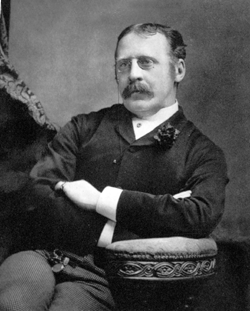
Every year on November 4, the international community commemorates G. E. Moore (Pioneering British Analytical Philosopher, Author of Principia Ethica & Cambridge Professor). Celebrated across United Kingdom and worldwide for defining contributions to philosophy, their life remains an inspiring beacon of human courage, vision, and excellence.
1. Early Foundations, Background & Formative Years
Born in Upper Norwood, London, on November 4, 1873, G. E. Moore was educated at Dulwich College before entering Trinity College, Cambridge, in 1892 to study classics and philosophy. At Cambridge, Moore formed a legendary intellectual partnership with Bertrand Russell. Together, they led the historic rebellion that shattered British Idealism (the dominant Hegelian philosophy of F. H. Bradley and J. M. E. McTaggart), establishing the realism and precision that founded modern 20th-century analytic philosophy.
In 1903, Moore published his magnum opus, Principia Ethica. In it, he revolutionized moral philosophy by arguing that "good" is a simple, non-natural, indefinable property—analogous to the color yellow—and that any attempt to define moral goodness in terms of natural properties (such as pleasure, utility, or evolutionary fitness) commits the "naturalistic fallacy". Moore concluded that the greatest intrinsic goods in human existence are the enjoyment of beautiful objects and the pleasures of human friendship, ideas that deeply influenced the Bloomsbury Group (including Virginia Woolf, John Maynard Keynes, and Lytton Strachey).
As Professor of Philosophy at Cambridge and long-time editor of the philosophical journal Mind (1921–1947), Moore was renowned for his celebrated "Here is one hand" defense of common sense against philosophical skepticism. Known for his extraordinary intellectual honesty, moral sweetness, and relentless clarity, Moore was awarded the Order of Merit in 1951, cementing his legacy as a titan of modern philosophical thought.
Growing up in United Kingdom, G. E. Moore was guided by an innate curiosity, unwavering discipline, and a refusal to accept mediocrity. These formative experiences forged the intellectual and moral bedrock that would later define their world-changing accomplishments.
2. Groundbreaking Breakthroughs & Monumental Achievements
George Edward Moore was one of the founding fathers of modern analytic philosophy alongside Bertrand Russell and Ludwig Wittgenstein, renowned for his ethical treatise *Principia Ethica* (1903), his concept of the "naturalistic fallacy", and his famous common-sense defense of external reality.
Throughout their career, G. E. Moore surmounted institutional obstacles, skepticism, and severe adversity. Through unyielding resolve, they established new benchmarks in philosophy that continue to shape the modern world.
3. Cultural Resonance, Philosophy & World Impact
The philosophical principles embodied by G. E. Moore extend far beyond regional frontiers. Admirers and scholars across Europe, the Americas, Africa, Asia, and Oceania recognize their timeless contribution to human progress, ethical leadership, and creative mastery.
4. Key Milestones & Notable Works
Notable Achievements & Works
- Principia Ethica (1903 landmark treatise defining meta-ethics and the naturalistic fallacy)
- "A Defence of Common Sense" (1925 influential epistemological essay)
- "Proof of an External World" (1939 famous "Here is one hand" paper against skepticism)
- "The Refutation of Idealism" (1903 pioneering paper founding modern philosophical realism)
- Editor of the premier philosophy journal Mind (1921–1947) & Order of Merit (1951)
5. Enduring Legacy for Future Generations
On November 4, we reflect upon a legacy that transcends time. For aspiring students, creators, and leaders everywhere, the journey of G. E. Moore serves as proof that conviction, mastery, and dedication leave an indelible mark upon human history.