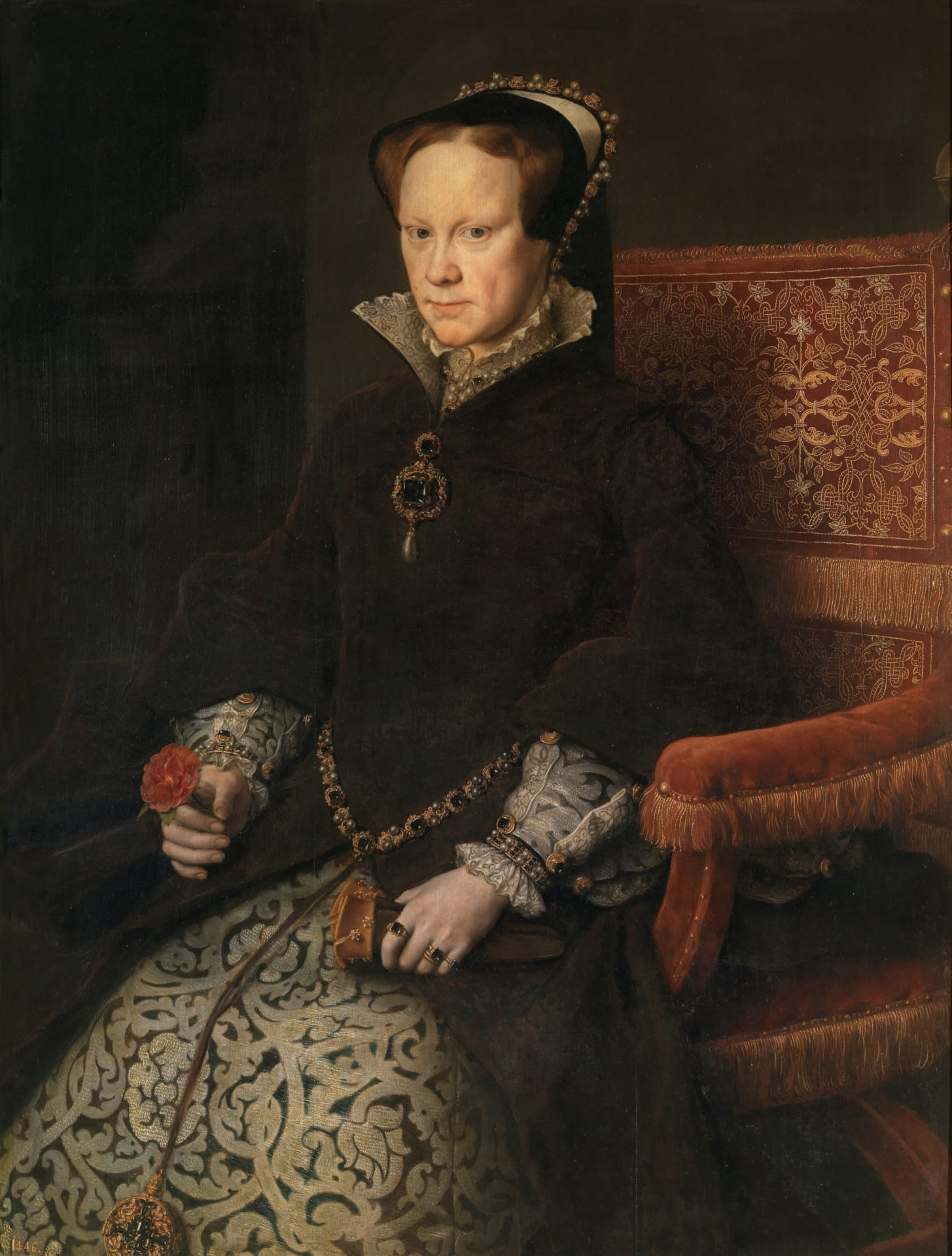
Queen Mary I (1516 – 1558) was a towering figure in England and world history, widely celebrated as Queen of England and Ireland (1553–1558), First Queen Regnant of England. Their transformative contributions left an enduring imprint on human civilization.
At a Glance: Queen Mary I
Major Historical Impact & Defining Contributions
Born on February 18, 1516, at the Palace of Placentia, Mary Tudor was the only surviving child of King Henry VIII and his first wife, Catherine of Aragon. Highly educated in Latin, French, Spanish, music, and philosophy by humanists such as Juan Luis Vives, Mary enjoyed royal status until her father's obsessive quest for a male heir led to his divorce from Catherine, England's break with Rome, and Mary's illegitimation. Stripped of her title as princess and pressured for years to renounce her Catholic faith and her mother's memory, Mary displayed legendary stubborn courage, steadfastly refusing to compromise her conscience. Following the brief reign and premature death of her Protestant half-brother Edward VI in July 1553, the Duke of Northumberland attempted to usurp the crown by installing Lady Jane Grey. In an extraordinary display of decisive leadership, Mary fled to East Anglia, raised a loyal provincial army, and marched into London amidst euphoric popular acclaim to claim her rightful inheritance as England's first queen regnant. As sovereign, Mary enacted crucial constitutional precedents: the Act of Parliament of 1554 formally confirmed that a queen regnant possessed all the regal powers and jurisdictions of a king. Her administration achieved vital fiscal and naval reforms, reorganizing the Royal Navy and establishing the modern Book of Rates (1558) that stabilized English customs revenue for centuries. Seeking to restore England to Roman Catholicism, she married King Philip II of Spain and reinstated heresy laws, leading to the execution of approximately 280 Protestant dissenters (an action that later earned her the hostile moniker 'Bloody Mary' in Protestant historiography). Mary died on November 17, 1558, at St James's Palace at age forty-two, succeeded by her half-sister Elizabeth I, leaving an indelible constitutional legacy as England's first crowned female monarch.
Key Milestones, Works & Enduring Achievements
Throughout an extraordinary journey, Queen Mary I established landmark milestones that continue to inspire scholars, creators, and leaders:
- Act Concerning Regal Power (1554 - Constitutional milestone establishing equal power of Queen Regnant)
- Restoration of Catholic Liturgy and Papal Jurisdiction in England (1553–1555)
- Overthrow of the Lady Jane Grey Usurpation to Claim the Throne (1553)
- The Book of Rates (1558 - Financial reform establishing modern English customs revenue)
- Expansion of Royal Navy Infrastructure and Maritime Defense
Enduring Philosophy & Timeless Words
Reflecting on human nature, duty, and excellence, Queen Mary I also observed:
Read All Curated Quotes & Tributes
Explore our comprehensive collection of inspiring quotes, personal reflections, and historical tributes honoring Queen Mary I on November 17.