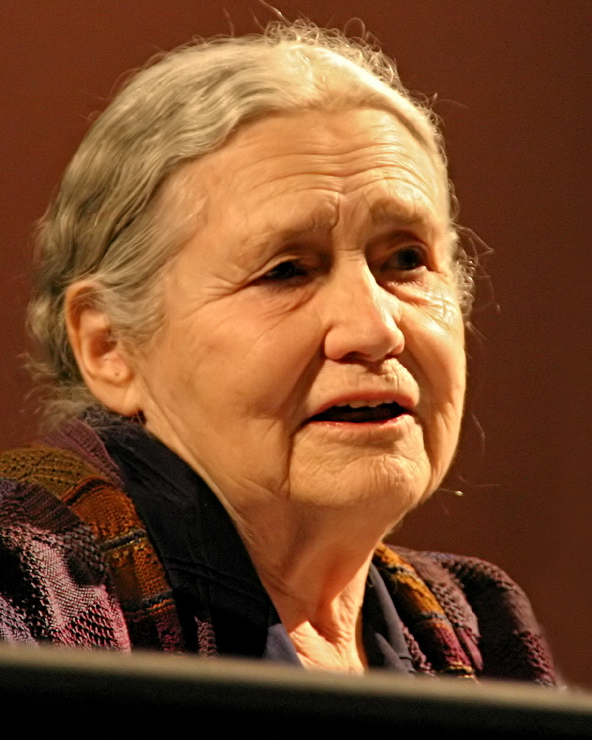
Doris Lessing (1919 – 2013) was a towering figure in United Kingdom and world history, widely celebrated as Nobel Laureate British Novelist, Essayist, and Feminist Literary Icon. Their transformative contributions left an enduring imprint on human civilization.
At a Glance: Doris Lessing
Major Historical Impact & Defining Contributions
Born on October 22, 1919, in Kermanshah, Persia (now Iran), to British parents, Doris May Tayler moved with her family in 1925 to a remote farm in Southern Rhodesia (now Zimbabwe). Growing up on an isolated maize farm amidst the racial brutalities of British colonial rule, Lessing educated herself through voracious reading of 19th-century European literature after leaving formal schooling at age fourteen. Working as a nursemaid, telephone operator, and journalist in Salisbury, she became involved with radical anti-colonial communist groups. In 1949, following two divorces, Lessing moved to London with her youngest son and the manuscript of her debut novel, 'The Grass Is Singing' (1950), a devastating psychological exposé of colonial racism that achieved instant critical acclaim. Over the 1950s, she published the semi-autobiographical 'Children of Violence' series, following heroine Martha Quest. In 1962, Lessing published her magnum opus, 'The Golden Notebook'. Structuring the narrative into four separate notebooks kept by the protagonist Anna Wulf—black for her African experiences, red for her communist disillusionment, yellow for an emotional novel-in-progress, and blue for a personal psychiatric diary—which culminate in a fifth unifying golden notebook, the novel became an international landmark of feminist literature, narrative fragmentation, and psychological trauma. In later years, Lessing radically crossed genres, composing visionary speculative fiction with the five-volume 'Canopus in Argos: Archives' series (1979–1983) and exploring Sufi philosophy under the mentorship of Idries Shah. In 2007, at the age of eighty-eight, Lessing was awarded the Nobel Prize in Literature—becoming the oldest person to win the award and only the eleventh woman—lauded by the Swedish Academy as 'that epicist of the female experience, who with scepticism, fire and visionary power has subjected a divided civilisation to scrutiny.' Lessing passed away in London on November 17, 2013, at age ninety-four.
Key Milestones, Works & Enduring Achievements
Throughout an extraordinary journey, Doris Lessing established landmark milestones that continue to inspire scholars, creators, and leaders:
- The Golden Notebook (1962 - Masterpiece of narrative fragmentation and female consciousness)
- The Grass Is Singing (1950 - Landmark debut exposing colonial racial psychology)
- Children of Violence Series (Martha Quest, 1952–1969 - Five-novel autobiographical saga)
- Canopus in Argos: Archives (1979–1983 - Pioneering speculative philosophical series)
- Under My Skin: Volume One of My Autobiography (1994 - James Tait Black Memorial Prize)
Enduring Philosophy & Timeless Words
Reflecting on human nature, duty, and excellence, Doris Lessing also observed:
Read All Curated Quotes & Tributes
Explore our comprehensive collection of inspiring quotes, personal reflections, and historical tributes honoring Doris Lessing on November 17.