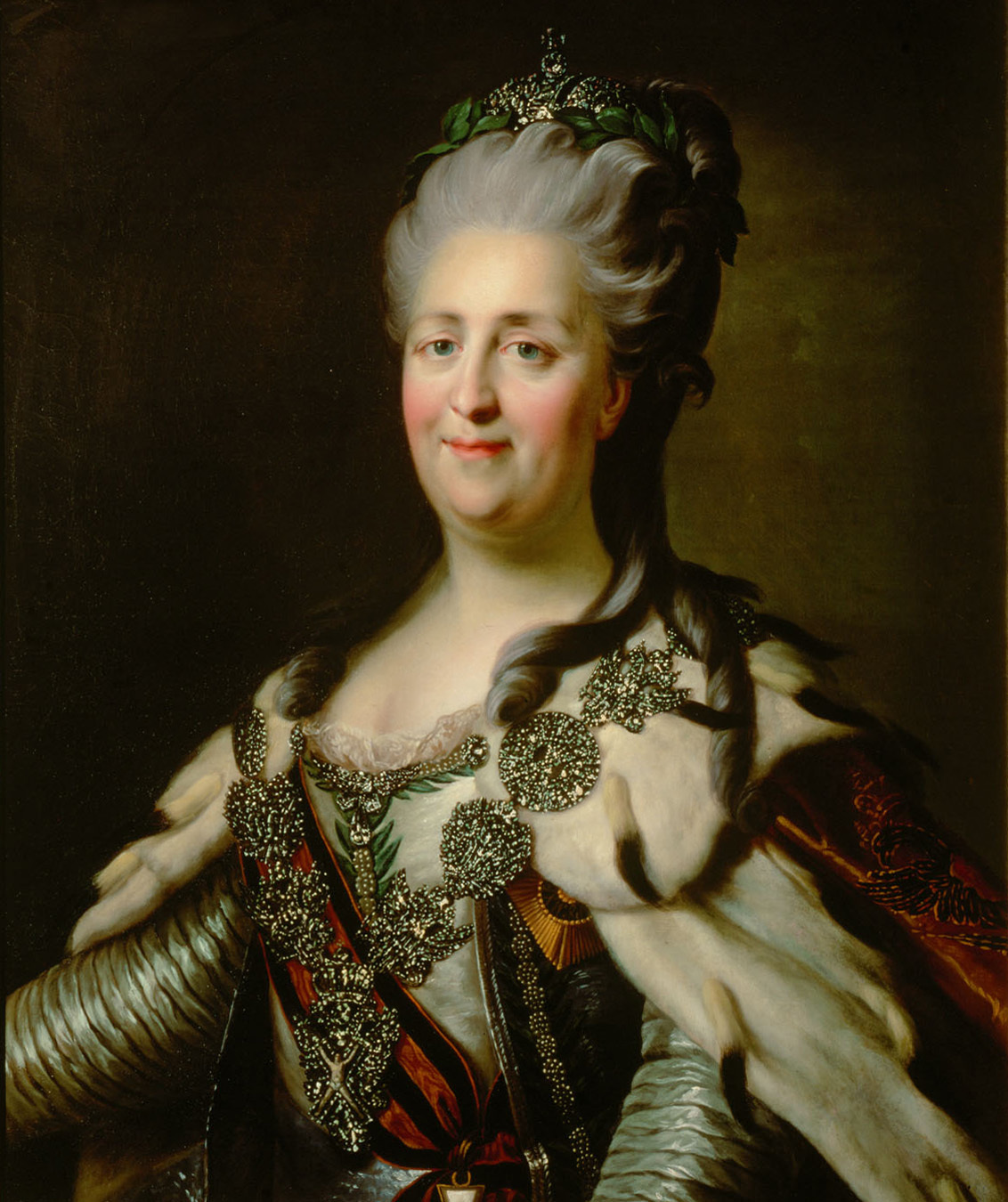
Catherine the Great (1729 – 1796) was a towering figure in Russia and world history, widely celebrated as Empress of All Russia (1762–1796) and Enlightened Monarch. Their transformative contributions left an enduring imprint on human civilization.
At a Glance: Catherine the Great
Major Historical Impact & Defining Contributions
Born on May 2, 1729, in Stettin, Prussia, as Princess Sophie of Anhalt-Zerbst, Catherine arrived in Russia at age fourteen to marry Grand Duke Peter, the heir to the Russian imperial throne. Mastering the Russian language, converting to Russian Orthodoxy, and immersing herself in Enlightenment philosophy, Catherine cultivated the devotion of the Russian court and military guard while her husband alienated them. In July 1762, following a bloodless coup against her erratic husband Emperor Peter III, Catherine was proclaimed Empress Regnant of Russia. An avid intellectual correspondent of Voltaire, Denis Diderot, and the French Encyclopedists, Catherine governed as an 'enlightened despot'. In 1767, she drafted the 'Nakaz' (Instruction), a groundbreaking legal treatise drawing on Montesquieu and Beccaria that advocated for legal equality, humane judicial standards, and religious tolerance. In 1764, she founded the Smolny Institute in Saint Petersburg, the first state-financed higher education institution for women in Europe, and established the Hermitage collection by acquiring thousands of masterworks. In public health, she demonstrated supreme personal bravery by publicly inoculating herself and her son against smallpox in 1768, sparking nationwide vaccination campaigns. In foreign policy, Catherine's military commanders, led by Prince Grigory Potemkin and Marshal Alexander Suvorov, won decisive victories over the Ottoman Empire, securing access to the Black Sea and annexing the Crimean peninsula in 1783, where she founded cities including Sevastopol and Odessa. Passing away on November 17, 1796, in Saint Petersburg at age sixty-seven, Catherine remains Russia's longest-ruling female monarch and an immortal titan of world history.
Key Milestones, Works & Enduring Achievements
Throughout an extraordinary journey, Catherine the Great established landmark milestones that continue to inspire scholars, creators, and leaders:
- The Nakaz (Instruction of Catherine the Great, 1767 - Enlightenment legal code)
- Founding of the State Hermitage Museum in Saint Petersburg (1764)
- Establishment of the Smolny Institute for Noble Maidens (First state school for women, 1764)
- Annexation of Crimea and Foundation of the Black Sea Fleet (1783)
- Charter to the Nobility and Charter of the Towns (1785 - Administrative modernization)
Enduring Philosophy & Timeless Words
Reflecting on human nature, duty, and excellence, Catherine the Great also observed:
Read All Curated Quotes & Tributes
Explore our comprehensive collection of inspiring quotes, personal reflections, and historical tributes honoring Catherine the Great on November 17.