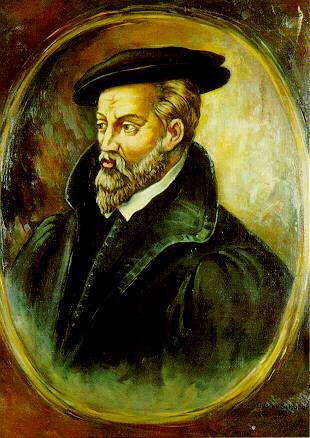
Heinrich von Kleist (1777 – 1811) was a towering figure in Germany and world history, widely celebrated as German Romantic Dramatist, Poet & Novellist. Their transformative contributions left an enduring imprint on human civilization.
At a Glance: Heinrich von Kleist
The Tempestuous Flame of German Drama: Heinrich von Kleist
On November 21, 1811, on the tranquil wooded banks of the Kleiner Wannsee near Berlin, thirty-four-year-old Bernd Heinrich Wilhelm von Kleist shot his terminally ill companion Henrietta Vogel and then turned the pistol on himself. Misunderstood and rejected by contemporary arbiters of taste like Johann Wolfgang von Goethe, Kleist left behind a body of dramatic and prose literature of such shocking modernity, psychological violence, and breathless narrative fury that twentieth-century modernism claimed him as its true forefather.
1. The Prussian Officer and the 'Kant-Krise'
Born into an elite Prussian Junker military family, Kleist served as a guards officer before resigning in disgust in 1799 to study mathematics and philosophy. In March 1801, his world collapsed when he read Immanuel Kant's epistemology. Concluding that human reason cannot perceive things as they truly are, but only through subjective sensory filters, Kleist plunged into his famous 'Kant-Krise':
'If all people had green glasses instead of eyes, they would have to believe that the objects they see are green... My sole, highest aim has collapsed, and I have no other.' Rather than surrender to despair, Kleist decided that art, not logic, was the only vessel capable of expressing the paradoxical, chaotic nature of human existence.
2. The Masterpieces: Michael Kohlhaas and The Prince of Homburg
In his 1810 novella Michael Kohlhaas, Kleist created one of world literature's most formidable anti-heroes. When an arrogant Junker nobleman illegally confiscates and starves Kohlhaas's prize horses and corrupt courts dismiss his petitions, the pious horse-dealer burns castles and leads an apocalyptic peasant insurrection demanding pure justice. Franz Kafka famously declared that he could not read Michael Kohlhaas without trembling.
In Prinz Friedrich von Homburg (1810), Kleist explored a young cavalry officer who wins a battle for Prussia by disobeying tactical orders while in a somnambulistic dream-state. Condemned to death by his sovereign uncle, the Prince must navigate existential terror and romantic idealism before achieving moral transcendence.
3. On the Marionette Theatre and Enduring Legacy
In his brilliant 1810 essay On the Marionette Theatre (Über das Marionettentheater), Kleist formulated a groundbreaking theory of modern aesthetics. He argued that human self-consciousness produces awkward clumsiness; supreme physical and artistic grace belongs only to the unthinking wooden puppet moved by mechanical gravity, or to the infinite consciousness of God. Human beings, having eaten of the tree of knowledge, must journey through infinite consciousness to regain their lost paradise.
Ignored in his lifetime, Kleist's explosive works are now core staples of the global theatrical repertoire. His grave at the Wannsee has become a place of literary pilgrimage, honoring a genius who burned with too fierce a passion for a cold world.
Key Milestones, Works & Enduring Achievements
Throughout an extraordinary journey, Heinrich von Kleist established landmark milestones that continue to inspire scholars, creators, and leaders:
- Michael Kohlhaas (1810) [Novella]: Epic tale of an honorable horse-trader driven to furious rebellion by bureaucratic injustice; celebrated by Kafka as one of world literature's greatest novellas.
- The Prince of Homburg (Prinz Friedrich von Homburg) (1810) [Drama]: Psychological masterpiece exploring a Prussian military officer caught between individual intuition, dream-states, and strict martial law.
- The Broken Jug (Der zerbrochne Krug) (1806) [Comedy Play]: Masterpiece of German courtroom comedy featuring a corrupt judge who must try a case in which he himself is the guilty culprit.
- Penthesilea (1808) [Tragedy]: Ferocious tragedy depicting the Amazon queen Penthesilea and Greek warrior Achilles, exploring the destructive intersection of love and war.
- On the Marionette Theatre (Über das Marionettentheater) (1810) [Philosophical Essay]: Profound aesthetic essay arguing that pure grace belongs only to the unthinking puppet or the infinite consciousness of God.
Enduring Philosophy & Timeless Words
Reflecting on human nature, duty, and excellence, Heinrich von Kleist also observed:
Read All Curated Quotes & Tributes
Explore our comprehensive collection of inspiring quotes, personal reflections, and historical tributes honoring Heinrich von Kleist on November 21.