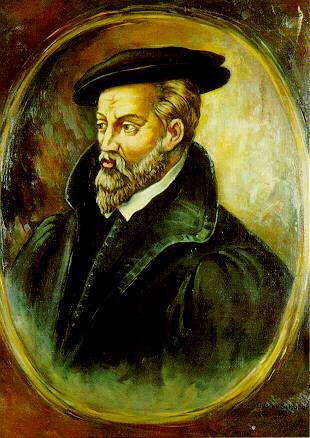
Georgius Agricola (1494 – 1555) was a towering figure in Germany and world history, widely celebrated as Renaissance Scholar, Physician & 'Father of Mineralogy'. Their transformative contributions left an enduring imprint on human civilization.
At a Glance: Georgius Agricola
The Father of Mineralogy: Georgius Agricola
On November 21, 1555, in Chemnitz, Saxony, the Renaissance lost one of its most rigorous empirical minds with the death of Georgius Agricola (born Georg Bauer). At a time when European mining and metallurgy were choked with alchemical superstitions, demonic folklore, and mystical astrology, Agricola applied direct observation, chemical experimentation, and precise mechanical engineering, laying the foundational stones of modern mineralogy, economic geology, and occupational medicine.
1. From Medical Practice to Underground Silver Veins
Educated in classical philology and medicine at Leipzig, Bologna, and Padua, Agricola was appointed municipal physician in 1527 in the boomtown of Joachimsthal in the Ore Mountains. At the time, Joachimsthal was Europe's premier silver mining center, where silver coins (Joachimsthalers, the linguistic ancestor of the modern word 'dollar') were minted by the millions.
Fascinated by mining engineering, Agricola spent every spare moment underground with miners. He studied the rock strata, sketched timber shoring and drainage pumps, and analyzed the devastating respiratory ailments of underground workers, becoming the first physician in history to identify and document occupational silicosis and advocate for mechanical mine ventilation.
2. De Natura Fossilium: Modern Mineral Classification
In 1546, Agricola published De Natura Fossilium ('On the Nature of Fossils', with 'fossil' meaning anything dug from the earth). Rejecting the scholastic alchemical belief that metals grew inside the earth like plants under planetary astrological influence, Agricola introduced the first modern classification of minerals based on empirical physical properties: hardness, color, weight, transparency, luster, cleavage, and solubility.
3. De Re Metallica: The Renaissance Engineering Masterpiece
Agricola's magnum opus, De Re Metallica ('On the Nature of Metals'), was completed in 1550 and published posthumously in Basel in 1556. Spanning twelve massive volumes illustrated with 292 exquisite, detailed woodcuts, the work was a comprehensive encyclopedia of sixteenth-century engineering.
Agricola illustrated horse-powered suction pumps, reversible water wheels, assaying balances, blast furnaces, and chemical separation processes for gold, silver, copper, and lead. In 1912, American mining engineer and future U.S. President Herbert Hoover and his geologist wife Lou Henry Hoover published the definitive English translation, painstakingly testing Agricola's formulas in modern laboratories and confirming their astonishing empirical accuracy. Agricola's legacy remains immortal in every modern mine, geological survey, and mineralogy department on Earth.
Key Milestones, Works & Enduring Achievements
Throughout an extraordinary journey, Georgius Agricola established landmark milestones that continue to inspire scholars, creators, and leaders:
- De Re Metallica Libri XII (On the Nature of Metals) (1556) [Encyclopedic Scientific Treatise]: Monumental 12-volume illustrated masterwork on mining engineering, geology, and smelting that served as the global standard for 200 years.
- De Natura Fossilium (On the Nature of Fossils/Minerals) (1546) [Mineralogical Classification]: First comprehensive scientific classification of minerals and geological formations based on physical properties rather than alchemy.
- First Description of Occupational Lung Disease in Miners (1528) [Occupational Medicine]: Documented silicosis and toxic fumes in underground silver mines, advocating for forced air ventilation systems.
- De Ortu et Causis Subterraneorum (1544) [Physical Geology Treatise]: Pioneered physical geology by explaining how underground waters and subterranean heat create mineral veins and shape earth strata.
- 1912 English Translation by Herbert & Lou Henry Hoover (1912) [Modern Scholarship]: Historic scholarly translation published by future U.S. President Herbert Hoover, validating Agricola's sixteenth-century engineering accuracy.
Enduring Philosophy & Timeless Words
Reflecting on human nature, duty, and excellence, Georgius Agricola also observed:
Read All Curated Quotes & Tributes
Explore our comprehensive collection of inspiring quotes, personal reflections, and historical tributes honoring Georgius Agricola on November 21.