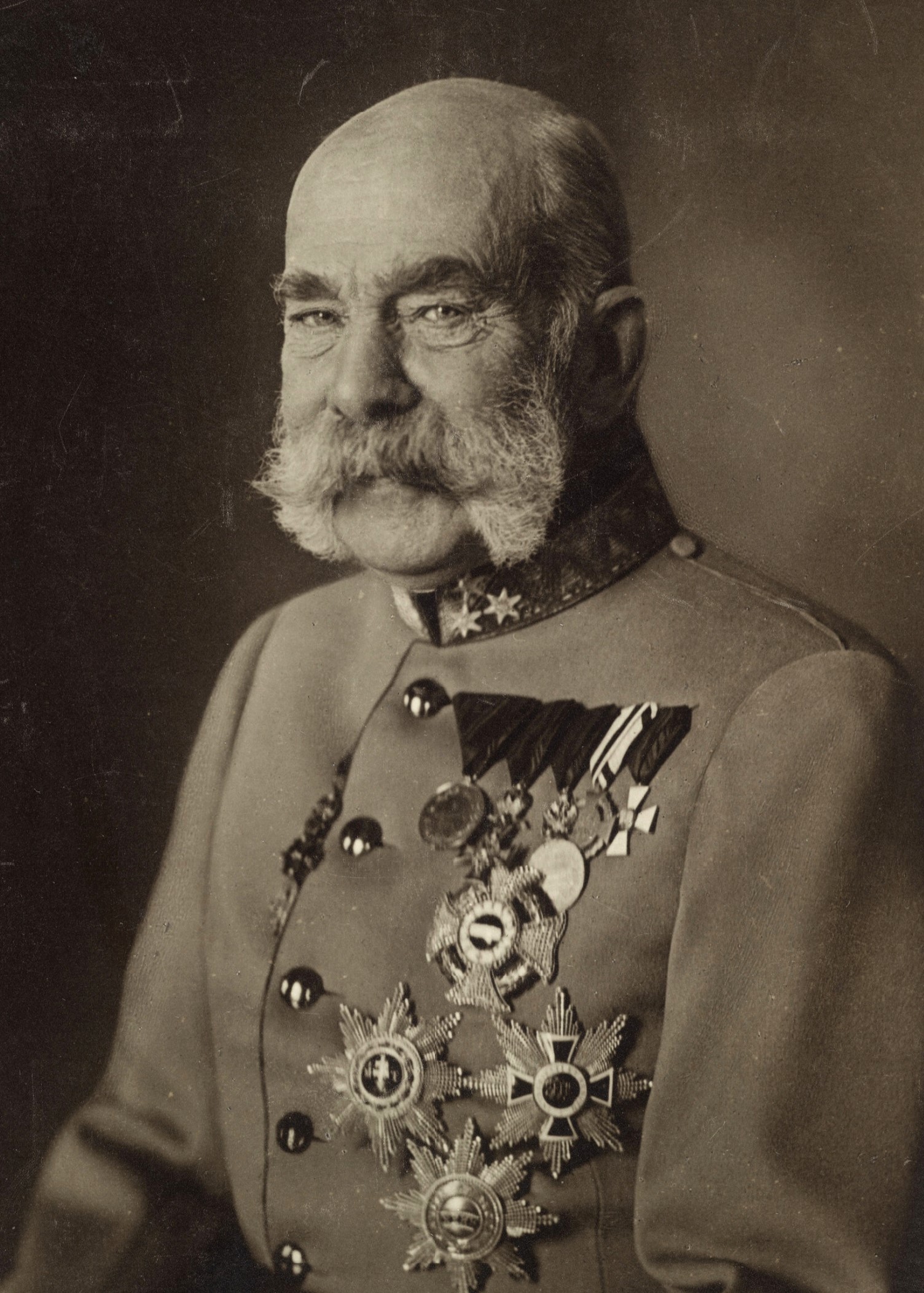
Franz Joseph I of Austria (1830 – 1916) was a towering figure in Austria and world history, widely celebrated as Emperor of Austria & King of Hungary (Reigned 1848–1916). Their transformative contributions left an enduring imprint on human civilization.
At a Glance: Franz Joseph I of Austria
The Last Emperor of the Old World: Franz Joseph I
On November 21, 1916, in the midst of the bloodiest conflict Europe had ever witnessed, eighty-six-year-old Emperor Franz Joseph I died in his modest iron bed at Schönbrunn Palace in Vienna. Ascending the throne at eighteen during the European revolutions of 1848, Franz Joseph reigned for sixty-eight years over a sprawling multinational realm of fifty-two million people speaking eleven languages. His death symbolized the final eclipse of old-world European aristocratic chivalry and the impending collapse of the Habsburg Empire.
1. Ascent Amid Revolution and the Imperial Work Ethic
In December 1848, with Vienna engulfed in revolutionary barricades and Emperor Ferdinand I abdicating, eighteen-year-old Franz Joseph was thrust onto the throne. Guided by Prime Minister Prince Felix of Schwarzenberg, he crushed Hungarian and Italian rebellions with unyielding severity.
Yet Franz Joseph viewed himself not as an absolute tyrant, but as the 'first bureaucrat of the empire'. Rising at 4:00 AM every morning in his unadorned room, he spent twelve hours at his desk personally reviewing military dispatches, judicial pardons, and administrative appointments, earning the affectionate respect of subjects across Austria, Hungary, Bohemia, and Galicia.
2. The Ringstraße and the Ausgleich of 1867
In 1857, Franz Joseph signed the historic decree ordering the demolition of Vienna's medieval city walls. In their place rose the glorious Ringstraße, a grand boulevard flanked by the Neo-Gothic Rathaus, the Greek Revival Parliament, the Court Opera, and imperial museums. The Ringstraße provided the physical stage for Vienna's fin-de-siècle cultural renaissance.
Following military defeat by Otto von Bismarck's Prussia at Königgrätz in 1866, Franz Joseph demonstrated pragmatic statesmanship. Recognizing that the empire could not survive without Hungarian cooperation, he negotiated the historic Compromise of 1867 (Ausgleich), creating the Dual Monarchy of Austria-Hungary. Crowning himself King of Hungary in Budapest alongside his beloved Empress Elisabeth ('Sisi'), he secured another half-century of imperial stability.
3. Dynastic Tragedy and the Sarajevo Precipice
Despite his imperial grandeur, Franz Joseph's personal life was an unrelenting Greek tragedy. His brother Maximilian was shot by a firing squad in Mexico in 1867. In 1889, his only son and heir, Crown Prince Rudolf, died in a murder-suicide pact at Mayerling. In 1898, an Italian anarchist assassinated Empress Sisi on the shores of Lake Geneva, leaving Franz Joseph devastated: 'Nothing is spared me on this earth.'
The final catastrophe arrived on June 28, 1914, when his nephew Archduke Franz Ferdinand was assassinated in Sarajevo. Reluctantly acquiescing to hawkish generals, Franz Joseph signed the ultimatum to Serbia: 'To My Peoples! It was my fervent wish to consecrate the years which, by God's grace, are still vouchsafed to me, to the works of peace...' World War I was unleashed.
4. The Passing of an Era
Working at his desk until his final hours on November 20, Franz Joseph died of pneumonia on the evening of November 21, 1916. His grand funeral procession through the cold streets of Vienna to the Imperial Crypt (Kapuzinergruft) was the death march of the Habsburg monarchy, which dissolved barely two years later.
Key Milestones, Works & Enduring Achievements
Throughout an extraordinary journey, Franz Joseph I of Austria established landmark milestones that continue to inspire scholars, creators, and leaders:
- Austro-Hungarian Compromise (Ausgleich) (1867) [Constitutional Treaty]: Transformed the Austrian Empire into the Dual Monarchy of Austria-Hungary, sharing sovereign defense, diplomacy, and finance.
- Construction of Vienna's Ringstraße (1857) [Urban Planning Masterpiece]: Ordered the demolition of medieval city fortifications, constructing the magnificent Ringstraße boulevard with parliament, opera, and museums.
- Reign of 68 Years (1848–1916) (1916) [Imperial Sovereignty]: One of the longest reigns in recorded world history, unifying eleven distinct nationalities under a single Habsburg crown.
- Decembrist Constitution of 1867 (1867) [Legal Reform]: Guaranteed fundamental civil rights, equality before the law, freedom of religion, and minority language rights across Cisleithania.
- Patronage of Central European Arts and Science (1890) [Cultural Flowering]: Fostered the flourishing of Vienna as the intellectual epicenter of modern medicine, psychoanalysis, art nouveau, and classical music.
Enduring Philosophy & Timeless Words
Reflecting on human nature, duty, and excellence, Franz Joseph I of Austria also observed:
Read All Curated Quotes & Tributes
Explore our comprehensive collection of inspiring quotes, personal reflections, and historical tributes honoring Franz Joseph I of Austria on November 21.