🇺🇸 United States
Tuesday, November 10, 2026
Eugene Wigner — Biography, Quotes & Tribute
Famous People Birthday Celebration Nobel Laureate Theoretical Physicist and Mathematician • Hungary 1902 — 1995

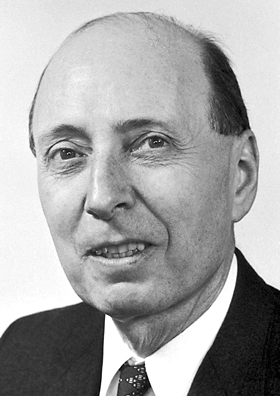
Eugene Wigner

Wigner Jenő Pál

Eugene Wigner was a Hungarian-American theoretical physicist and mathematician who received the 1963 Nobel Prize in Physics for introducing group theory and fundamental symmetry principles to quantum mechanics, and who designed the first operational nuclear reactors for the Manhattan Project.

Standalone Editorial Biography & Legacy Guide 3 min read • 0 views

Eugene Wigner Biography: Historical Milestones, Life Achievements & Lasting Legacy

Eugene Wigner was a Hungarian-American theoretical physicist and mathematician who received the 1963 Nobel Prize in Physics for introducing group theory and fundamental symmetry principles t...

Read Full Editorial Biography & Historical Legacy →
Master Collection: 50+ Quotes & Birthday Wishes 309 likes • 334 copies

30+ Eugene Wigner Quotes, Birthday Tributes & Inspiring Reflections (November 17)

<p class="lead">Honor the extraordinary legacy of <strong>Eugene Wigner</strong> on November 17 with these curated quotes, philosophical reflections, and heartfelt tributes celebrating their monumental impact on Nobel Laureate Theoretical Physicist and Mathematician.</p>

Explore 50+ Quotes, Wishes & Tributes →

Life & Legacy Overview

Born on November 17, 1902, in Budapest into a cultured Jewish family, Eugene Paul Wigner attended the famous Fasori Lutheran Gymnasium alongside his lifelong friend John von Neumann. Moving to Berlin, he earned his doctorate in chemical engineering at the Technical University of Berlin while attending theoretical physics colloquia alongside Albert Einstein, Max Planck, and Werner Heisenberg. In the late 1920s, Wigner made a monumental contribution to physics by introducing the mathematical framework of group theory to quantum mechanics. His 1931 monograph 'Group Theory and Its Application to the Quantum Mechanics of Atomic Spectra' proved that fundamental symmetries in physical laws dictate the conservation laws of nature (such as parity and angular momentum). Emigrating to the United States in 1930 to join the faculty of Princeton University, Wigner became a central figure in nuclear physics, formulating the Breit-Wigner formula for nuclear resonance. In August 1939, alarmed by the Nazi threat, Wigner accompanied Leo Szilard to visit Albert Einstein, drafting the historic Einstein-Szilard letter to President Franklin D. Roosevelt that initiated the American atomic project. During the Manhattan Project at the University of Chicago Metallurgical Laboratory, Wigner headed the team that designed the water-cooled Hanford nuclear reactors (the B-Reactor), which produced the plutonium needed for the war effort, displaying unparalleled precision in nuclear engineering. In 1963, Wigner was awarded the Nobel Prize in Physics 'for his contributions to the theory of the atomic nucleus and the elementary particles, particularly through the discovery and application of fundamental symmetry principles.' In epistemology and philosophy of science, his seminal 1960 essay 'The Unreasonable Effectiveness of Mathematics in the Natural Sciences' remains an intellectual classic. Wigner died in Princeton, New Jersey, on January 1, 1995, at age ninety-two.
Notable Works / Milestones:
  • Group Theory and Its Application to Quantum Mechanics (1931 - Foundational treatise)
  • Nobel Prize in Physics (1963 - Symmetries in quantum and nuclear physics)
  • The Unreasonable Effectiveness of Mathematics in the Natural Sciences (1960)
  • Design of the Hanford B-Reactor (First full-scale production nuclear reactor, 1944)
  • Formulation of the Breit-Wigner Formula and Wigner's Friend Thought Experiment

Notable Quotes by Eugene Wigner View All 50+ →

"The miracle of the appropriateness of the language of mathematics for the formulation of the laws of physics is a wonderful gift which we neither understand nor deserve."
"Symmetry principles provide the structure upon which the laws of nature are built."
"Physics does not explain nature; it explains what we can say about nature."
"Mathematics is the science of skillful operations with concepts and rules invented just for this purpose."
"It is difficult to avoid the impression that a miracle has occurred when a purely mathematical formulation turns out to describe physical phenomena with astonishing precision."
"It was not possible to formulate the laws of quantum mechanics in a fully consistent way without reference to consciousness."
Key Historical Details
Category: Famous People
Subcategory: Birthday
Birthday: November 17 (1902)
Passed Away: January 1 (1995)
Birthplace: Budapest, Kingdom of Hungary
Profession: Nobel Laureate Theoretical Physicist and Mathematician
Birthday Hub

Explore all famous personalities, biographies, quotes, and wishes under Birthday.

Explore Birthday Hub →
Similar Personalities
F
Franz Liszt
Hungarian Composer, Virtuoso Pianist, Conductor & Pioneer of the Symphonic Poem
A
Albert Szent-Györgyi
Hungarian-American Biochemist, Nobel Laureate in Medicine (1937) & Discoverer of Vitamin C
F
Ferenc Puskás
Legendary Hungarian Footballer, Real Madrid Star, and FIFA Icon