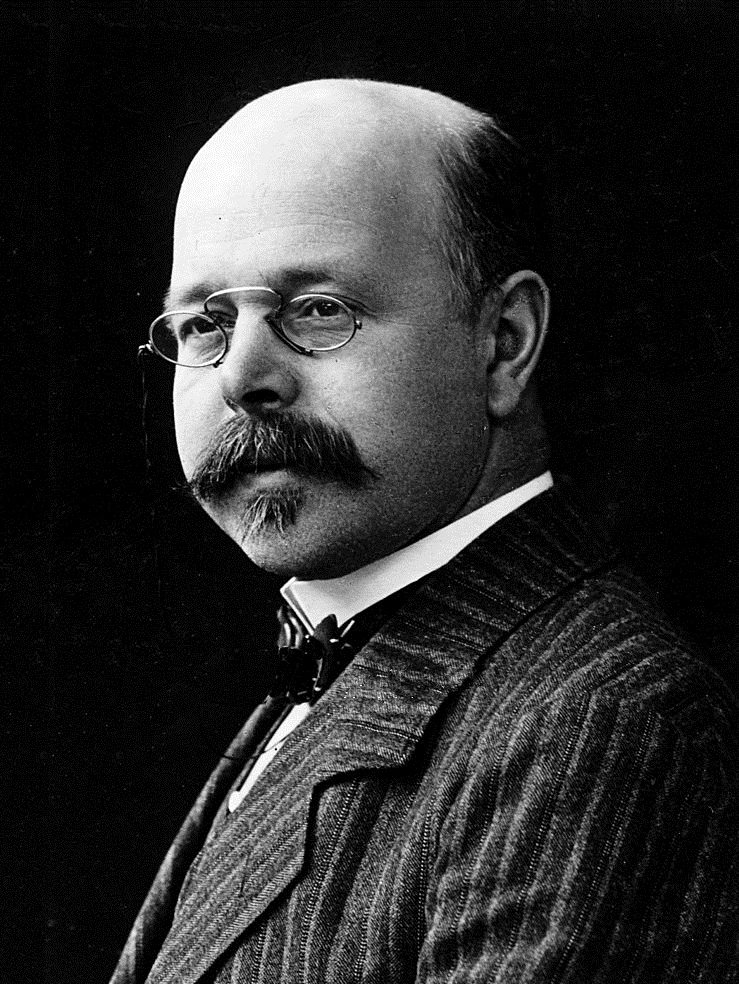
Walther Nernst (1864 – 1941) was a towering figure in Germany and world history, widely celebrated as Physical Chemist, Physicist & Nobel Laureate. Their transformative contributions left an enduring imprint on human civilization.
At a Glance: Walther Nernst
Major Historical Impact & Defining Contributions
Walther Hermann Nernst was born in West Prussia in 1864. Studying physics and chemistry at Zurich, Berlin, and Graz under Ludwig Boltzmann and Wilhelm Ostwald, Nernst quickly established himself as one of the founding fathers of modern physical chemistry. In 1889, at age 25, he formulated the Nernst Equation, which connects the reduction potential of an electrochemical reaction to the standard electrode potential, temperature, and chemical activities, forming the foundational bedrock of all modern electrochemistry, battery technology, and neurobiology (cell membrane potentials). In 1906, Nernst formulated his Heat Theorem, subsequently celebrated as the Third Law of Thermodynamics, which established that the entropy of a pure crystalline substance approaches a constant minimum value (zero) as absolute zero temperature (zero Kelvin) is approached, making absolute zero unattainable in a finite number of steps. This discovery was crucial for early quantum physics and earned Nernst the 1920 Nobel Prize in Chemistry. An eccentric genius, Nernst also invented the electric Nernst lamp in 1897 and co-organized the historic First Solvay Conference in 1911. Openly defiant of the Nazi regime and opposed to anti-Semitic persecutions, Nernst retired to his estate and died on November 18, 1941.
Key Milestones, Works & Enduring Achievements
Throughout an extraordinary journey, Walther Nernst established landmark milestones that continue to inspire scholars, creators, and leaders:
- Third Law of Thermodynamics (Nernst's Heat Theorem, 1906, Nobel Prize 1920)
- The Nernst Equation (Foundational mathematical formula of electrochemistry, 1889)
- Nernst Lamp (High-efficiency electric ceramic incandescent lamp, 1897)
- Theoretical Chemistry from the Standpoint of Avogadro's Rule and Thermodynamics (Classic textbook, 1893)
- Organization of the First Solvay Conference (With Ernest Solvay and Max Planck, 1911)
Enduring Philosophy & Timeless Words
Reflecting on human nature, duty, and excellence, Walther Nernst also observed:
Read All Curated Quotes & Tributes
Explore our comprehensive collection of inspiring quotes, personal reflections, and historical tributes honoring Walther Nernst on November 18.