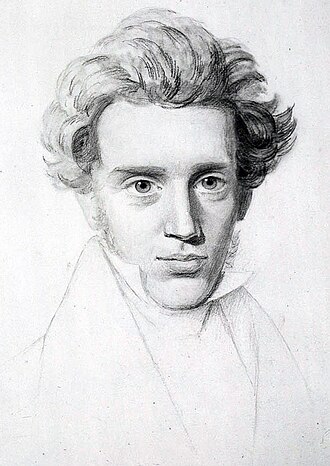
Every year on November 11, the world commemorates the extraordinary life and legacy of Søren Kierkegaard (Danish Philosopher, Theologian, Cultural Critic & Father of Christian Existentialism). Celebrated across Denmark and worldwide for defining contributions to philosophy, their life remains an inspiring beacon of human courage, vision, and excellence.
Fast Facts & Historical Significance
- Profession & Arena: Danish Philosopher, Theologian, Cultural Critic & Father of Christian Existentialism
- Nation of Origin: Denmark
- Historic Category: philosophy
- Historical Milestone: Celebrated on November 11 for enduring world impact
1. Early Foundations, Background & Formative Years
Søren Aabye Kierkegaard was born on May 5, 1813, in Copenhagen, Denmark, and passed away on November 11, 1855. Raised in an intensely devout Lutheran household by his father Michael, Kierkegaard studied theology and philosophy at the University of Copenhagen. His life was profoundly altered by his painful decision to break his engagement to Regine Olsen in 1841—a sacrifice he felt compelled to make in order to devote his entire intellectual being to God and philosophical authorship.
Operating outside the academic establishment, Kierkegaard waged an intellectual war against Hegelian systematic philosophy, which he argued reduced living human individuals into mere cogs in an abstract historical system. Writing under a dazzling array of pseudonyms (including Johannes de silentio, Victor Eremita, and Johannes Climacus), he introduced fundamental existential categories: the concept of existential dread (angst), the stages of life's way (aesthetic, ethical, and religious), and the subjective nature of truth.
In works like Either/Or (1843), Fear and Trembling (1843), and The Sickness Unto Death (1849), Kierkegaard argued that genuine faith is not an intellectual assent to church dogma, but an agonizing, radical commitment—a 'leap of faith'—made in the face of the absurd. Collapsing in the street in October 1855, Kierkegaard died on November 11, 1855, at age 42, having transformed the trajectory of modern Western theology, psychology, and philosophy.
Growing up in Denmark, Søren Kierkegaard was guided by an innate curiosity, unwavering discipline, and a refusal to accept mediocrity. These formative experiences forged the intellectual and moral bedrock that would later define their world-changing accomplishments.
2. Defining Achievements & Global Career Breakthroughs
Across decades of dedicated service and relentless practice, Søren Kierkegaard redefined standards of excellence in philosophy. Whether breaking barriers, innovating masterworks, or transforming public perception, their career represents the pinnacle of professional dedication.
3. Philosophy, Quotations & Guiding Worldview
Throughout their life, Søren Kierkegaard articulated profound insights into human potential, creative resilience, and moral responsibility. Their words continue to offer timeless guidance for succeeding generations.
4. Key Milestones & Notable Works
- Pioneered existential philosophy with 'Either/Or' (Enten-Eller, 1843)
- Dissected faith and the teleological suspension of the ethical in 'Fear and Trembling' (1843)
- Analyzed despair and existential psychology in 'The Sickness Unto Death' (1849)
- Explored anxiety and human freedom in 'The Concept of Anxiety' (1844)
- Critiqued conformist mass society in 'The Present Age' (1846)
5. The Enduring Legacy of Søren Kierkegaard
Generations of practitioners, scholars, and future leaders trace their inspiration directly to the path blazed by Søren Kierkegaard. Their courage reminds us that true greatness requires relentless perseverance, creative boldness, and a lifelong commitment to uplifting humanity.