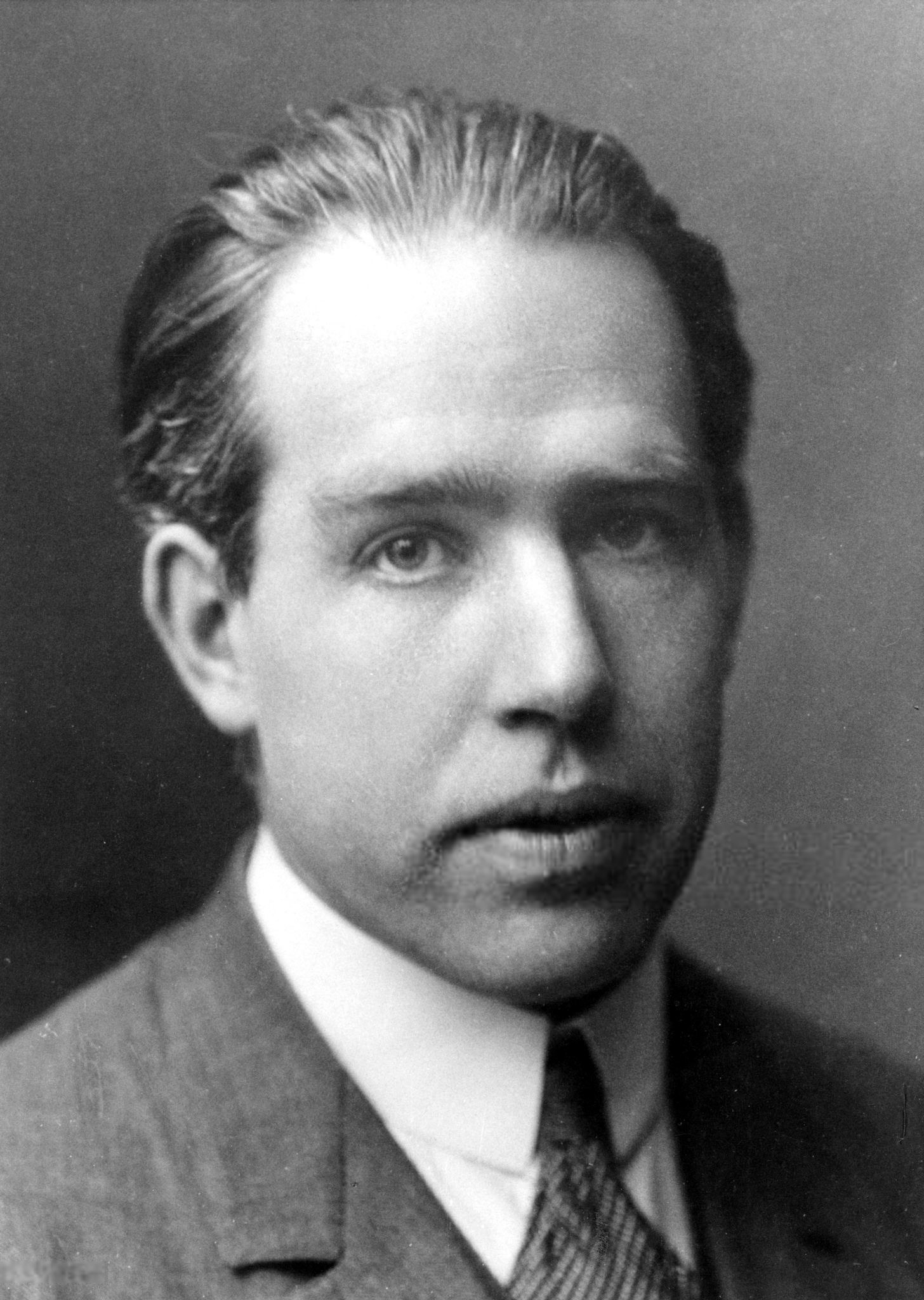
Niels Bohr (1885 – 1962) was a towering figure in Denmark and world history, widely celebrated as Theoretical Physicist & Nobel Laureate. Their transformative contributions left an enduring imprint on human civilization.
At a Glance: Niels Bohr
Major Historical Impact & Defining Contributions
Niels Bohr, born in Copenhagen in 1885, revolutionized modern science by introducing the quantum model of the atom in 1913. Blending Ernest Rutherford's nuclear model with Max Planck's quantum theory, Bohr proposed that electrons travel in discrete quantized orbits and emit or absorb electromagnetic radiation only when transitioning between fixed energy states, explaining the spectral lines of hydrogen. In 1921, he established the Institute for Theoretical Physics in Copenhagen, which became the global epicenter for the development of quantum mechanics, nurturing geniuses like Werner Heisenberg, Wolfgang Pauli, and Paul Dirac. Bohr formulated the principle of complementarity, asserting that quantum objects exhibit mutually exclusive yet equally fundamental wave and particle properties depending on the experimental setup. During World War II, Bohr escaped Nazi-occupied Denmark to assist the Manhattan Project at Los Alamos under the pseudonym Nicholas Baker. After the war, he devoted his life to promoting peaceful nuclear cooperation, penning his famous 1950 'Open Letter to the United Nations' advocating global scientific openness to prevent an atomic arms race. He died in Copenhagen on November 18, 1962.
Key Milestones, Works & Enduring Achievements
Throughout an extraordinary journey, Niels Bohr established landmark milestones that continue to inspire scholars, creators, and leaders:
- Bohr Model of the Atom (Quantized electron orbits, 1913)
- Nobel Prize in Physics (For investigations of atomic structure, 1922)
- Principle of Complementarity (Copenhagen interpretation of quantum mechanics, 1927)
- Liquid Drop Model of the Atomic Nucleus (With John Wheeler, 1939)
- Open Letter to the United Nations (Advocating global open science and nuclear peace, 1950)
Enduring Philosophy & Timeless Words
Reflecting on human nature, duty, and excellence, Niels Bohr also observed:
Read All Curated Quotes & Tributes
Explore our comprehensive collection of inspiring quotes, personal reflections, and historical tributes honoring Niels Bohr on November 18.