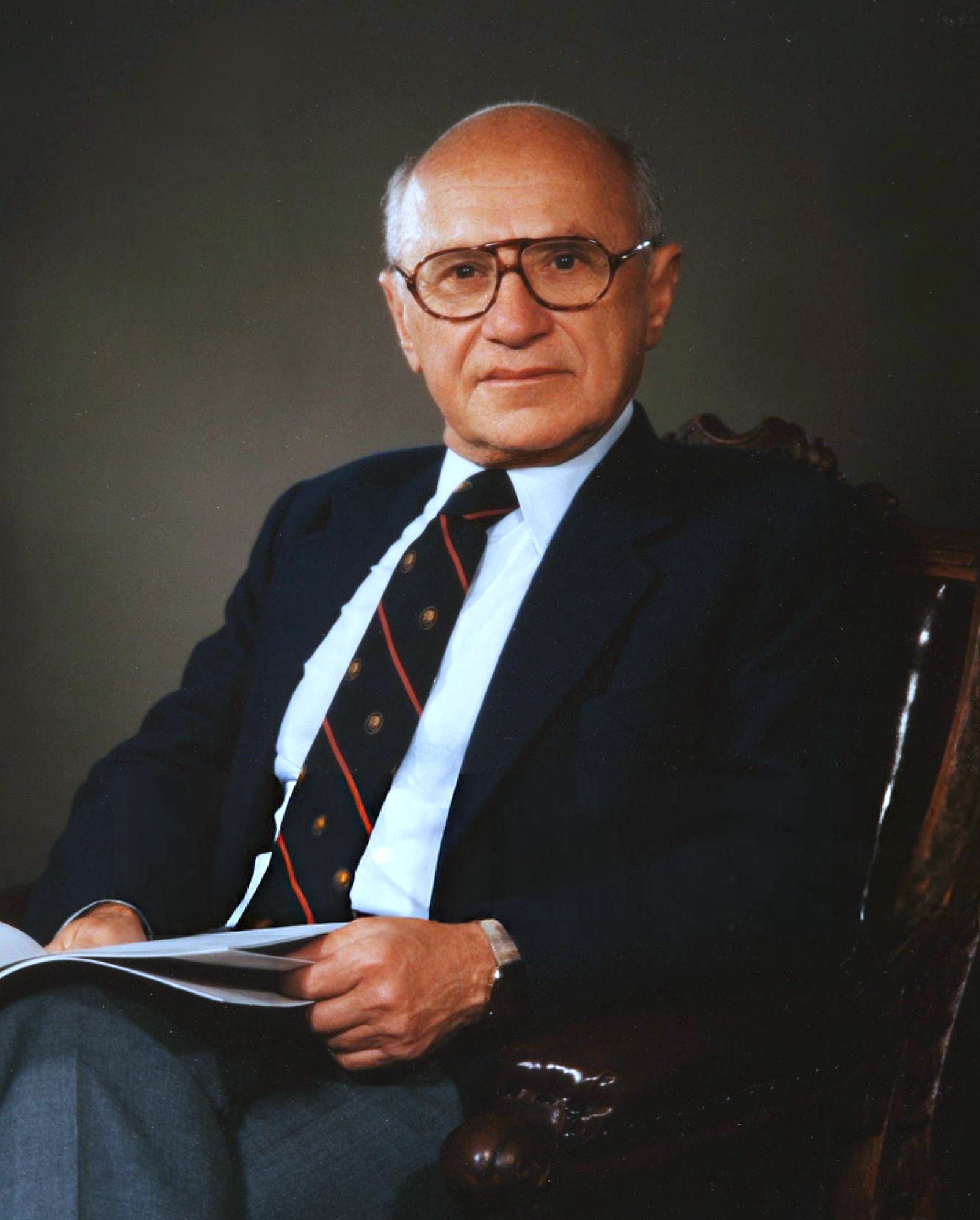
Milton Friedman (1912 – 2006) was a towering figure in United States and world history, widely celebrated as Nobel Laureate Economist, Monetarist Scholar, and Public Intellectual. Their transformative contributions left an enduring imprint on human civilization.
At a Glance: Milton Friedman
Major Historical Impact & Defining Contributions
Born on July 31, 1912, in Brooklyn, New York, to Jewish immigrant parents from Galicia, Milton Friedman demonstrated brilliant mathematical aptitude from a young age. He earned degrees from Rutgers University, the University of Chicago, and Columbia University. During World War II, Friedman worked at the National Bureau of Economic Research and the Division of War Research. In 1946, he joined the faculty of the University of Chicago, where he led the 'Chicago School of Economics' for more than three decades. Friedman fundamentally challenged prevailing Keynesian orthodoxy through rigorous empirical methodology. In 'A Theory of the Consumption Function' (1957), he formulated the permanent income hypothesis, demonstrating that consumer spending responds to long-term income expectations rather than transitory fluctuations. In 1963, collaborating with Anna Schwartz, he published 'A Monetary History of the United States, 1867–1960', which proved that the Great Depression was caused not by an inherent failure of capitalism, but by catastrophic monetary contraction orchestrated by the Federal Reserve. Friedman was awarded the Nobel Memorial Prize in Economic Sciences in 1976 for his achievements in the fields of consumption analysis, monetary history and theory, and for his demonstration of the complexity of stabilization policy. Beyond academia, his books 'Capitalism and Freedom' (1962) and 'Free to Choose' (1980)—the latter accompanied by an iconic PBS television series—popularized school choice vouchers, flexible exchange rates, and the elimination of military conscription. Friedman passed away on November 16, 2006, in San Francisco at age ninety-four, remembered as one of the most influential economic minds of the twentieth century.
Key Milestones, Works & Enduring Achievements
Throughout an extraordinary journey, Milton Friedman established landmark milestones that continue to inspire scholars, creators, and leaders:
- A Monetary History of the United States, 1867–1960 (with Anna Schwartz, 1963)
- Capitalism and Freedom (1962 - Seminal defense of individual liberty and free markets)
- Free to Choose (with Rose Friedman, 1980 - Bestselling book and PBS documentary)
- A Theory of the Consumption Function (1957 - Formulating the permanent income hypothesis)
- Essays in Positive Economics (1953 - Landmark treatise on economic methodology)
Enduring Philosophy & Timeless Words
Reflecting on human nature, duty, and excellence, Milton Friedman also observed:
Read All Curated Quotes & Tributes
Explore our comprehensive collection of inspiring quotes, personal reflections, and historical tributes honoring Milton Friedman on November 16.