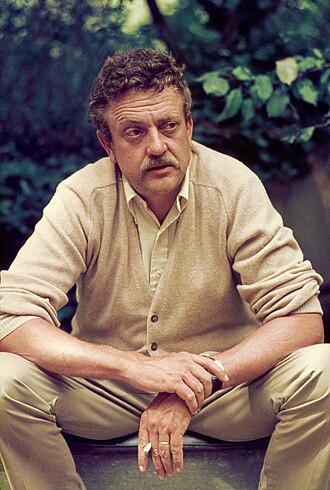
Every year on November 11, the world commemorates the extraordinary life and legacy of Kurt Vonnegut (American Satirist, Novelist, Essayist & Counterculture Literary Icon). Celebrated across United States and worldwide for defining contributions to literature, their life remains an inspiring beacon of human courage, vision, and excellence.
Fast Facts & Historical Significance
- Profession & Arena: American Satirist, Novelist, Essayist & Counterculture Literary Icon
- Nation of Origin: United States
- Historic Category: literature
- Historical Milestone: Celebrated on November 11 for enduring world impact
1. Early Foundations, Background & Formative Years
Kurt Vonnegut Jr. was born on November 11, 1922, in Indianapolis, Indiana. While studying biochemistry at Cornell University, he enlisted in the United States Army during World War II. Deployed to the European theater, Private Vonnegut was captured by German troops during the Battle of the Bulge in December 1944 and transferred to a prisoner-of-war camp in Dresden.
In February 1945, Vonnegut survived the cataclysmic Allied firebombing of Dresden by hiding underground in an underground meat locker called Schlachthof Fünf (Slaughterhouse Five). Assigned as a POW to recover thousands of incinerated corpses from city cellars, the incomprehensible horror of mass destruction became the traumatic crucible that informed his artistic life. It took Vonnegut twenty-five years to find the satirical, time-traveling, and nonlinear narrative form capable of confronting that trauma, resulting in his 1969 masterpiece Slaughterhouse-Five.
With an unmistakable blend of deadpan irony, deep empathy, and the fatalistic refrain 'So it goes', Vonnegut captured the zeitgeist of the Vietnam War generation. In books such as Cat's Cradle (1963) and Breakfast of Champions (1973), he skewered corporate greed, technological arrogance, and religious dogma, always championing simple human kindness as civilization's sole redeeming grace.
Growing up in United States, Kurt Vonnegut was guided by an innate curiosity, unwavering discipline, and a refusal to accept mediocrity. These formative experiences forged the intellectual and moral bedrock that would later define their world-changing accomplishments.
2. Defining Achievements & Global Career Breakthroughs
Across decades of dedicated service and relentless practice, Kurt Vonnegut redefined standards of excellence in literature. Whether breaking barriers, innovating masterworks, or transforming public perception, their career represents the pinnacle of professional dedication.
3. Philosophy, Quotations & Guiding Worldview
Throughout their life, Kurt Vonnegut articulated profound insights into human potential, creative resilience, and moral responsibility. Their words continue to offer timeless guidance for succeeding generations.
4. Key Milestones & Notable Works
- Penned the seminal anti-war masterpiece 'Slaughterhouse-Five' (1969)
- Wrote the religious and scientific satire 'Cat's Cradle' (1963)
- Authored the meta-fictional novel 'Breakfast of Champions' (1973)
- Created the futuristic dystopian satire 'Player Piano' (1952)
- Served as Honorary President of the American Humanist Association (1992–2007)
5. The Enduring Legacy of Kurt Vonnegut
Generations of practitioners, scholars, and future leaders trace their inspiration directly to the path blazed by Kurt Vonnegut. Their courage reminds us that true greatness requires relentless perseverance, creative boldness, and a lifelong commitment to uplifting humanity.