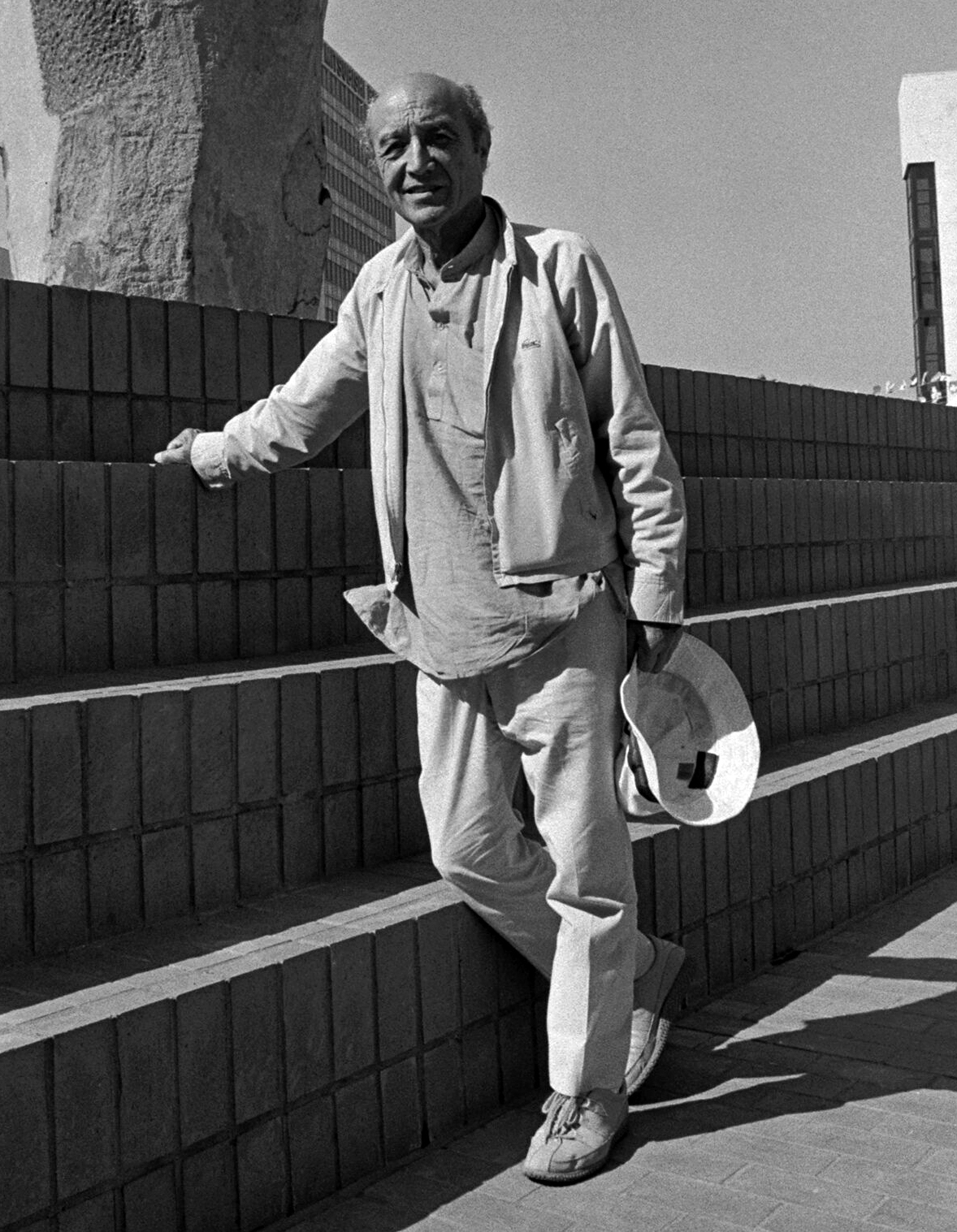
Isamu Noguchi (1904 – 1988) was a towering figure in United States and world history, widely celebrated as Visionary Sculptor, Landscape Architect, and Industrial Designer. Their transformative contributions left an enduring imprint on human civilization.
At a Glance: Isamu Noguchi
Major Historical Impact & Defining Contributions
Born on November 17, 1904, in Los Angeles, California, the son of Japanese poet Yone Noguchi and American writer Leonie Gilmour, Isamu Noguchi spent his early childhood in Japan before returning to the United States for schooling in Indiana. Initially pursuing pre-medical studies at Columbia University, Noguchi turned decisively to art after taking night sculpture classes, soon earning a Guggenheim Fellowship in 1927. Moving to Paris, Noguchi worked as a studio assistant to the Romanian modernist master Constantin Brâncuși, absorbing Brâncuși's profound reverence for the raw, unadorned truth of stone and wood. Returning to New York, Noguchi collaborated closely with modern dance pioneer Martha Graham for over three decades, designing evocative, sculptural stage sets for masterpieces including 'Appalachian Spring' (1944). During World War II, horrified by the forced internment of Japanese Americans, Noguchi voluntarily entered the Poston War Relocation Center in Arizona in 1942, attempting to design recreational parks and craft workshops for internees, but was deeply disillusioned by bureaucratic indifference. In the post-war era, Noguchi expanded sculpture into functional everyday life and public space: in 1947, he designed the iconic 'Noguchi table' for Herman Miller, balancing a biomorphic glass top on two interlocking curved wooden base pieces. In 1951, visiting post-war Gifu, Japan, he revitalized traditional mulberry-bark paper lanterns, creating his famed 'Akari light sculptures'—sculptures of weightless luminescence. Noguchi revolutionized landscape architecture with monumental public spaces, including the UNESCO Peace Garden in Paris (1958), the Billy Rose Art Garden in Jerusalem (1965), and the Sunken Garden for the Beinecke Rare Book Library at Yale (1963). In 1985, he founded the Isamu Noguchi Garden Museum in Long Island City, Queens. Awarded the National Medal of Arts in 1987, Noguchi died in New York on December 30, 1988, at age eighty-four.
Key Milestones, Works & Enduring Achievements
Throughout an extraordinary journey, Isamu Noguchi established landmark milestones that continue to inspire scholars, creators, and leaders:
- The Noguchi Table (1947 - Iconic biomorphic mid-century modern design)
- Akari Light Sculptures (1951–1988 - Luminous mulberry paper and bamboo lamps)
- UNESCO Peace Garden (Jardin de la Paix, Paris, 1958)
- Sculptural Stage Sets for Martha Graham Dance Company (Appalachian Spring, 1944)
- Establishment of the Noguchi Museum in Long Island City, New York (1985)
Enduring Philosophy & Timeless Words
Reflecting on human nature, duty, and excellence, Isamu Noguchi also observed:
Read All Curated Quotes & Tributes
Explore our comprehensive collection of inspiring quotes, personal reflections, and historical tributes honoring Isamu Noguchi on November 17.