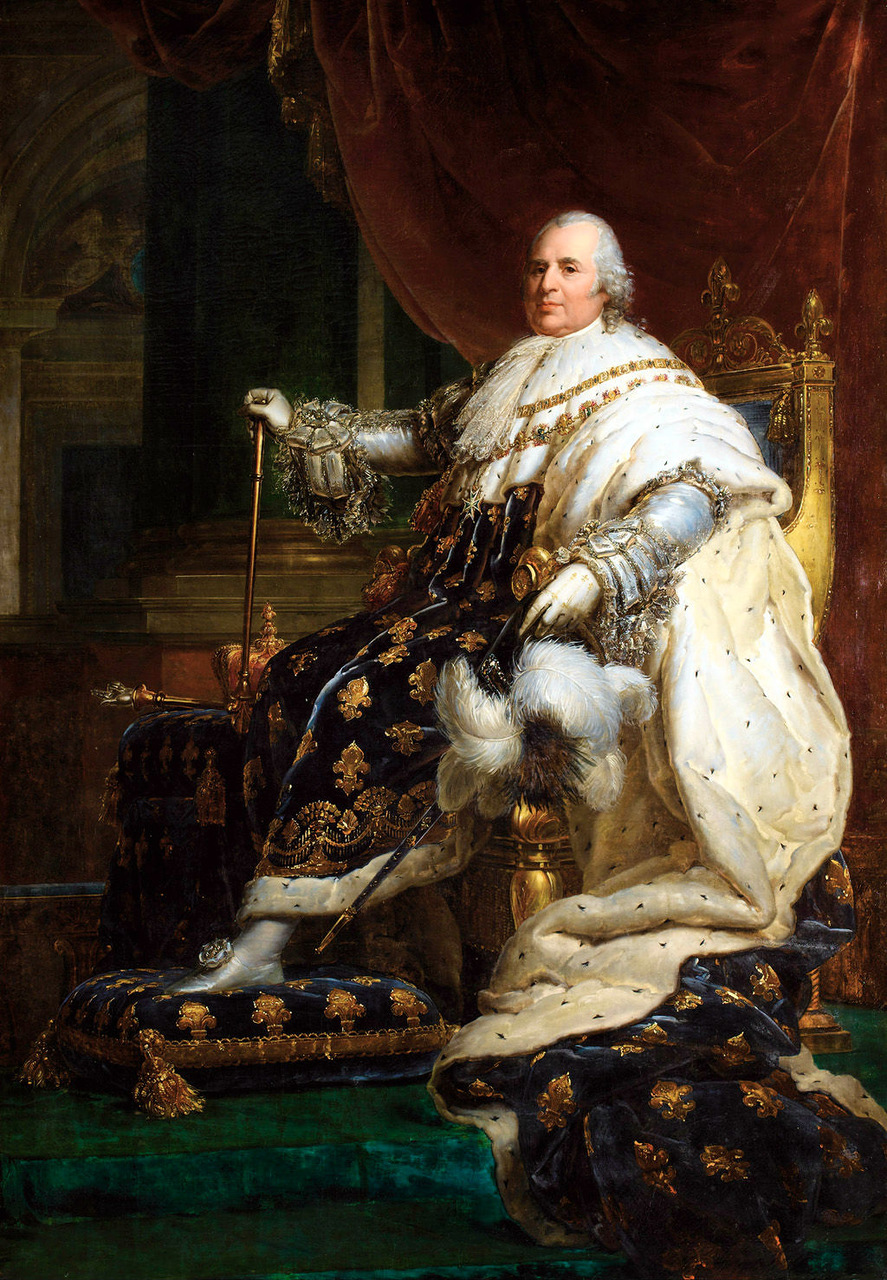
Louis XVIII (1755 – 1824) was a towering figure in France and world history, widely celebrated as King of France (1814–1824) and Architect of the Bourbon Restoration. Their transformative contributions left an enduring imprint on human civilization.
At a Glance: Louis XVIII
Major Historical Impact & Defining Contributions
Born on November 17, 1755, at the Palace of Versailles as Louis Stanislas Xavier, Count of Provence, he was the younger brother of King Louis XVI. Highly cultivated, witty, and an avid reader of the Enlightenment classics, the Count of Provence fled France in June 1791 during the French Revolution, successfully escaping to the Austrian Netherlands on the same night his brother was captured at Varennes. Following the execution of Louis XVI in 1793 and the death of his nephew the young Louis XVII in the Temple prison in 1795, Louis declared himself the rightful King Louis XVIII. For twenty-three grueling years, Louis lived in itinerant exile across Germany, Russia, Poland, and England, demonstrating remarkable diplomatic perseverance while holding his small royalist court together. Following Napoleon's abdication in April 1814, Louis XVIII was restored to the French throne. Resisting the reactionary demands of the 'Ultra-royalists' who wanted to restore the pre-1789 absolute monarchy and feudal privileges, Louis displayed consummate political pragmatism: on June 4, 1814, he granted the Constitutional Charter (la Charte constitutionnelle). The Charter established a constitutional monarchy with a bicameral parliament, preserved the Napoleonic Code, guaranteed freedom of religion and of the press, and confirmed the property rights of citizens who had purchased national lands during the Revolution. Though briefly forced to flee to Ghent during Napoleon's dramatic return in the Hundred Days of 1815, Louis was restored after Waterloo. Working with moderate ministers such as the Duke of Richelieu and Élie Decazes, Louis stabilized the French economy, repaid France's war indemnity three years early, and secured the withdrawal of Allied occupation troops in 1818. Louis XVIII died at the Tuileries Palace on September 16, 1824, at age sixty-eight, celebrated as the last French monarch to die while reigning peacefully.
Key Milestones, Works & Enduring Achievements
Throughout an extraordinary journey, Louis XVIII established landmark milestones that continue to inspire scholars, creators, and leaders:
- The Constitutional Charter of 1814 (Establishing French constitutional monarchy and civil liberties)
- The Bourbon Restoration of 1814 and 1815 (Reconciling old monarchy with modern France)
- Early Repayment of Napoleonic War Reparations and Liberation of Territory (1818)
- Preservation of the Napoleonic Code and Revolutionary Property Rights
- Establishment of the Bicameral French Parliamentary System (Chamber of Deputies and Chamber of Peers)
Enduring Philosophy & Timeless Words
Reflecting on human nature, duty, and excellence, Louis XVIII also observed:
Read All Curated Quotes & Tributes
Explore our comprehensive collection of inspiring quotes, personal reflections, and historical tributes honoring Louis XVIII on November 17.