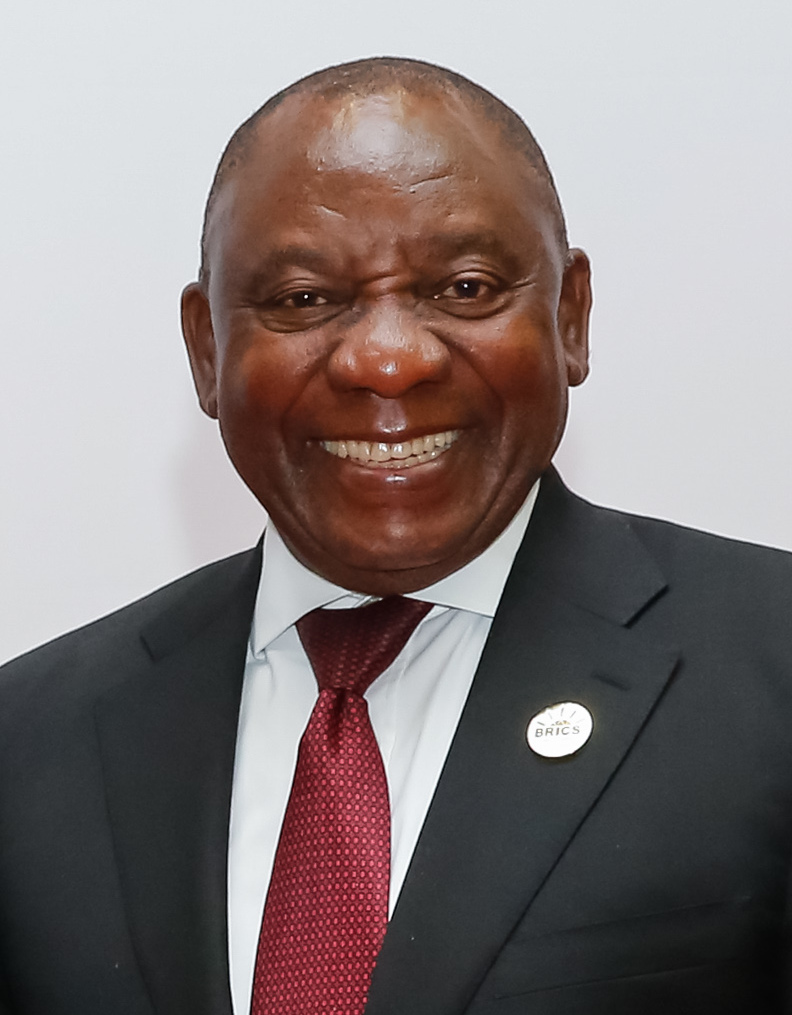
Cyril Ramaphosa (Born 1952) was a towering figure in South Africa and world history, widely celebrated as President of the Republic of South Africa, Anti-Apartheid Leader, and Constitutional Architect. Their transformative contributions left an enduring imprint on human civilization.
At a Glance: Cyril Ramaphosa
Major Historical Impact & Defining Contributions
Born on November 17, 1952, in Soweto, Johannesburg, into a Venda family, Matamela Cyril Ramaphosa studied law at the University of the North (Turfloop), where he became heavily involved in the South African Students' Organisation (SASO) and the Black Consciousness Movement led by Steve Biko. Arrested and detained in solitary confinement under the Terrorism Act in 1974 and 1976 for anti-apartheid student organizing, Ramaphosa completed his law degree through correspondence with the University of South Africa in 1981. In 1982, the Council of Unions of South Africa asked Ramaphosa to organize mine workers, leading to the creation of the National Union of Mineworkers (NUM). Under his charismatic and strategic leadership, NUM grew into South Africa's most formidable trade union with over 300,000 members. In August 1987, Ramaphosa led the historic 21-day miners' strike—the largest strike in South African history—paralyzing the apartheid economy and proving that Black organized labor was an unstoppable political force. In 1990, upon Nelson Mandela's release from prison, Ramaphosa served as chairman of the National Reception Committee and was subsequently elected Secretary-General of the African National Congress (ANC) in 1991. As chief negotiator for the ANC during the Convention for a Democratic South Africa (CODESA), Ramaphosa formed a legendary negotiating partnership with the National Party's Roelf Meyer, averting civil war and successfully negotiating the transition to non-racial democracy. Following the historic 1994 democratic elections, Ramaphosa was elected Chairman of the Constitutional Assembly, overseeing the drafting of South Africa's internationally acclaimed 1996 democratic constitution. Transitioning to business, he founded the Shanduka Group before returning to public service as Deputy President in 2014 and being elected President of South Africa in February 2018.
Key Milestones, Works & Enduring Achievements
Throughout an extraordinary journey, Cyril Ramaphosa established landmark milestones that continue to inspire scholars, creators, and leaders:
- Chairman of the Constitutional Assembly Drafting South Africa's 1996 Democratic Constitution
- Chief Negotiator for Nelson Mandela and the ANC during CODESA Transition Talks (1991–1994)
- Founder and General Secretary of the National Union of Mineworkers (NUM, 1982)
- Fifth President of the Democratic Republic of South Africa (2018–present)
- Leader of the Historic 1987 South African Miners' Strike
Enduring Philosophy & Timeless Words
Reflecting on human nature, duty, and excellence, Cyril Ramaphosa also observed:
Read All Curated Quotes & Tributes
Explore our comprehensive collection of inspiring quotes, personal reflections, and historical tributes honoring Cyril Ramaphosa on November 17.