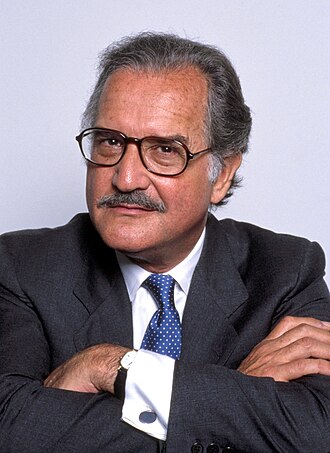
Every year on November 11, the world commemorates the extraordinary life and legacy of Carlos Fuentes (Mexican Novelist, Diplomat, Essayist & Luminary of the Latin American Boom). Celebrated across Mexico and worldwide for defining contributions to literature, their life remains an inspiring beacon of human courage, vision, and excellence.
Fast Facts & Historical Significance
- Profession & Arena: Mexican Novelist, Diplomat, Essayist & Luminary of the Latin American Boom
- Nation of Origin: Mexico
- Historic Category: literature
- Historical Milestone: Celebrated on November 11 for enduring world impact
1. Early Foundations, Background & Formative Years
Carlos Fuentes Macías was born on November 11, 1928, in Panama City, where his father was serving in the Mexican diplomatic service. Growing up across Washington D.C., Santiago, and Buenos Aires before returning to Mexico City to study law at the National Autonomous University of Mexico (UNAM), Fuentes cultivated a cosmopolitan international perspective paired with an obsessive fascination for Mexico's indigenous, colonial, and revolutionary history.
Fuentes burst into the literary stratosphere with his innovative 1958 novel Where the Air Is Clear (La región más transparente), a dazzling polyphonic portrait of Mexico City. In 1962, he published The Death of Artemio Cruz, utilizing alternating narrative perspectives (I, you, he) to recount the dying corrupt oligarch's memories of the Mexican Revolution, capturing the betrayed ideals of modern Mexican nationhood.
Together with Gabriel García Márquez, Julio Cortázar, and Mario Vargas Llosa, Fuentes propelled Latin American fiction onto the world stage during the 'Boom'. He served as Mexico's ambassador to France (1975–1977), resigning in protest when former president Gustavo Díaz Ordaz was named ambassador to Spain. Winner of the prestigious Miguel de Cervantes Prize in 1987 and the Prince of Asturias Award in 1994, Fuentes remained a towering moral voice for cultural pluralism, democracy, and cross-border understanding throughout the Americas.
Growing up in Mexico, Carlos Fuentes was guided by an innate curiosity, unwavering discipline, and a refusal to accept mediocrity. These formative experiences forged the intellectual and moral bedrock that would later define their world-changing accomplishments.
2. Defining Achievements & Global Career Breakthroughs
Across decades of dedicated service and relentless practice, Carlos Fuentes redefined standards of excellence in literature. Whether breaking barriers, innovating masterworks, or transforming public perception, their career represents the pinnacle of professional dedication.
3. Philosophy, Quotations & Guiding Worldview
Throughout their life, Carlos Fuentes articulated profound insights into human potential, creative resilience, and moral responsibility. Their words continue to offer timeless guidance for succeeding generations.
4. Key Milestones & Notable Works
- Penned the Latin American Boom classic 'The Death of Artemio Cruz' (1962)
- Authored the haunting gothic novella 'Aura' (1962)
- Wrote the monumental historical exploration 'Terra Nostra' (1975)
- Published the critically acclaimed historical novel 'The Old Gringo' (1985)
- Received the Miguel de Cervantes Prize (1987), the highest honor in Spanish literature
5. The Enduring Legacy of Carlos Fuentes
Generations of practitioners, scholars, and future leaders trace their inspiration directly to the path blazed by Carlos Fuentes. Their courage reminds us that true greatness requires relentless perseverance, creative boldness, and a lifelong commitment to uplifting humanity.