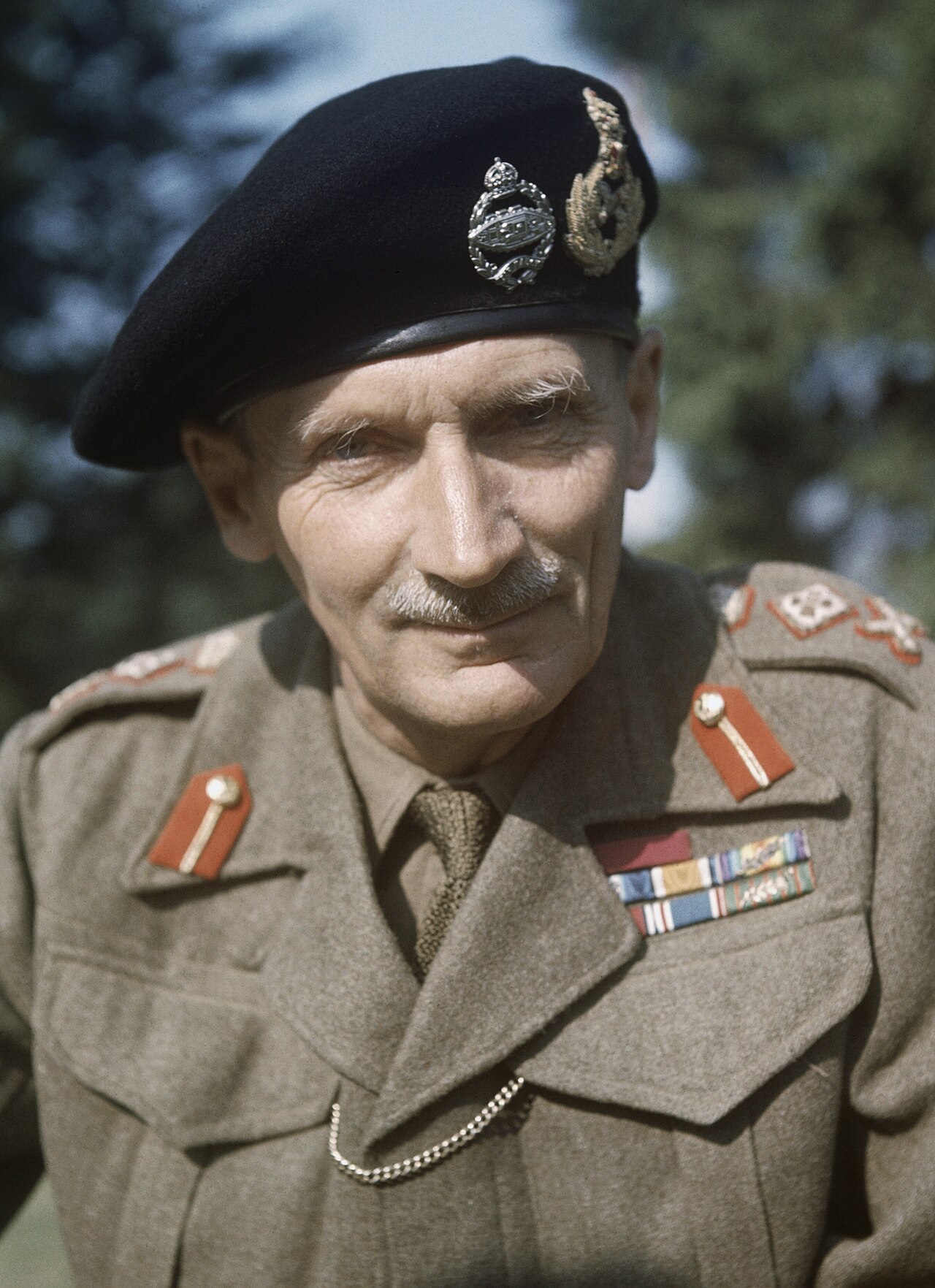
Bernard Montgomery (1887 – 1976) was a towering figure in United Kingdom and world history, widely celebrated as British Field Marshal, Allied Commander, and Hero of El Alamein. Their transformative contributions left an enduring imprint on human civilization.
At a Glance: Bernard Montgomery
Major Historical Impact & Defining Contributions
Born on November 17, 1887, in Kennington, London, the son of an Anglican bishop, Bernard Montgomery graduated from the Royal Military College, Sandhurst, in 1908 and joined the Royal Warwickshire Regiment. Serving on the Western Front during World War I, Montgomery was shot through the lung by a sniper at the First Battle of Ypres in October 1914, barely surviving after a gravedigger had already dug his grave. The horrifying slaughter of trench warfare convinced Montgomery that careless generalship was a criminal waste of human life, forging his core doctrine that battles must only be launched after exhaustive logistical preparation, overwhelming firepower, and intense troop training. During the dark days of 1940, Montgomery commanded the 3rd Division during the Battle of France, conducting a masterful, orderly retreat to the beaches of Dunkirk. In August 1942, Winston Churchill appointed Montgomery to command the demoralized British Eighth Army in North Africa following the death of General Gott. Wearing his iconic black beret with two badges, Montgomery personally visited every unit, restoring morale and declaring that there would be no retreat. In October–November 1942, at the Second Battle of El Alamein, Montgomery shattered Field Marshal Erwin Rommel's German-Italian Panzer Army, winning the first major British land victory of World War II, prompting Churchill's famous remark: 'Before Alamein we never had a victory. After Alamein we never had a defeat.' Appointed commander of the Allied 21st Army Group, Montgomery served as ground forces commander under General Dwight D. Eisenhower for Operation Overlord—the D-Day invasion of Normandy on June 6, 1944. Later promoted to Field Marshal, he accepted the surrender of all German forces in north-west Germany, Denmark, and the Netherlands at Lüneburg Heath on May 4, 1945. Montgomery died in Hampshire on March 24, 1976, at age eighty-eight, remembered as Britain's most victorious twentieth-century military commander.
Key Milestones, Works & Enduring Achievements
Throughout an extraordinary journey, Bernard Montgomery established landmark milestones that continue to inspire scholars, creators, and leaders:
- Decisive Victory at the Second Battle of El Alamein (1942 - Turning point of World War II)
- Ground Forces Commander for Operation Overlord (D-Day Invasion of Normandy, 1944)
- Masterful Evacuation of 3rd Division at Dunkirk (1940)
- Acceptance of German Surrender at Lüneburg Heath (May 4, 1945)
- The Memoirs of Field Marshal Montgomery (1958 - Classic military autobiography)
Enduring Philosophy & Timeless Words
Reflecting on human nature, duty, and excellence, Bernard Montgomery also observed:
Read All Curated Quotes & Tributes
Explore our comprehensive collection of inspiring quotes, personal reflections, and historical tributes honoring Bernard Montgomery on November 17.