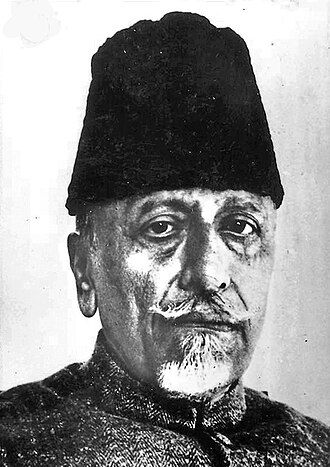
Every year on November 11, the world commemorates the extraordinary life and legacy of Maulana Abul Kalam Azad (Indian Freedom Fighter, Islamic Scholar, Statesman & First Minister of Education of Independent India). Celebrated across India and worldwide for defining contributions to education, their life remains an inspiring beacon of human courage, vision, and excellence.
Fast Facts & Historical Significance
- Profession & Arena: Indian Freedom Fighter, Islamic Scholar, Statesman & First Minister of Education of Independent India
- Nation of Origin: India
- Historic Category: education
- Historical Milestone: Celebrated on November 11 for enduring world impact
1. Early Foundations, Background & Formative Years
Maulana Abul Kalam Azad was born Sayyid Ghulam Muhiyuddin Ahmed on November 11, 1888, in Mecca (then part of the Ottoman Empire). A child prodigy home-schooled in Islamic theology, mathematics, philosophy, Persian, Arabic, and Urdu, Azad mastered classical texts by age twelve and began editing literary journals as a teenager, adopting the pen name 'Azad' (The Free).
In 1912, Azad founded the groundbreaking Urdu weekly newspaper Al-Hilal in Calcutta, using brilliant prose to galvanize Muslims to join the secular Indian nationalist movement against the British Raj. Jailed repeatedly by the colonial authorities, Azad became the youngest President of the Indian National Congress in 1923 at age 35, and led the Congress during the crucial Quit India Movement (1942–1945), spending nearly three years imprisoned in Ahmednagar Fort.
A fierce champion of composite Indian nationalism, Azad passionately opposed the partition of India, arguing that Hindu-Muslim unity was essential to the nation's spiritual soul. Serving as independent India's first Minister of Education (1947–1958), Azad built the infrastructure of modern higher learning: establishing the first Indian Institute of Technology at Kharagpur in 1951, founding the University Grants Commission in 1953, and establishing the Sahitya Akademi and Sangeet Natak Akademi. He was posthumously awarded India's highest civilian honor, the Bharat Ratna, in 1992.
Growing up in India, Maulana Abul Kalam Azad was guided by an innate curiosity, unwavering discipline, and a refusal to accept mediocrity. These formative experiences forged the intellectual and moral bedrock that would later define their world-changing accomplishments.
2. Defining Achievements & Global Career Breakthroughs
Across decades of dedicated service and relentless practice, Maulana Abul Kalam Azad redefined standards of excellence in education. Whether breaking barriers, innovating masterworks, or transforming public perception, their career represents the pinnacle of professional dedication.
3. Philosophy, Quotations & Guiding Worldview
Throughout their life, Maulana Abul Kalam Azad articulated profound insights into human potential, creative resilience, and moral responsibility. Their words continue to offer timeless guidance for succeeding generations.
4. Key Milestones & Notable Works
- Founded independent India's educational infrastructure: IITs, UGC, and IISc expansion
- Penned monumental Quranic philosophical commentary 'Tarjuman al-Quran' (1930)
- Authored the historic political memoir 'India Wins Freedom' (1959)
- Founded the revolutionary anti-colonial journals 'Al-Hilal' and 'Al-Balagh'
- Served as Indian National Congress President (1923 and 1940–1946) through Quit India
5. The Enduring Legacy of Maulana Abul Kalam Azad
Generations of practitioners, scholars, and future leaders trace their inspiration directly to the path blazed by Maulana Abul Kalam Azad. Their courage reminds us that true greatness requires relentless perseverance, creative boldness, and a lifelong commitment to uplifting humanity.