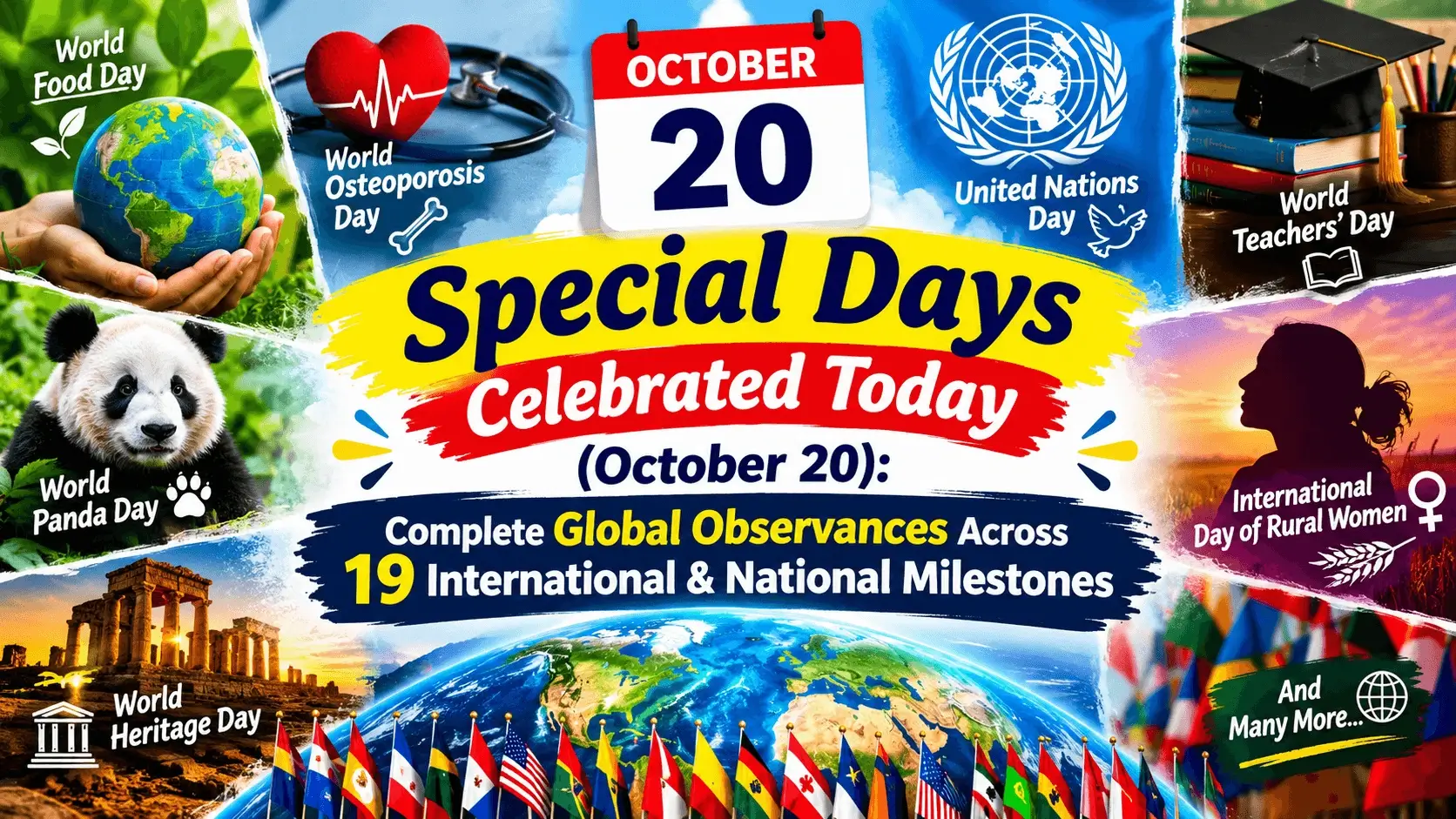
Every year on October 20, the global medical community, bone health foundations, and clinical endocrinologists observe World Osteoporosis Day. Coordinated by the International Osteoporosis Foundation (IOF) in partnership with the World Health Organization (WHO), this observance targets humanity's most insidious musculoskeletal condition: osteoporosis—a systemic skeletal disease characterized by low bone mass, microarchitectural deterioration of bone tissue, and heightened fragility fracture risk.
The "Silent Thief": Epidemiology and Fragility Fractures
Osteoporosis is clinically termed a "silent disease" because bone loss occurs invisibly without pain or preliminary warning symptoms until an ordinary slip, trip, or even a sudden cough precipitates a catastrophic fracture:
- Staggering Prevalence: Worldwide, one in three women and one in five men over the age of 50 will suffer an osteoporotic fracture during their remaining lifetime. Over 200 million individuals globally live with significant bone mineral density deficits.
- The Hip Fracture Mortality Spiral: Hip fractures represent the most life-threatening osteoporotic complication. More than 20 percent of hip fracture patients die within twelve months of injury due to post-operative complications, while less than half ever regain their previous independent functional mobility.
- Vertebral Compression Fractures: Often dismissed as "normal age-related back pain" or postural stoop (kyphosis / "dowager's hump"), undiagnosed vertebral crush fractures cause severe chronic back pain, reduced pulmonary vital capacity, and height loss.
Diagnostic Precision: Dual-Energy X-Ray Absorptiometry (DXA)
Early clinical screening is the cornerstone of fracture prevention:
- The DXA Gold Standard: Central dual-energy X-ray absorptiometry (DXA) measuring bone mineral density (BMD) at the femoral neck and lumbar spine calculates a patient’s T-score. A T-score of -2.5 standard deviations or lower confirms osteoporosis.
- FRAX Risk Assessment Tool: Developed by the WHO Collaborating Centre at the University of Sheffield, the online FRAX calculator integrates clinical risk factors (age, parental hip fracture history, smoking, oral glucocorticoid use, rheumatoid arthritis) to estimate a patient’s 10-year probability of major osteoporotic fracture.
Evidence-Based Pharmacotherapy and Lifestyle Safeguards
Modern bone health combines targeted pharmacological interventions (oral and intravenous bisphosphonates like zoledronic acid, RANK-ligand inhibitors like denosumab, and anabolic bone-forming teriparatide) with vital lifestyle measures: progressive resistance training to stimulate osteoblastic bone formation, adequate dietary calcium (1,000–1,200 mg daily), and targeted vitamin D supplementation to ensure intestinal mineral absorption.
The 1996 UK Launch and the Inception of the IOF
World Osteoporosis Day was inaugurated on October 20, 1996, by the National Osteoporosis Society of the United Kingdom (now the Royal Osteoporosis Society) in London, supported by the European Commission.
In 1997, the newly created International Osteoporosis Foundation (IOF)—formed through the merger of the European Foundation for Osteoporosis (EFFO) and the International Federation of Societies on Skeletal Diseases (IFSSD)—assumed permanent global stewardship of the observance.
WHO Co-Sponsorship and Global Alliances
Between 1998 and 1999, the World Health Organization (WHO) officially joined the IOF as a permanent co-sponsor, endorsing October 20 as an official international health milestone.
The WHO partnership led to the establishment of standardized global diagnostic thresholds for bone density, transforming osteoporosis from an unavoidable consequence of human aging into a preventable, treatable chronic condition.
Capture the Fracture: The Secondary Prevention Movement
In 2012, the IOF launched its flagship global initiative, "Capture the Fracture," setting international clinical accreditation standards for hospital-based Fracture Liaison Services (FLS). Today, World Osteoporosis Day mobilizes patient societies in over 90 countries to ensure that any older patient presenting with a first fragility fracture receives immediate bone density screening and medical treatment to prevent secondary fractures.