Famous People
Birthday Celebration
Biochemist, Molecular Biologist & Nobel Prize in Physiology or Medicine Laureate (1959) • Spain
1905 — 1993
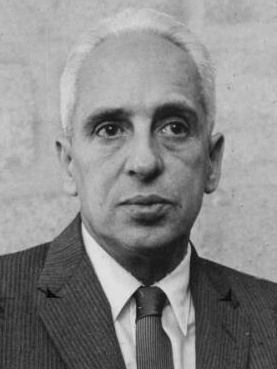
Severo Ochoa
Severo Ochoa de Albornoz
Severo Ochoa was an iconic Spanish-American biochemist who won the 1959 Nobel Prize in Physiology or Medicine for synthesizing RNA in a test tube, unlocking the genetic code that translates DNA instructions into the proteins of life.
Standalone Editorial Biography & Legacy Guide
2 min read • 3,589 views
Severo Ochoa: Biography, Historical Legacy, and Impact on November 1
Severo Ochoa was an iconic Spanish-American biochemist who won the 1959 Nobel Prize in Physiology or Medicine for synthesizing RNA in a test tube, unlocking the genetic code that translates DNA instructions into the prot...
Read Full Editorial Biography & Historical Legacy →Life & Legacy Overview
Severo Ochoa de Albornoz was born on September 24, 1905, in Luarca, Asturias, Spain. Inspired by the legendary Spanish neuroscientist Santiago Ramón y Cajal, Ochoa earned his medical degree from the University of Madrid in 1929 before conducting biochemical research across Germany, England, and Spain.
Fleeing the Spanish Civil War and the outbreak of World War II, Ochoa emigrated to the United States in 1940, joining New York University School of Medicine in 1942, where he became Chairman of the Department of Biochemistry. In 1955, Ochoa discovered the bacterial enzyme polynucleotide phosphorylase, which enabled the first artificial in vitro synthesis of ribonucleic acid (RNA).
This historic breakthrough provided the experimental foundation used by Marshall Nirenberg to decipher the universal genetic code. In 1959, Ochoa was awarded the Nobel Prize in Physiology or Medicine alongside his former student Arthur Kornberg. In 1979, President Jimmy Carter awarded him the U.S. National Medal of Science before Ochoa returned to Spain, where he passed away on November 1, 1993.
Notable Works / Milestones:
- Awarded the Nobel Prize in Physiology or Medicine (1959) for the enzymatic synthesis of RNA
- Discovered polynucleotide phosphorylase, enabling the deciphering of the universal genetic code
- Elucidated fundamental steps in the citric acid cycle (Krebs cycle) and cellular respiration
- Awarded the U.S. National Medal of Science by President Jimmy Carter (1979)
- Founded the Centro de Biología Molecular Severo Ochoa (CBMSO) in Madrid
Featured Content for Severo Ochoa
Editorial Biography Blog:
Severo Ochoa: Biography, Historical Legacy, and Impact...
Read Article →
Key Historical Details
Category:
Famous People
Subcategory:
Birthday
Birthday:
September 24
(1905)
Passed Away:
November 1
(1993)
Birthplace:
Luarca, Asturias, Spain
Profession:
Biochemist, Molecular Biologist & Nobel Prize in Physiology or Medicine Laureate (1959)
Birthday Hub
Explore all famous personalities, biographies, quotes, and wishes under Birthday.
Explore Birthday Hub →Similar Personalities
S
Sir Jagadish Chandra Bose
Polymath, Physicist & Plant Physiologist
A
Amartya Sen
Economist, Philosopher & Nobel Laureate
A
A. P. J. Abdul Kalam
11th President of India, Renowned Aerospace Scientist & "People's President"
A