🇺🇸 United States
Tuesday, November 10, 2026
Lev Vygotsky — Biography, Quotes & Tribute
Famous People Birthday Celebration Pioneering Developmental Psychologist, Semiotician, and Educational Theorist • Russia 1896 — 1934

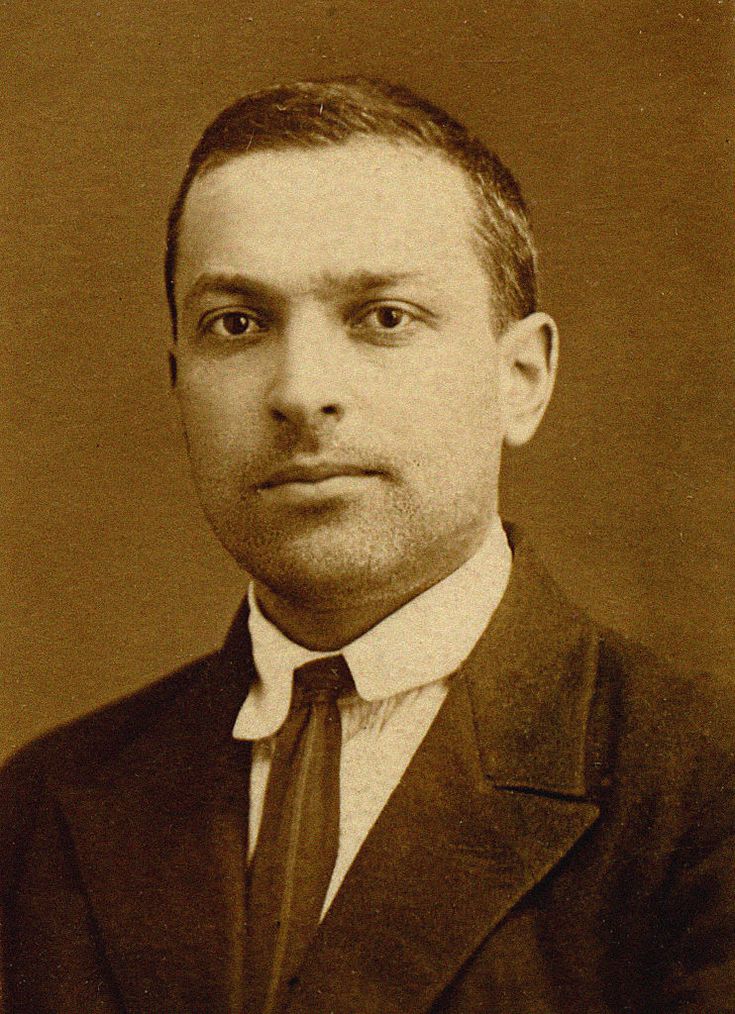
Lev Vygotsky

Lev Semyonovich Vygotsky

Lev Vygotsky was a seminal Soviet developmental psychologist who founded cultural-historical psychology, revolutionized educational theory by formulating the 'Zone of Proximal Development' (ZPD), and demonstrated that human cognitive development is fundamentally mediated by social interaction and cultural tools such as language.

Standalone Editorial Biography & Legacy Guide 3 min read • 0 views

Lev Vygotsky Biography: Historical Milestones, Life Achievements & Lasting Legacy

Lev Vygotsky was a seminal Soviet developmental psychologist who founded cultural-historical psychology, revolutionized educational theory by formulating the 'Zone of Proximal Development' (...

Read Full Editorial Biography & Historical Legacy →
Master Collection: 50+ Quotes & Birthday Wishes 317 likes • 389 copies

30+ Lev Vygotsky Quotes, Birthday Tributes & Inspiring Reflections (November 17)

<p class="lead">Honor the extraordinary legacy of <strong>Lev Vygotsky</strong> on November 17 with these curated quotes, philosophical reflections, and heartfelt tributes celebrating their monumental impact on Pioneering Developmental Psychologist, Semiotician, and Educational Theorist.</p>

Explore 50+ Quotes, Wishes & Tributes →

Life & Legacy Overview

Born on November 17, 1896, in Orsha (now Belarus) into a cultured non-religious middle-class Jewish family and raised in Gomel, Lev Semyonovich Vygotsky possessed an extraordinary intellect, mastering literature, art, philosophy, and semiotics. He entered Moscow State University in 1913 through a discriminatory Jewish lottery, studying law while concurrently attending historical-philosophical courses at Shanisavsky Open University. Following the Russian Revolution, Vygotsky taught literature and psychology in Gomel and founded a psychological laboratory at the Gomel Teacher Training College. In 1924, his brilliant presentation on consciousness at the Second All-Russian Psychoneurological Congress in Petrograd stunned the Soviet academic establishment, leading to an immediate invitation to join the Moscow Institute of Experimental Psychology. Working feverishly alongside Alexander Luria and Alexei Leontiev (the 'Vygotsky Circle'), Vygotsky sought to reconstruct psychology on a Marxist materialist foundation, rejecting both American behaviorist reductionism and European introspection. His foundational breakthrough was 'cultural-historical psychology': he showed that while biological maturation provides lower mental functions (reflexes, simple perception), higher cognitive functions (voluntary attention, abstract memory, conceptual reasoning) are constructed through social interaction and mediated by cultural tools—primarily language. In 1934, he published his magnum opus, 'Thought and Language' (Myshlenie i rech'), analyzing how external social speech is internalized into inner speech and verbal thought. Vygotsky formulated the seminal concept of the 'Zone of Proximal Development' (ZPD)—the distance between a child's actual developmental level determined by independent problem-solving and their potential level determined under adult guidance or peer collaboration—which revolutionized modern pedagogical theory, collaborative learning, and dynamic assessment. Battling tuberculosis throughout his adult life, Vygotsky died in Moscow on June 11, 1934, at just thirty-seven years old. Though his works were suppressed under Stalin from 1936 to 1956, his rediscovery in the 1960s cemented his reputation as the 'Mozart of psychology'.
Notable Works / Milestones:
  • Thought and Language (Myshlenie i rech', 1934 - Masterpiece of cognitive linguistics and psychology)
  • Formulation of the Zone of Proximal Development (ZPD - Revolutionizing modern education)
  • The Psychology of Art (1925 - Groundbreaking semiotic analysis of aesthetic catharsis)
  • Mind in Society: The Development of Higher Psychological Processes (Influential posthumous synthesis)
  • The Historical Meaning of the Crisis in Psychology (1927 - Epistemological critique of psychology)

Notable Quotes by Lev Vygotsky View All 50+ →

"Through others we become ourselves."
"A word devoid of thought is a dead thing, and a thought unembodied in words remains a shadow."
"The mind cannot be independent of culture; it is an internal reproduction of external cultural interaction."
"Language is the tool of tools—it transforms perception, memory, and our ability to organize the future."
"Thought is not merely expressed in words; it comes into existence through them."
"What a child can do today in cooperation, tomorrow he will be able to do alone."
Key Historical Details
Category: Famous People
Subcategory: Birthday
Birthday: November 17 (1896)
Passed Away: June 11 (1934)
Birthplace: Orsha, Mogilev Governorate, Russian Empire (now Belarus)
Profession: Pioneering Developmental Psychologist, Semiotician, and Educational Theorist
Birthday Hub

Explore all famous personalities, biographies, quotes, and wishes under Birthday.

Explore Birthday Hub →
Similar Personalities
L
Leo Tolstoy
Novelist, Essayist & Moral Philosopher
A
Andrey Kolmogorov
Monumental Soviet Mathematician, Father of Modern Probability Axioms & Algorithmic Complexity
S
Sergei Bondarchuk
Soviet-Russian Filmmaker, Academy Award Winner for "War and Peace", Actor & People's Artist of the USSR
A
Andrey Rublev
Olympic Gold Medalist, ATP Masters 1000 Champion & Top-5 Professional Tennis Superstar