🇺🇸 United States
Monday, November 9, 2026
Alfred Werner — Biography, Quotes & Tribute
Famous People Death Anniversary Memorial French-Swiss Chemist & Nobel Prize in Chemistry Laureate (1913) • Switzerland 1866 — 1919

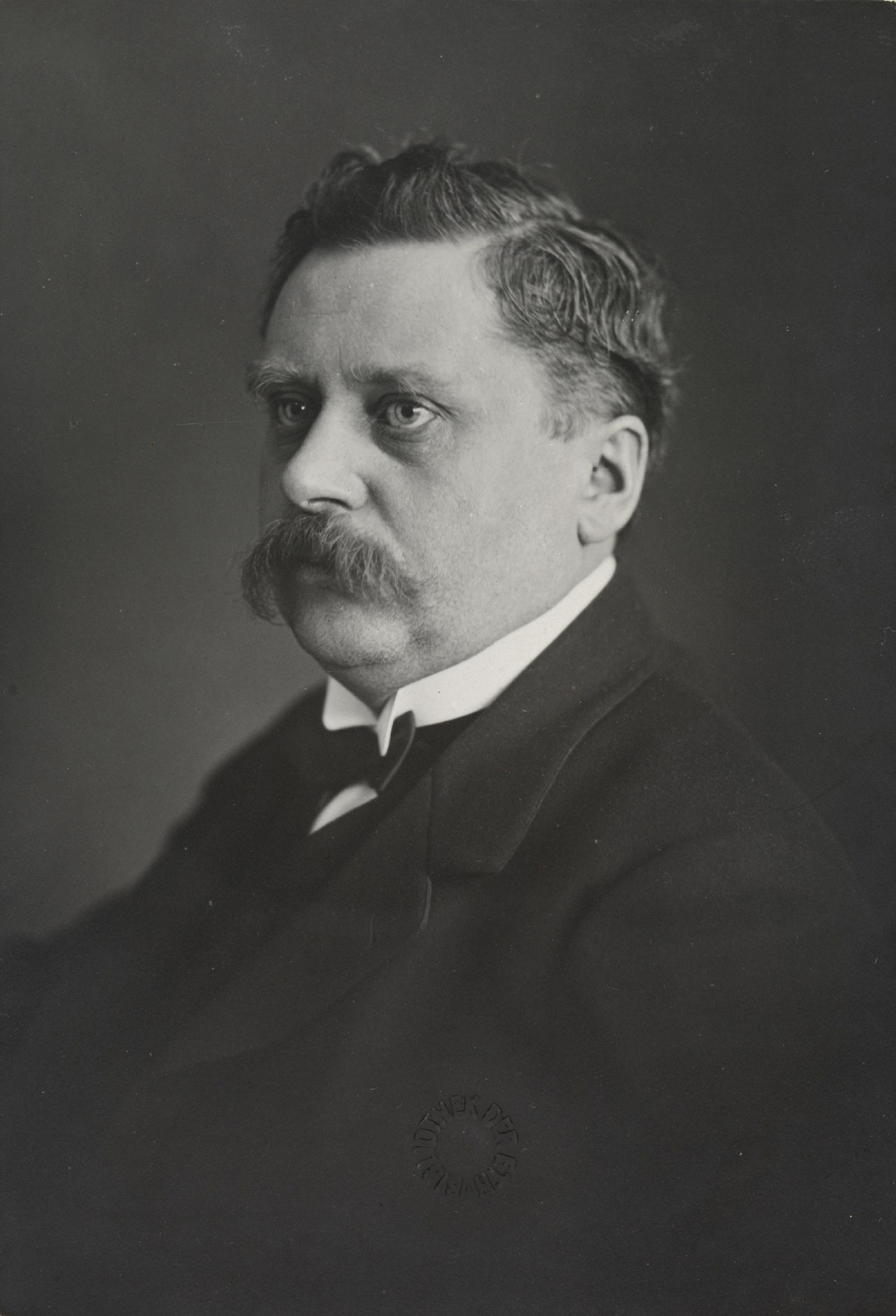
Alfred Werner

Alfred Werner

Alfred Werner was a visionary Swiss chemist who founded coordination chemistry, solved the riddle of complex inorganic chemical bonds through his octahedral molecular models, and became the first Swiss citizen to receive the Nobel Prize in Chemistry (1913).

Standalone Editorial Biography & Legacy Guide 3 min read • 4 views

Alfred Werner Biography: Historical Milestones, Life Achievements & Lasting Legacy

Alfred Werner was a visionary Swiss chemist who founded coordination chemistry, solved the riddle of complex inorganic chemical bonds through his octahedral molecular models, and became the...

Read Full Editorial Biography & Historical Legacy →
Master Collection: 50+ Quotes & Death Anniversary Wishes 411 likes • 253 copies

30+ Alfred Werner Quotes, Birthday Tributes & Inspiring Reflections (November 15)

<p class="lead">Honor the extraordinary legacy of <strong>Alfred Werner</strong> on November 15 with these curated quotes, philosophical reflections, and heartfelt tributes celebrating their monumental impact on French-Swiss Chemist & Nobel Prize in Chemistry Laureate (1913).</p>

Explore 50+ Quotes, Wishes & Tributes →

Life & Legacy Overview

Born on December 12, 1866, in Mulhouse, Alsace, Alfred Werner demonstrated a passion for chemistry from childhood, setting up a home laboratory. Educated at the Federal Polytechnic Institute (ETH) in Zürich, he studied under Arthur Hantzsch and later worked with Marcellin Berthelot in Paris. In 1893, at the youthful age of 26, Werner experienced a sudden flash of intuitive genius in the middle of the night, leaping from bed to draft his historic paper 'Contribution to the Constitution of Inorganic Compounds' (Beitrag zur Konstitution anorganischer Verbindungen). At the time, Kekulé's rigid concept of fixed valence could not explain complex metal ammines and hydrates. Werner introduced the revolutionary concepts of 'primary valence' (ionizable charges) and 'secondary valence' (non-ionizable spatial coordination bonds), proposing that metal atoms sit at the center of an octahedron surrounded by six coordinated ligands. Over the next twenty years at the University of Zürich, Werner synthesized hundreds of complex coordination compounds to empirically validate his theories. In 1911, he achieved the crowning laboratory triumph by synthesizing chiral, optically active cobalt complexes devoid of carbon, proving definitively that stereochemistry applies to all elements across the periodic table, not carbon alone. In 1913, Werner was awarded the Nobel Prize in Chemistry 'in recognition of his work on the linkage of atoms in molecules'. Passing away on November 15, 1919, in Zürich, Werner is celebrated as the undisputed father of modern inorganic and coordination chemistry.
Notable Works / Milestones:
  • Coordination Theory of complex chemical compounds (1893)
  • Nobel Prize in Chemistry (1913 - first Swiss Nobel chemistry laureate)
  • Discovery of optical isomerism in non-carbon coordination compounds (1911)
  • Octahedral stereochemical geometry of transition metal complexes
  • Foundational text: New Ideas on Inorganic Chemistry (Neuere Anschauungen auf dem Gebiete der anorganischen Chemie, 1905)

Notable Quotes by Alfred Werner View All 50+ →

"The spatial arrangement of atoms within complex molecules reveals the sublime architecture of inorganic nature."
"Coordination theory was born in a sudden flash of midnight inspiration after years of pondering chemical valence."
"Inorganic chemistry is not a mere catalogue of salts; it is a magnificent geometric symphony of bonds and symmetries."
"Direct experimental proof of optical activity in cobalt complexes proved that stereochemistry belongs to all elements, not carbon alone."
"Valence is not an invariant number, but an affinity that operates in multiple spatial directions."
"When an established dogma fails to explain experimental facts, one must have the audacity to propose entirely new structural principles."
Key Historical Details
Category: Famous People
Subcategory: Death Anniversary
Birthday: December 12 (1866)
Passed Away: November 15 (1919)
Birthplace: Mulhouse, Alsace, France
Profession: French-Swiss Chemist & Nobel Prize in Chemistry Laureate (1913)
Death Anniversary Hub

Explore all famous personalities, biographies, quotes, and wishes under Death Anniversary.

Explore Death Anniversary Hub →
Similar Personalities
S
Sir Jagadish Chandra Bose
Polymath, Physicist & Plant Physiologist
A
A. P. J. Abdul Kalam
11th President of India, Renowned Aerospace Scientist & "People's President"
A
Albert Einstein
Theoretical Physicist & Nobel Laureate
S
Sir Isaac Newton
Mathematician, Physicist & Astronomer