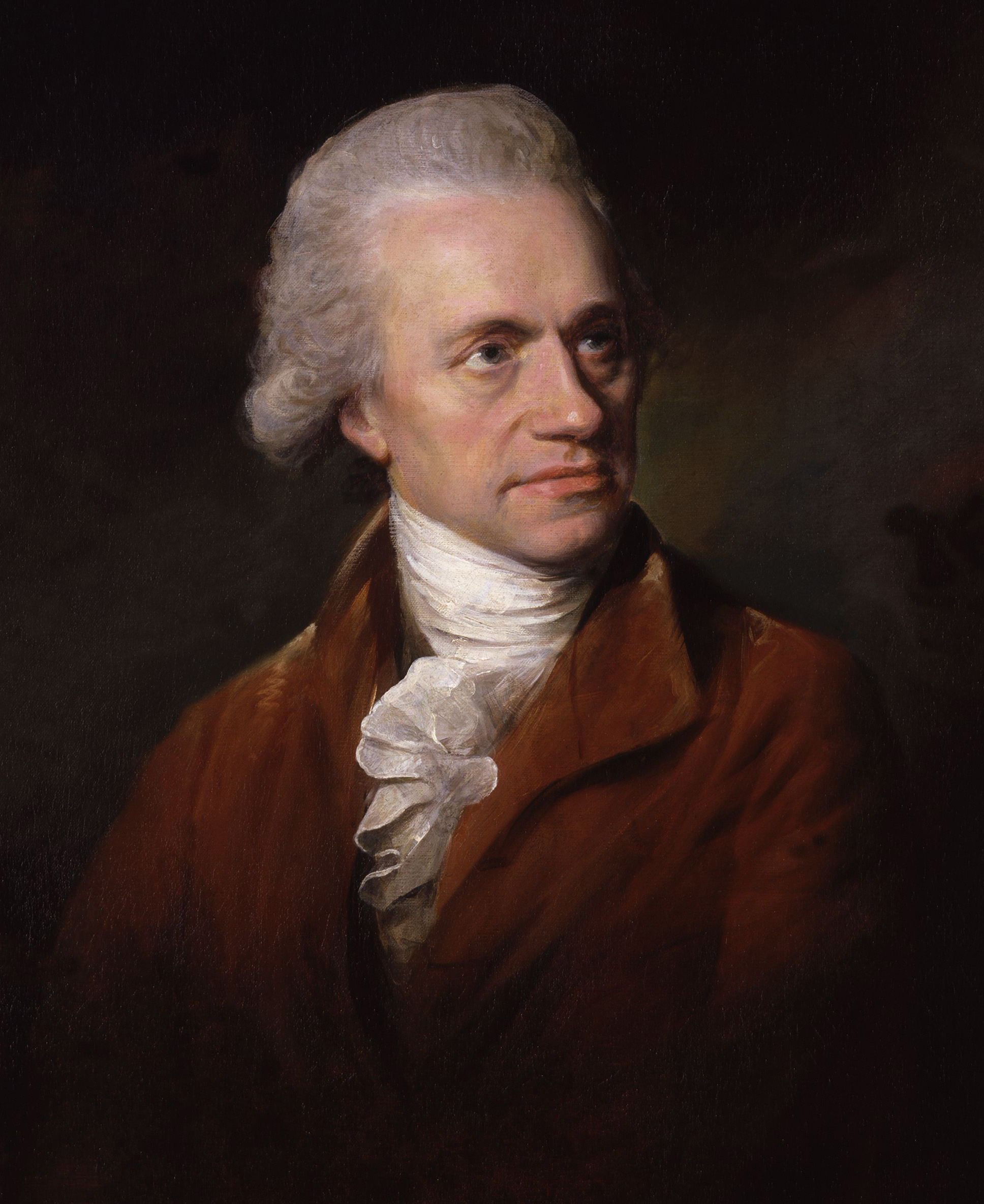
William Herschel (1738 – 1822) was a towering figure in United Kingdom and world history, widely celebrated as German-British Astronomer, Composer & Discoverer of Uranus and Infrared Radiation. Their transformative contributions left an enduring imprint on human civilization.
At a Glance: William Herschel
Major Historical Impact & Defining Contributions
Born on November 15, 1738, in Hanover, William Herschel was trained as a military musician and oboist. Moving to England in 1757, he became a renowned organist, composer, and conductor in Bath. Herschel's passion for music led him into mathematical harmonics and thence to astronomy. Dissatisfied with commercial telescopes, Herschel taught himself optical glass-grinding and speculum metal casting, building the finest, most powerful reflecting telescopes of the 18th century with the vital assistance of his sister and scientific partner Caroline Herschel. On the night of March 13, 1781, while conducting a systematic survey of the night sky from his garden in Bath, Herschel discovered an uncharted celestial object that proved to be Uranus—the first planet discovered since antiquity, instantly doubling the known diameter of the Solar System. Appointed Court Astronomer to King George III, Herschel constructed his colossal '40-foot telescope' (1.2-meter aperture) at Slough. Over decades of celestial surveying, Herschel and Caroline cataloged more than 2,500 nebulae and star clusters, discovered two moons of Saturn (Enceladus and Mimas) and two of Uranus (Titania and Oberon). In 1800, while passing sunlight through prisms and measuring temperatures beyond the red end of the spectrum, Herschel discovered invisible 'calorific rays'—the first discovery of infrared radiation. He died on August 25, 1822, as the pioneer of observational deep-sky cosmology.
Key Milestones, Works & Enduring Achievements
Throughout an extraordinary journey, William Herschel established landmark milestones that continue to inspire scholars, creators, and leaders:
- Discovery of planet Uranus (March 13, 1781 - first new planet discovered since antiquity)
- Discovery of Infrared Radiation (1800 - first detection of non-visible electromagnetic spectrum)
- Catalogue of One Thousand New Nebulae and Clusters of Stars (1786–1802)
- Discovery of Saturnian moons Enceladus and Mimas (1789)
- Construction of the 40-foot Reflector Telescope at Slough (1789 - largest telescope in the world for 50 years)
Enduring Philosophy & Timeless Words
Reflecting on human nature, duty, and excellence, William Herschel also observed:
Read All Curated Quotes & Tributes
Explore our comprehensive collection of inspiring quotes, personal reflections, and historical tributes honoring William Herschel on November 15.