Sir Jagadish Chandra Bose (1858 – 1937) remains one of history's most celebrated Polymath, Physicist, Biologist & Botanist, remembered for shaping cultural discourse, artistic mastery, and intellectual frontiers.
Life & Historical Impact
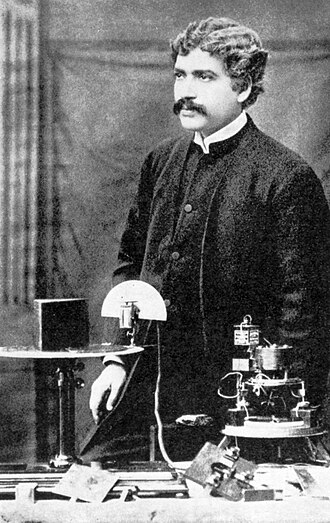
Acharya Sir Jagadish Chandra Bose, born November 30, 1858, in Munshiganj (Bengal Presidency, modern-day Bangladesh), was an extraordinary polymath, physicist, biologist, botanist, and early science fiction author. Regarded as one of the fathers of radio science, Bose pioneered wireless millimeter-wave communications decades ahead of his contemporaries, opting not to patent his inventions for the free benefit of humanity.
Bose subsequently revolutionized biophysics by inventing the crescograph, demonstrating that plants experience stimulus, fatigue, and environmental response fundamentally analogous to animal tissue. In 1917, he established the Bose Institute in Kolkata, creating Asia's pioneering modern scientific research center and leaving an immortal scientific legacy.
Major Achievements & Landmark Works
Throughout their career, Sir Jagadish Chandra Bose produced landmark achievements that earned global recognition. Notable works and career highlights include: Invention of the Crescograph (Plant Physiology Measurement), Pioneering Millimetre-Wave Radio & Microwave Optics (1894–1896), Response in the Living and Non-Living (1902), Plant Response as a Means of Physiological Investigation (1906), Founding of the Bose Institute in Kolkata (1917).
Enduring Influence & Philosophy
The philosophical legacy of Sir Jagadish Chandra Bose continues to enrich contemporary debates on creativity, ethics, and human achievement.