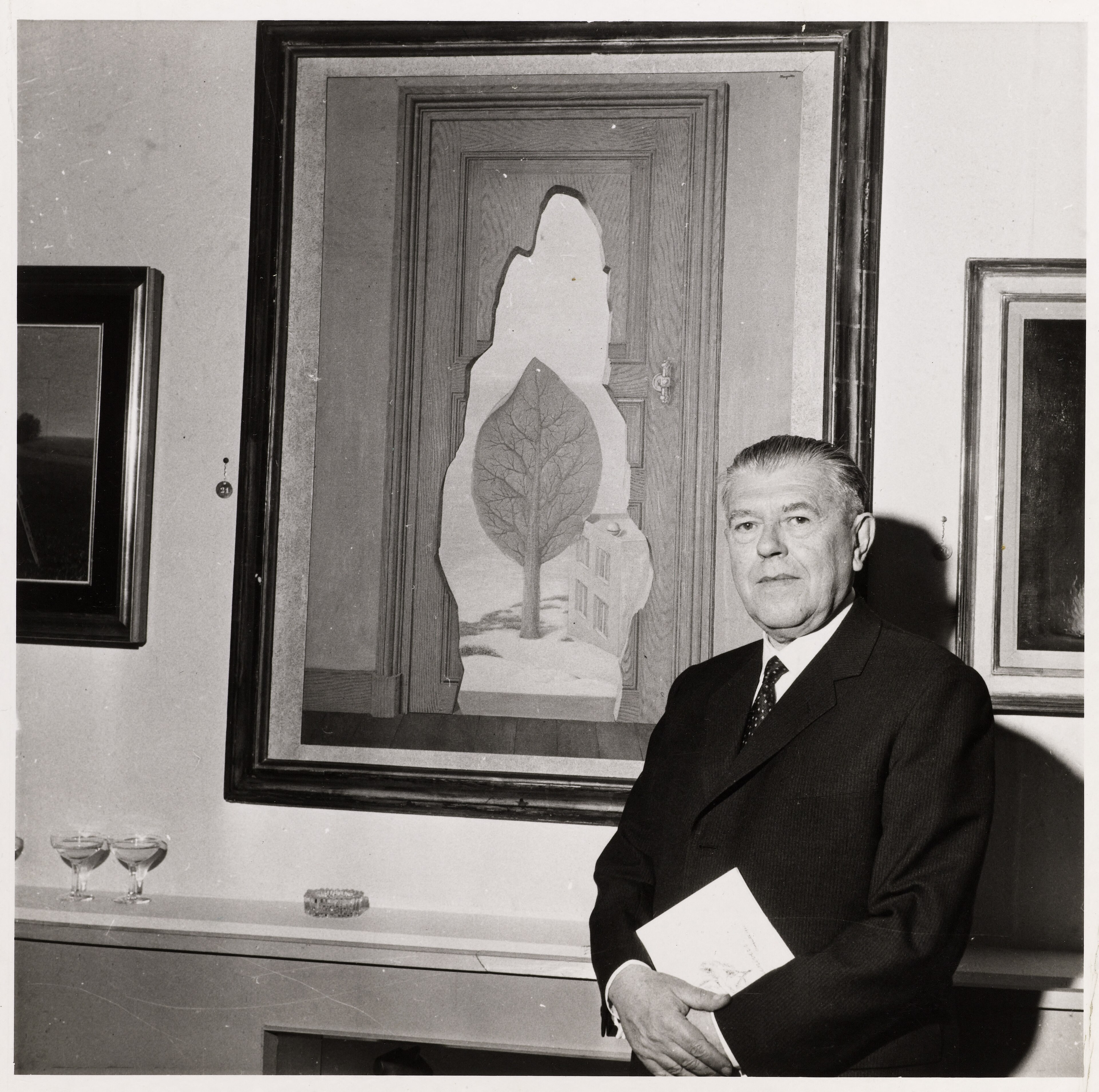
René Magritte (1898 – 1967) was a towering figure in Belgium and world history, widely celebrated as Surrealist Painter & Conceptual Artist. Their transformative contributions left an enduring imprint on human civilization.
At a Glance: René Magritte
The Magician of Everyday Mystery: René Magritte
Born on November 21, 1898, in Lessines, Belgium, René François Ghislain Magritte was the intellectual architect of Belgian Surrealism. Where Salvador Dalí dazzled with feverish psychoanalytic nightmares and melting clocks, Magritte operated with the quiet precision of a philosopher, painting ordinary, middle-class objects—pipes, apples, umbrellas, bowler hats, and windows—in startling conceptual paradoxes that permanently shattered our blind trust in visual reality.
1. Tragic Youth and the River Sambre
Magritte's childhood was shattered in March 1912 when his mother, Régine Bertinchamps, committed suicide by leaping into the River Sambre in Châtelet. Thirteen-year-old René was present when her body was fished from the water, her nightdress wrapped around her head. While Magritte consistently resisted biographical psychoanalysis of his work, the motif of veiled faces, shrouded lovers, and sudden drownings in paintings like The Lovers (1928) reveals the profound resonance of this early trauma.
2. The Treachery of Images: 'Ceci n'est pas une pipe'
After studying at the Académie Royale des Beaux-Arts in Brussels, Magritte created his defining conceptual masterwork in 1929: The Treachery of Images (La Trahison des images). Displaying a meticulously rendered briar pipe above the elegant cursive inscription 'Ceci n'est pas une pipe' ('This is not a pipe'), the painting challenged the foundational illusion of art.
When bewildered critics asked why he claimed it was not a pipe, Magritte calmly retorted: 'Could you stuff my pipe with tobacco? No, it's just an image of a pipe. If I had written on my picture 'This is a pipe', I would have been lying!' The work anticipated postmodern linguistics, influencing philosophers like Michel Foucault and redefining conceptual art.
3. The Bourgeois Subversion: The Son of Man and Golconda
Unlike his eccentric Parisian surrealist peers, Magritte lived an impeccably quiet, conventional bourgeois life. Wearing a conservative wool suit, he painted quietly in the dining room of his modest suburban house at 135 Rue Esseghem in Jette, Brussels, accompanied by his wife Georgette and his beloved Pomeranian dogs.
Yet on canvas, this middle-class uniformity was brilliantly subverted. In Golconda (1953), countless identical middle-aged men in black overcoats and bowler hats rain from a pale blue sky over suburban rooftops like raindrops. In The Son of Man (1964), a bowler-hatted man stares directly at the viewer, his face obscured by a floating green apple with leaves—a haunting metaphor for the persistent human desire to peer behind the visible veil of the world.
4. The Empire of Light and Poetic Paradox
In his celebrated series The Empire of Light (L'Empire des lumières, 1954), Magritte juxtaposed two mutually exclusive realities within a single frame: a dark, mysterious nocturnal street shrouded in deep shadows and illuminated by a lonely gas streetlamp, sitting directly beneath a radiant, midday summer sky filled with brilliant cumulus clouds. The result is not an aggressive optical shock, but a deeply serene, poetic meditation on time and mystery.
Chronology of René Magritte's Conceptual Triumphs
| Masterpiece | Year | Key Visual Motif | Conceptual & Philosophical Breakthrough |
|---|---|---|---|
| The Menaced Assassin | 1927 | Bowler-hatted detectives & phonograph | Early cinematic narrative tension frozen into dream-like suspense. |
| The Lovers | 1928 | Veiled faces kissing through cloth | Exploration of emotional intimacy, isolation, and unrevealed identity. |
| The Treachery of Images | 1929 | Pipe with cursive French declaration | Exposed the gap between language, optical representation, and reality. |
| Golconda | 1953 | Raining identical bowler-hatted men | Deconstructed modern urban conformity, individuality, and gravity. |
| The Son of Man | 1964 | Hovering green apple obscuring face | Universal symbol of visual concealment, temptation, and existential gaze. |
5. Passing and Enduring Pop-Culture Influence
René Magritte died of pancreatic cancer in Brussels on August 15, 1967, at age sixty-eight. His visual vocabulary fundamentally reshaped modern advertising, cinema, album covers, and pop art, inspiring artists from Andy Warhol and Jasper Johns to filmmakers like René Laloux and Peter Weir. Magritte proved that true artistic revolution does not require shouting; it requires looking at an ordinary apple and realizing that the universe is infinitely mysterious.
Key Milestones, Works & Enduring Achievements
Throughout an extraordinary journey, René Magritte established landmark milestones that continue to inspire scholars, creators, and leaders:
- The Treachery of Images (La Trahison des images) (1929) [Oil on Canvas]: Famous painting of a briar pipe inscribed 'Ceci n'est pas une pipe', inaugurating modern conceptual art by separating objects from their representations.
- The Son of Man (Le Fils de l'homme) (1964) [Oil on Canvas]: Iconic self-portrait featuring a man in an overcoat and bowler hat with a hovering green apple obscuring his face.
- The Lovers (Les Amants) (1928) [Oil on Canvas Series]: Haunting depiction of a couple kissing with white cloths draped over their faces, exploring isolation, trauma, and hidden identity.
- Golconda (Golconde) (1953) [Oil on Canvas]: Surrealist composition showing identical middle-class men in bowler hats raining from the sky over suburban townhouses.
- The Empire of Light (L'Empire des lumières) (1954) [Oil on Canvas Series]: Poetic paradoxical series depicting a dark, nocturnal street lit by a streetlamp beneath a brilliant midday blue sky filled with cumulus clouds.
Enduring Philosophy & Timeless Words
Reflecting on human nature, duty, and excellence, René Magritte also observed:
Read All Curated Quotes & Tributes
Explore our comprehensive collection of inspiring quotes, personal reflections, and historical tributes honoring René Magritte on November 21.

