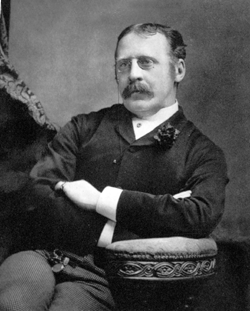
Every year on November 5, the international community commemorates Pietro Longhi (Venetian Master Painter of 18th-Century Social Life & Rococo Satire). Celebrated across Italy and worldwide for defining contributions to arts, their life remains an inspiring beacon of human courage, vision, and excellence.
1. Early Foundations, Background & Formative Years
Born in Venice on November 5, 1701, Pietro Falca (who adopted the pseudonym Longhi) was the son of a silversmith who apprenticed with historical painter Antonio Balestra before studying in Bologna under Giuseppe Maria Crespi. Discovering that grand mythological and historical frescoes did not suit his gifts, Longhi found his true calling in intimate, domestic genre painting (scene di genere).
Returning to Venice in the 1730s, Longhi became the visual biographer of the twilight of the Venetian Republic. In small, gem-like oil canvases, he depicted powdered patricians taking hot chocolate, ladies having their teeth examined by traveling quacks, music lessons, masked lovers at the Ridotto gambling casino, and the public exhibition of exotic beasts during Carnival, including his famous 1751 masterpiece The Rhinoceros (Clara the rhinoceros in Venice).
Longhi was a founding member of the Accademia di Belle Arti di Venezia in 1756, serving as director of its academy of drawing. His friend, the great dramatist Carlo Goldoni, praised him in verse: "Longhi, thou who callest my sister Muse to painting, thy brush will always seek the truth." Today, Longhi's paintings in the Ca' Rezzonico, Gallerie dell'Accademia, and the National Gallery in London offer an irreplaceable window into the refined wit and melancholy charm of 18th-century Venice.
Growing up in Italy, Pietro Longhi was guided by an innate curiosity, unwavering discipline, and a refusal to accept mediocrity. These formative experiences forged the intellectual and moral bedrock that would later define their world-changing accomplishments.
2. Groundbreaking Breakthroughs & Monumental Achievements
Pietro Longhi was an Italian master painter of the Venetian School celebrated for his charming, intimate genre scenes chronicling 18th-century Venetian aristocratic and middle-class life, masks, card games, and Carnival festivities, often compared to the comedic plays of his contemporary Carlo Goldoni.
Throughout their career, Pietro Longhi surmounted institutional obstacles, skepticism, and severe adversity. Through unyielding resolve, they established new benchmarks in arts that continue to shape the modern world.
3. Cultural Resonance, Philosophy & World Impact
The philosophical principles embodied by Pietro Longhi extend far beyond regional frontiers. Admirers and scholars across Europe, the Americas, Africa, Asia, and Oceania recognize their timeless contribution to human progress, ethical leadership, and creative mastery.
4. Key Milestones & Notable Works
- The Rhinoceros (1751) – Iconic Venetian Carnival scene at Ca' Rezzonico and National Gallery
- The Exhibition of a Rhinoceros at Venice and The Tooth Puller (1746)
- Founding member of the Accademia di Belle Arti di Venezia (1756)
- Chronicled Venetian Carnival masks, gaming houses (Ridotto), and salon culture
- Major collections displayed at Ca' Rezzonico, Museo Correr, and The Metropolitan Museum of Art
5. The Enduring Legacy of Pietro Longhi
Generations of practitioners, scholars, and future leaders trace their inspiration directly to the path blazed by Pietro Longhi. Their courage reminds us that true greatness requires relentless perseverance, creative boldness, and a lifelong commitment to uplifting humanity.