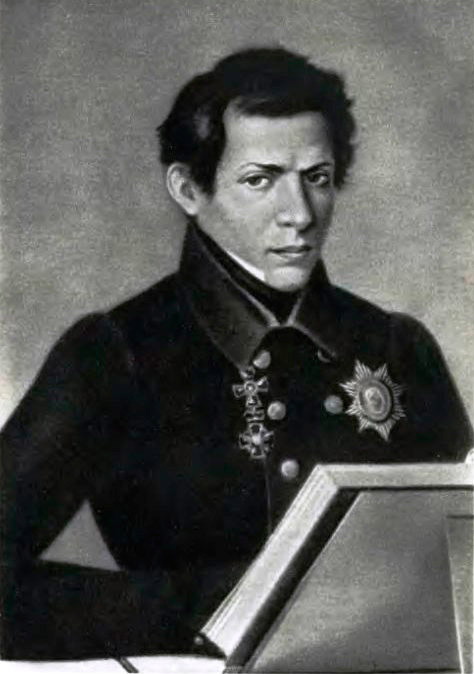
Nikolai Lobachevsky remains one of history's most celebrated figures in their domain, remembered for shaping cultural discourse, artistic mastery, and intellectual frontiers.
Life & Historical Impact
Nikolai Ivanovich Lobachevsky, born December 1, 1792, in Nizhny Novgorod, Russian Empire, was a monumental mathematician celebrated as the 'Copernicus of Geometry.' Daring to challenge Euclid's fifth postulate (the parallel postulate) which had stood unchallenged for over two millennia, Lobachevsky independently conceived hyperbolic non-Euclidean geometry in 1826.
His revolutionary mathematical framework proved that consistent, rigorous geometries exist on curved surfaces where parallel lines diverge—a conceptual breakthrough that later provided the fundamental mathematical foundation for Albert Einstein's General Theory of Relativity. Serving as Rector of Kazan University for nearly two decades, Lobachevsky reshaped scientific higher education with vision and unwavering integrity.
Major Achievements & Landmark Works
Throughout their career, Nikolai Lobachevsky produced landmark achievements that earned global recognition. Notable works and career highlights include: Founding of Hyperbolic Non-Euclidean Geometry (Pangeometry, 1826–1829), On the Principles of Geometry (First Published Treatise, 1829–1830), Geometrical Investigations on the Theory of Parallel Lines (1840), Pangeometry (Final Synthesis, 1855), Rector of Kazan State University (Transformed into World-Class Research Center).
Enduring Influence & Philosophy
The philosophical legacy of Nikolai Lobachevsky continues to enrich contemporary debates on creativity, ethics, and human achievement.