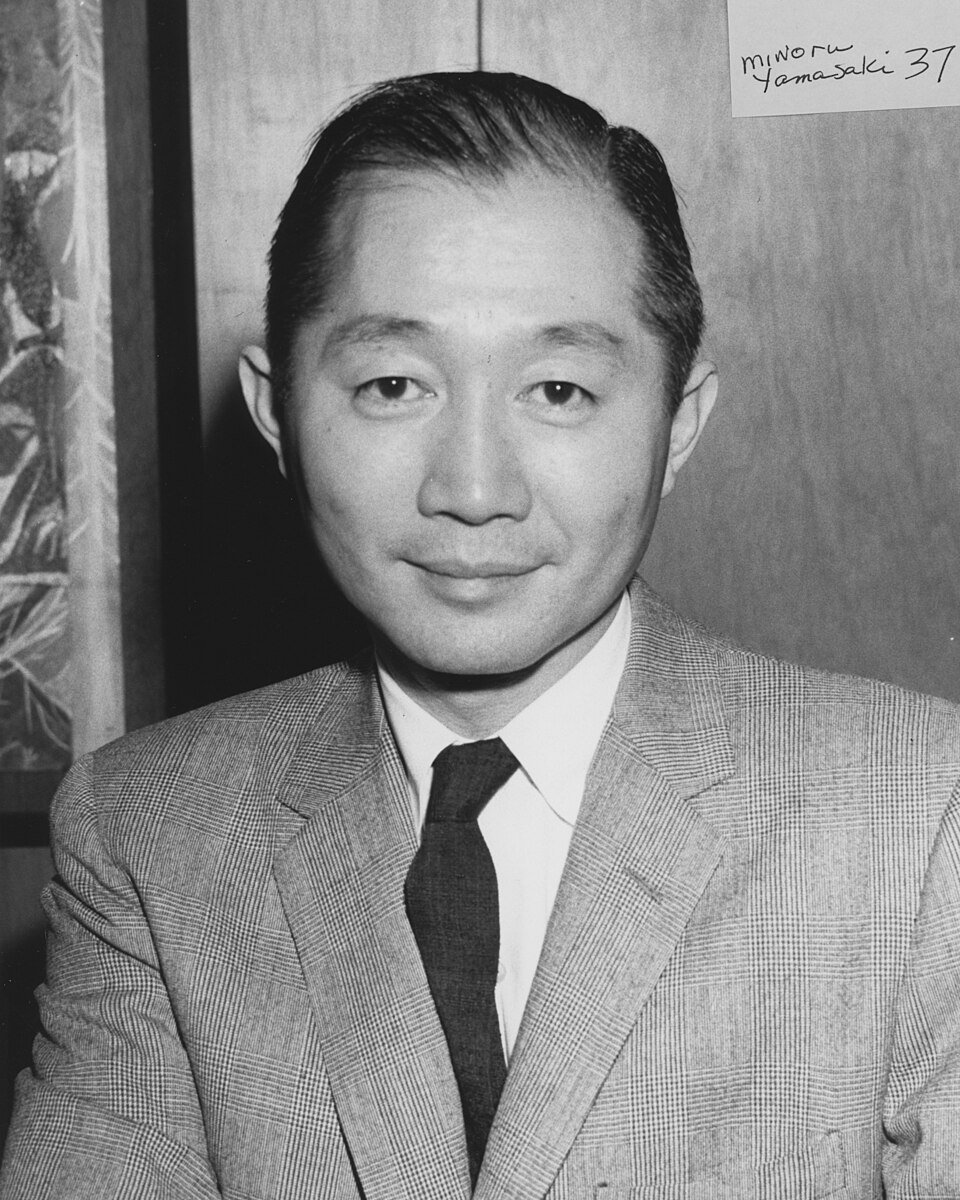
Minoru Yamasaki remains one of history's most celebrated figures in their domain, remembered for shaping cultural discourse, artistic mastery, and intellectual frontiers.
Life & Historical Impact
Minoru Yamasaki, born December 1, 1912, in Seattle, Washington, to Japanese immigrant parents, was one of the 20th century's most celebrated and influential modernist architects. Overcoming fierce anti-Asian prejudice during the Depression era, Yamasaki pioneered 'New Formalism'—infusing modern structural engineering with delicate arches, soaring vaults, and serene reflecting pools.
His iconic masterpieces include the Seattle Pacific Science Center and the monumental 110-story Twin Towers of the World Trade Center in Manhattan, which held the title of the world's tallest buildings upon completion. A three-time recipient of the American Institute of Architects' First Honor Award, Yamasaki designed civic structures celebrating human peace and international brotherhood.
Major Achievements & Landmark Works
Throughout their career, Minoru Yamasaki produced landmark achievements that earned global recognition. Notable works and career highlights include: World Trade Center Twin Towers in New York City (Completed 1973), Pacific Science Center in Seattle (Century 21 Exposition, 1962), Dhahran International Airport Terminal in Saudi Arabia (1961), Lambert–St. Louis International Airport Main Terminal (1956), A Life in Architecture (Autobiography, 1979).
Enduring Influence & Philosophy
The philosophical legacy of Minoru Yamasaki continues to enrich contemporary debates on creativity, ethics, and human achievement.