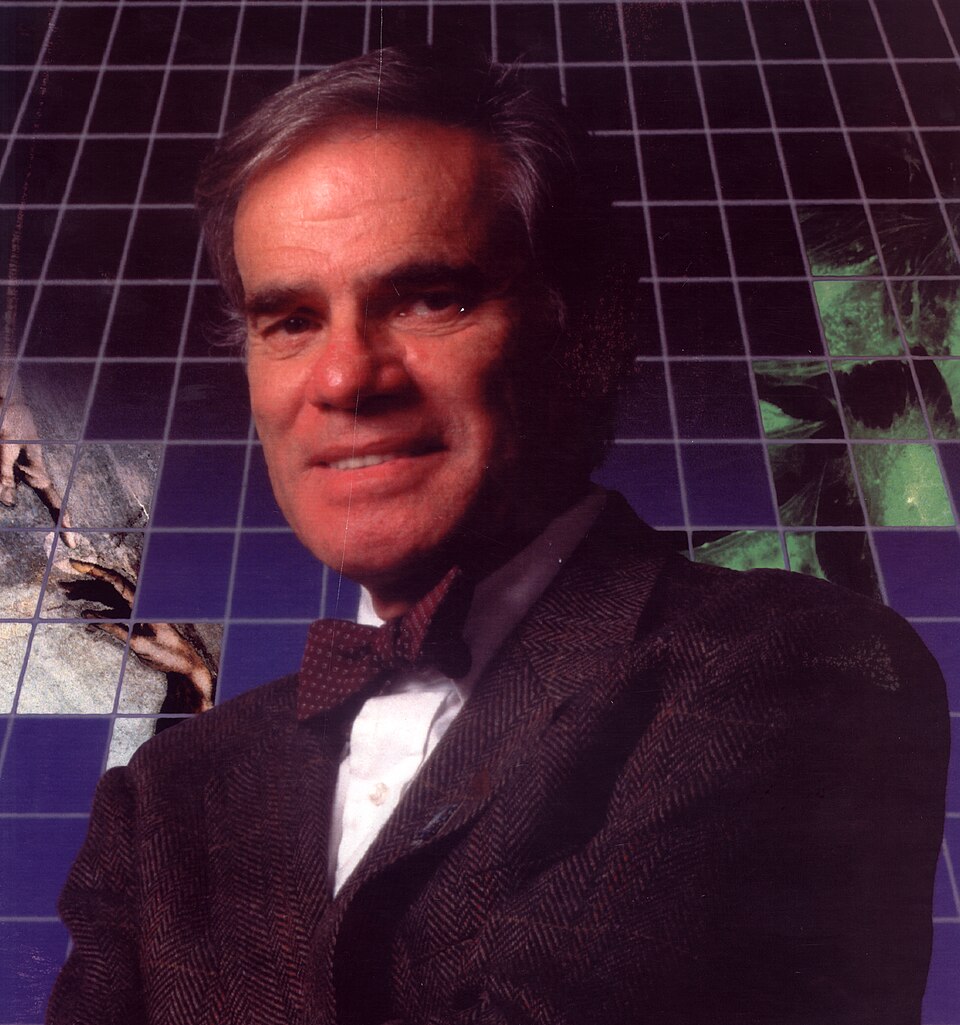
Martin Rodbell remains one of history's most celebrated figures in their domain, remembered for shaping cultural discourse, artistic mastery, and intellectual frontiers.
Life & Historical Impact
Martin Rodbell, born December 1, 1925, in Baltimore, Maryland, was an eminent American biochemist and molecular endocrinologist who was awarded the 1994 Nobel Prize in Physiology or Medicine alongside Alfred G. Gilman. Rodbell fundamentally transformed cellular biology by discovering that cellular communication relies on a three-part signal transduction system: a discriminator, a transducer (G-proteins), and an amplifier.
His pioneering work at the National Institutes of Health (NIH) proved that GTP acts as an essential molecular switch, opening the door to understanding how hormones, neurotransmitters, and sensory inputs regulate human cellular physiology. Rodbell's discoveries established modern pharmacological drug targeting for hundreds of human diseases.
Major Achievements & Landmark Works
Throughout their career, Martin Rodbell produced landmark achievements that earned global recognition. Notable works and career highlights include: Nobel Prize in Physiology or Medicine (1994), Discovery of G-Proteins and Signal Transduction in Living Cells (1970s), Demonstration of GTP Role in Cellular Hormone Signaling, Pioneering Research at the National Institutes of Health (NIH), Scientific Director of National Institute of Environmental Health Sciences.
Enduring Influence & Philosophy
The philosophical legacy of Martin Rodbell continues to enrich contemporary debates on creativity, ethics, and human achievement.