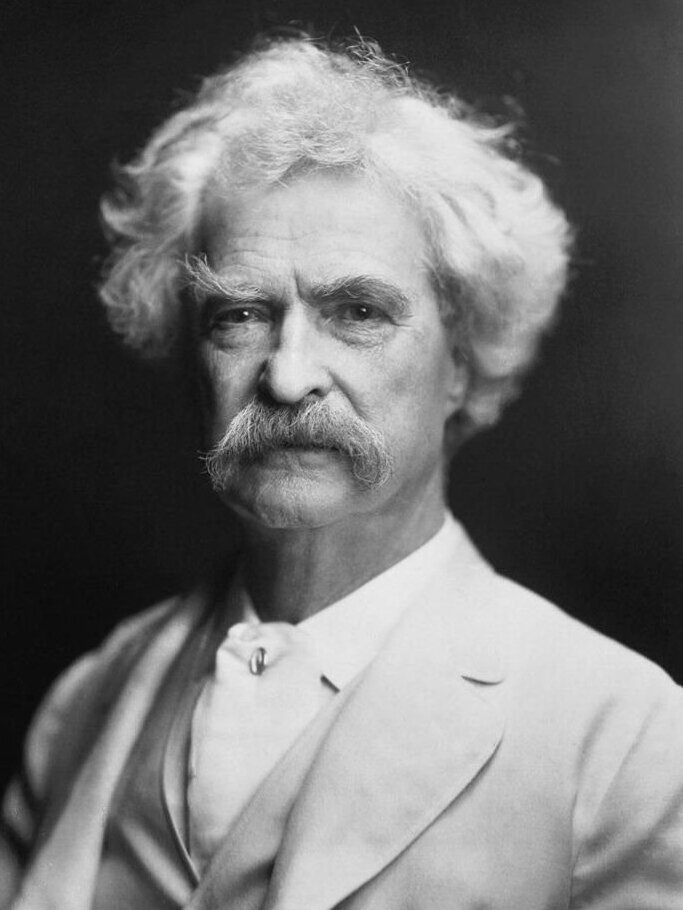
Mark Twain (1835 – 1910) remains one of history's most celebrated Novelist, Humorist & Social Critic, remembered for shaping cultural discourse, artistic mastery, and intellectual frontiers.
Life & Historical Impact
Mark Twain, born Samuel Langhorne Clemens on November 30, 1835, in Florida, Missouri, was a titan of American literature, satire, and social commentary. Celebrated by William Faulkner as 'the father of American literature,' Twain transformed American letters by elevating colloquial regional speech and sharp social observation into enduring art.
Twain's masterpieces, including *Adventures of Huckleberry Finn* and *The Adventures of Tom Sawyer*, exposed the moral contradictions of racism, societal hypocrisy, and institutional greed with unmatched humor and humanist empathy. Beyond fiction, Twain was a globetrotting lecturer, essayist, and vocal anti-imperialist whose fearless wit illuminated the human condition across generations.
Major Achievements & Landmark Works
Throughout their career, Mark Twain produced landmark achievements that earned global recognition. Notable works and career highlights include: Adventures of Huckleberry Finn (1884), The Adventures of Tom Sawyer (1876), A Connecticut Yankee in King Arthur's Court (1889), Life on the Mississippi (1883), The Prince and the Pauper (1881).
Enduring Influence & Philosophy
The philosophical legacy of Mark Twain continues to enrich contemporary debates on creativity, ethics, and human achievement.