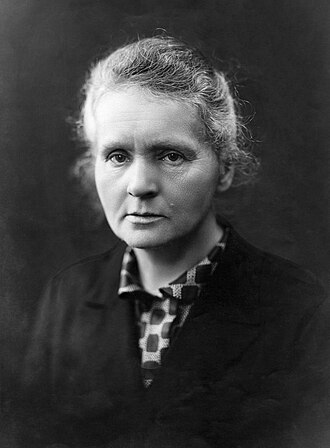
Every year on November 7, the world commemorates the extraordinary life and legacy of Marie Curie (Polish-French Physicist, Chemist & Pioneer of Radioactivity). Celebrated across Poland and worldwide for defining contributions to science, their life remains an inspiring beacon of human courage, vision, and excellence.
1. Early Foundations, Background & Formative Years
Maria Salomea Skłodowska was born in Warsaw, Poland, on November 7, 1867, the youngest of five children of secondary-school teachers. Growing up in a Poland partitioned under the oppressive rule of the Russian Empire, she received clandestine education at the illegal Flying University while working as a governess to financially support her sister Bronisława's medical studies in Paris.
In 1891, at age twenty-four, Maria moved to Paris, enrolling at the University of Paris (Sorbonne). Living in a freezing garret on meager bread and tea, she earned degrees in physics and mathematics at the head of her class. In 1894, she met Pierre Curie, professor of physics at the ESPCI. Bound by mutual scientific passion, they married in 1895, embarking on history's most celebrated scientific collaboration.
Investigating Henri Becquerel's uranium rays in a drafty wooden shed, Marie hypothesized that radiation was an atomic property rather than a molecular interaction, coining the term 'radioactivity.' Through painstaking fractional crystallization of pitchblende ore, the Curies isolated polonium (July 1898) and radium (December 1898). In 1903, Marie and Pierre shared the Nobel Prize in Physics with Becquerel. Following Pierre's tragic death in a street accident in 1906, Marie succeeded him as the first female professor at the Sorbonne. In 1911, she was awarded the Nobel Prize in Chemistry for isolating pure radium. During World War I, she engineered twenty mobile radiography vehicles ('Petites Curies') that performed over one million X-rays for wounded soldiers on the front lines. She died on July 4, 1934, from aplastic anemia caused by prolonged radiation exposure, and was entombed with highest state honors in the Panthéon in Paris.
Growing up in Poland, Marie Curie was guided by an innate curiosity, unwavering discipline, and a refusal to accept mediocrity. These formative experiences forged the intellectual and moral bedrock that would later define their world-changing accomplishments.
2. Defining Achievements & Global Career Breakthroughs
Across decades of dedicated service and relentless practice, Marie Curie redefined standards of excellence in science. Whether breaking barriers, innovating masterworks, or transforming public perception, their career represents the pinnacle of professional dedication.
3. Philosophy, Quotations & Guiding Worldview
Throughout their life, Marie Curie articulated profound insights into human potential, creative resilience, and moral responsibility. Their words continue to offer timeless guidance for succeeding generations.
4. Key Milestones & Notable Works
- Discovered the radioactive elements polonium (named after Poland) and radium (1898)
- Coined the scientific term 'radioactivity' and proved it is an inherent atomic property
- Nobel Prize in Physics (1903) — first woman ever awarded a Nobel Prize
- Nobel Prize in Chemistry (1911) — only person to win Nobels in two different sciences
- Developed mobile X-ray radiography vehicles ('Petites Curies') saving countless lives in WWI
- Founded the Curie Institutes in Paris and Warsaw, premier oncology and nuclear research centers
5. The Enduring Legacy of Marie Curie
Generations of practitioners, scholars, and future leaders trace their inspiration directly to the path blazed by Marie Curie. Their courage reminds us that true greatness requires relentless perseverance, creative boldness, and a lifelong commitment to uplifting humanity.