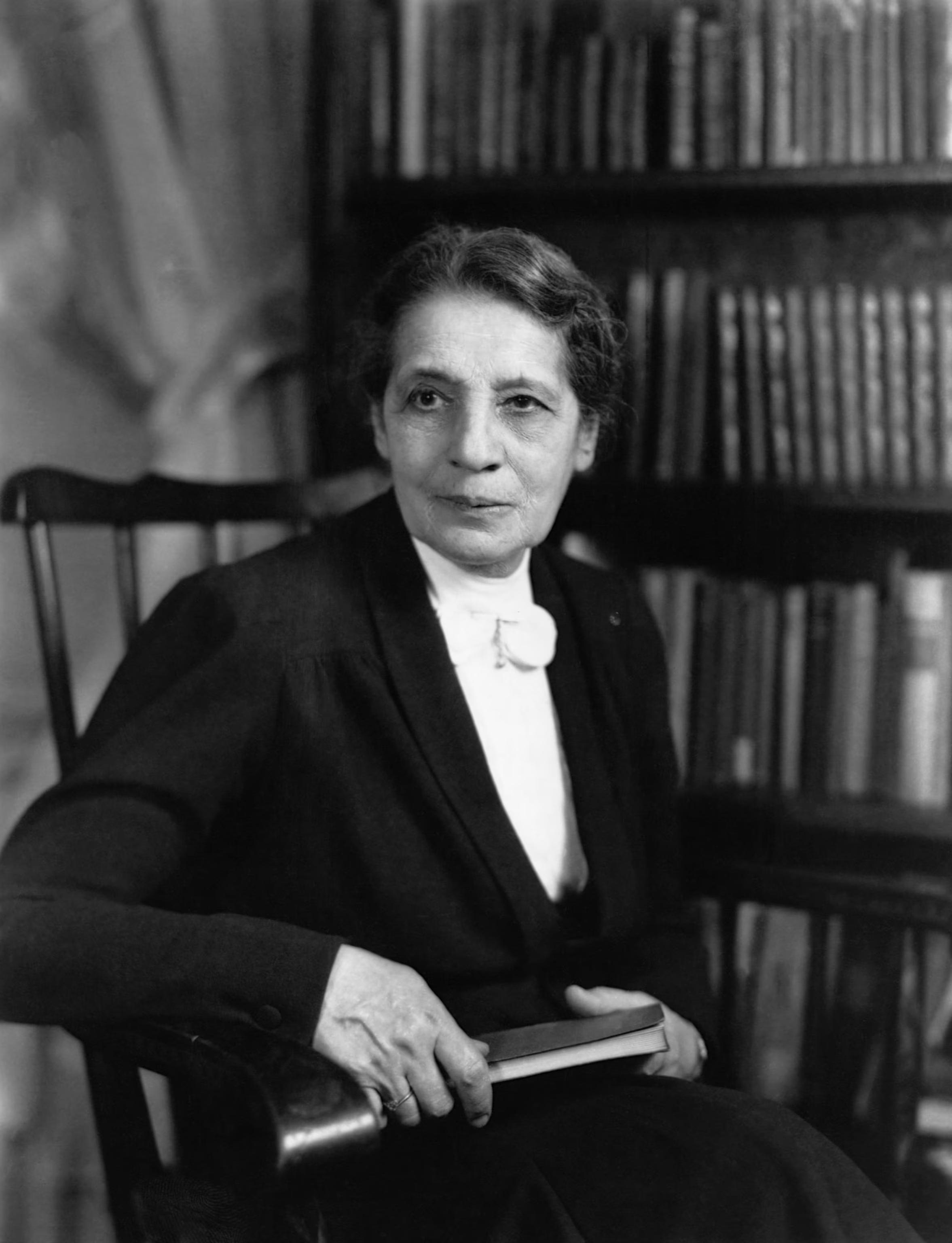
Every year on November 7, the world commemorates the extraordinary life and legacy of Lise Meitner (Austrian-Swedish Nuclear Physicist & Co-Discoverer of Nuclear Fission). Celebrated across Austria and worldwide for defining contributions to science, their life remains an inspiring beacon of human courage, vision, and excellence.
1. Early Foundations, Background & Formative Years
Elise Meitner was born on November 7, 1878, in Vienna, Austria, into an enlightened Jewish intellectual family. Excluded from Austrian public high schools due to her gender, she studied privately, passing her university entrance exam and enrolling at the University of Vienna in 1901. Inspired by the brilliant theoretical physicist Ludwig Boltzmann, Meitner earned her doctorate in physics in 1906, becoming only the second woman to receive a physics PhD at Vienna.
In 1907, Meitner moved to Berlin to attend lectures by Max Planck. She began a thirty-year scientific partnership with chemist Otto Hahn at the Kaiser Wilhelm Institute for Chemistry. Initially forced to work in an unheated basement carpenter's shop without access to university laboratories or a salary because of her gender, her experimental brilliance quickly became indispensable. In 1917, Meitner and Hahn discovered protactinium-231. By 1926, Meitner became the first woman in Germany to hold a full professorship in physics at the University of Berlin.
Following Hitler's rise and the 1938 annexation of Austria, Meitner's Jewish heritage placed her life in mortal danger. With the assistance of Dutch physicists, she fled Nazi Germany on a train to the Netherlands and settled in Stockholm, Sweden. In December 1938, Hahn wrote to Meitner in exile reporting baffling chemical results: bombarding uranium with neutrons produced barium. Walking in the snow at Kungälv with her nephew Otto Frisch, Meitner applied Bohr's liquid-drop model of the nucleus and Einstein's E=mc² to theoretically calculate that the uranium nucleus had split in half, releasing 200 million electron volts of energy. Frisch and Meitner coined the term nuclear fission. When Hahn was controversially awarded the 1944 Nobel Prize in Chemistry alone, Meitner was unjustly excluded by the Nobel Committee. Refusing to participate in the Manhattan Project, she spent her final decades advocating for international arms control and peaceful atomic science. Her epitaph in Cambridge reads: 'A physicist who never lost her humanity.'
Growing up in Austria, Lise Meitner was guided by an innate curiosity, unwavering discipline, and a refusal to accept mediocrity. These formative experiences forged the intellectual and moral bedrock that would later define their world-changing accomplishments.
2. Defining Achievements & Global Career Breakthroughs
Across decades of dedicated service and relentless practice, Lise Meitner redefined standards of excellence in science. Whether breaking barriers, innovating masterworks, or transforming public perception, their career represents the pinnacle of professional dedication.
3. Philosophy, Quotations & Guiding Worldview
Throughout their life, Lise Meitner articulated profound insights into human potential, creative resilience, and moral responsibility. Their words continue to offer timeless guidance for succeeding generations.
4. Key Milestones & Notable Works
- Theoretically explained and calculated the energy release of nuclear fission (December 1938)
- Co-discovered the chemical element protactinium (Pa, element 91) with Otto Hahn (1917)
- First female full professor of physics in Germany (University of Berlin, 1926)
- Discovered the radiationless Auger electron transition (1922, before Pierre Auger)
- Honored with the Enrico Fermi Award (1966) alongside Otto Hahn and Fritz Strassmann
- Synthesized element 109 was named Meitnerium (Mt) in her immortal honor (1997)
5. The Enduring Legacy of Lise Meitner
Generations of practitioners, scholars, and future leaders trace their inspiration directly to the path blazed by Lise Meitner. Their courage reminds us that true greatness requires relentless perseverance, creative boldness, and a lifelong commitment to uplifting humanity.