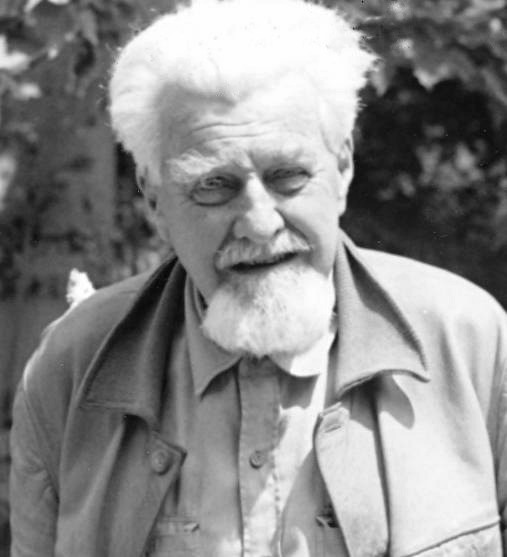
Every year on November 7, the world commemorates the extraordinary life and legacy of Konrad Lorenz (Austrian Zoologist, Ethologist & Nobel Laureate in Physiology/Medicine). Celebrated across Austria and worldwide for defining contributions to science, their life remains an inspiring beacon of human courage, vision, and excellence.
1. Early Foundations, Background & Formative Years
Konrad Zacharias Lorenz was born on November 7, 1903, in Vienna, Austria, the son of wealthy orthopedic surgeon Adolf Lorenz. Growing up at his family's estate in Altenberg on the banks of the Danube, young Konrad displayed an intense fascination with animals, keeping an astonishing menagerie of ducks, geese, dogs, and monkeys. At his father's insistence, he studied medicine at Columbia University and the University of Vienna, earning his MD in 1928, before completing a doctorate in zoology in 1933.
Lorenz revolutionized the study of animal behavior by moving away from artificial laboratory cages and studying animals in their natural habitats. He discovered the biological phenomenon of imprinting: newly hatched greylag geese and mallard ducklings instinctively attach to the first moving object they see during a critical post-hatch developmental window. Famously, Lorenz allowed newly hatched goslings (including his famous goose 'Martina') to imprint upon him, leading to iconic photographs of Lorenz walking through Austrian meadows with a line of devoted goslings following in single file.
Lorenz demonstrated that instinctual behaviors (fixed action patterns) are inherited evolutionary traits triggered by specific environmental releasers. In 1963, he published his influential, thought-provoking book On Aggression, analyzing the biological roots and evolutionary functions of intraspecies conflict. In 1973, Lorenz, along with Karl von Frisch and Nikolaas Tinbergen, was awarded the Nobel Prize in Physiology or Medicine 'for their discoveries concerning organization and elicitation of individual and social behaviour patterns.' His accessible, charming books—including King Solomon's Ring (1949)—introduced millions of readers to the profound intelligence and beauty of the animal kingdom.
Growing up in Austria, Konrad Lorenz was guided by an innate curiosity, unwavering discipline, and a refusal to accept mediocrity. These formative experiences forged the intellectual and moral bedrock that would later define their world-changing accomplishments.
2. Defining Achievements & Global Career Breakthroughs
Across decades of dedicated service and relentless practice, Konrad Lorenz redefined standards of excellence in science. Whether breaking barriers, innovating masterworks, or transforming public perception, their career represents the pinnacle of professional dedication.
3. Philosophy, Quotations & Guiding Worldview
Throughout their life, Konrad Lorenz articulated profound insights into human potential, creative resilience, and moral responsibility. Their words continue to offer timeless guidance for succeeding generations.
4. Key Milestones & Notable Works
- Co-founded the scientific discipline of modern ethology (comparative study of animal behavior)
- Discovered the biological mechanism of 'imprinting' in birds during critical developmental periods
- Awarded the Nobel Prize in Physiology or Medicine in 1973 (shared with Tinbergen and von Frisch)
- Authored worldwide bestsellers including 'King Solomon's Ring' (1949) and 'On Aggression' (1963)
- Established the Max Planck Institute for Behavioral Physiology at Seewiesen, Germany
5. The Enduring Legacy of Konrad Lorenz
Generations of practitioners, scholars, and future leaders trace their inspiration directly to the path blazed by Konrad Lorenz. Their courage reminds us that true greatness requires relentless perseverance, creative boldness, and a lifelong commitment to uplifting humanity.