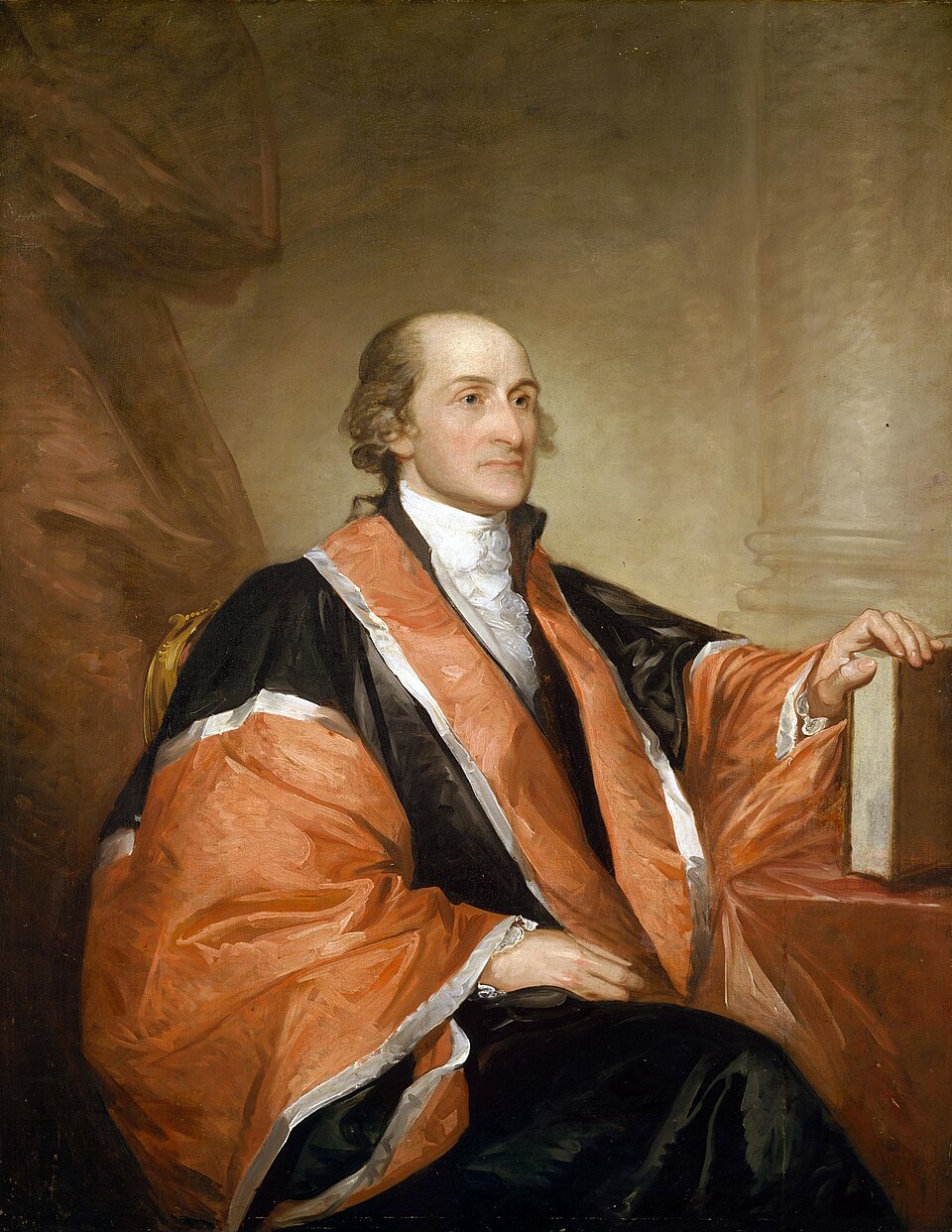

John Jay
Founding Father and Jurist
John Jay was an American Founding Father, co-author of The Federalist Papers, diplomat who negotiated the Treaty of Paris, and the first Chief Justice of the United States.
Early Life, Career Milestones & Enduring Legacy
John Jay (December 12, 1745 – May 17, 1829) was an American statesman, patriot, diplomat, and Founding Father of the United States. Born in New York City to a wealthy merchant family of Huguenot descent, Jay was a central architect of early American constitutional governance. He served as President of the Continental Congress (1778–1779) and joined Benjamin Franklin and John Adams in Paris to negotiate the historic 1783 Treaty of Paris, which formally ended the American Revolutionary War and recognized United States independence.
Along with Alexander Hamilton and James Madison, Jay co-authored *The Federalist Papers*, penning five influential essays on foreign policy before illness intervened. Appointed by President George Washington as the first Chief Justice of the United States Supreme Court in 1789, Jay established vital legal precedents. In 1794, he negotiated the Jay Treaty with Great Britain, averting war. Jay later served two distinguished terms as Governor of New York, where he successfully signed the Act for the Gradual Abolition of Slavery in 1799.
Top 5 Notable Works & Achievements
- The Federalist Papers (Essays 2, 3, 4, 5, and 64) (1787) — Essays: Authoritative essays advocating the ratification of the US Constitution and analyzing foreign relations.
- Treaty of Paris (1783) — Diplomatic Treaty: Negotiated by Jay, Franklin, and Adams, establishing American independence and generous territorial borders.
- Chisholm v. Georgia (1793) — Legal Opinion: Landmark Supreme Court opinion affirming federal judicial authority over sovereign states, prompting the 11th Amendment.
- The Jay Treaty (1794) — Diplomatic Treaty: Crucial diplomatic pact between the US and Britain averting imminent war and resolving Revolutionary debts.
- Act for the Gradual Abolition of Slavery (New York) (1799) — Legislation: Historic legislation signed as Governor of New York setting enslaved children on the path to freedom.