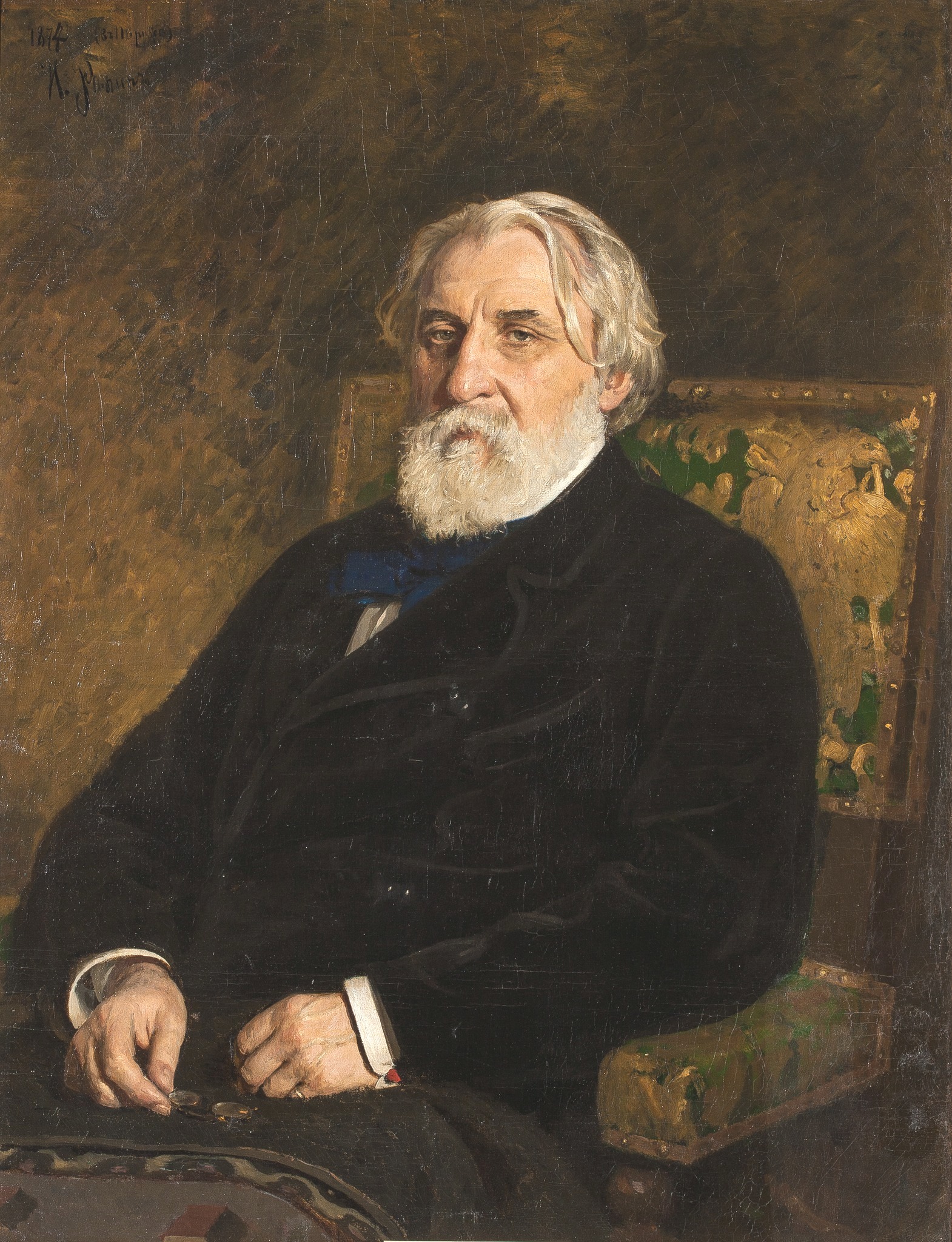
Every year on November 9, the world commemorates the extraordinary life and legacy of Ivan Turgenev (Russian Master Novelist, Short Story Writer & Playwright ('Fathers and Sons')). Celebrated across Russia and worldwide for defining contributions to literature, their life remains an inspiring beacon of human courage, vision, and excellence.
1. Early Foundations, Background & Formative Years
Ivan Turgenev was born into a wealthy landowning family on November 9, 1818, in Oryol, Russia. Deeply traumatized by his mother's tyrannical treatment of her serfs, Turgenev vowed an 'Hannibalic oath' to dedicate his life and pen to the eradication of serfdom. He studied at Moscow University, Saint Petersburg University, and the University of Berlin, absorbing Hegelian philosophy and Western humanist ideals.
In 1852, Turgenev published A Sportsman's Sketches (Zapiski okhotnika), depicting the dignity, rich inner life, and tragic exploitation of Russian peasant serfs with subtle lyrical realism. The book deeply moved Tsar Alexander II and is historically credited with helping build political momentum for the 1861 Emancipation of the serfs.
Turgenev achieved international literary immortality with Fathers and Sons (1862), contrasting the romantic idealism of the 1840s generation with the radical scientific materialism of the 1860s youth through his iconic protagonist Bazarov—popularizing the term 'nihilism'. Living primarily in Germany and France alongside mezzo-soprano Pauline Viardot, Turgenev championed Leo Tolstoy and Fyodor Dostoevsky to Western audiences. He died near Paris in 1883 and was buried in Saint Petersburg.
Growing up in Russia, Ivan Turgenev was guided by an innate curiosity, unwavering discipline, and a refusal to accept mediocrity. These formative experiences forged the intellectual and moral bedrock that would later define their world-changing accomplishments.
2. Defining Achievements & Global Career Breakthroughs
Across decades of dedicated service and relentless practice, Ivan Turgenev redefined standards of excellence in literature. Whether breaking barriers, innovating masterworks, or transforming public perception, their career represents the pinnacle of professional dedication.
3. Philosophy, Quotations & Guiding Worldview
Throughout their life, Ivan Turgenev articulated profound insights into human potential, creative resilience, and moral responsibility. Their words continue to offer timeless guidance for succeeding generations.
4. Key Milestones & Notable Works
- Authored 'A Sportsman's Sketches' (1852), which humanized serfs and catalyzed the Emancipation Edict of 1861
- Penned the immortal classic novel 'Fathers and Sons' (1862), defining the generational conflict and nihilism
- Wrote acclaimed psychological novels 'Rudin' (1856), 'Home of the Gentry' (1859), and 'On the Eve' (1860)
- Pioneered the Russian psychological drama with his acclaimed play 'A Month in the Country' (1850)
- Served as the preeminent cultural ambassador introducing 19th-century Russian literature to Western Europe
5. The Enduring Legacy of Ivan Turgenev
Generations of practitioners, scholars, and future leaders trace their inspiration directly to the path blazed by Ivan Turgenev. Their courage reminds us that true greatness requires relentless perseverance, creative boldness, and a lifelong commitment to uplifting humanity.