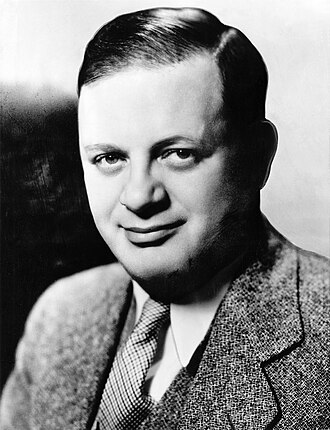
Every year on November 7, the world commemorates the extraordinary life and legacy of Herman J. Mankiewicz (Academy Award-Winning American Screenwriter & Journalist (Citizen Kane)). Celebrated across United States and worldwide for defining contributions to cinema, their life remains an inspiring beacon of human courage, vision, and excellence.
1. Early Foundations, Background & Formative Years
Herman Jacob Mankiewicz was born on November 7, 1897, in New York City, the son of German-Jewish immigrants. A brilliant student, he graduated from Columbia University at age nineteen and served in the United States Marine Corps during World War I. After the armistice, he served as American Red Cross director in Paris and Berlin correspondent for the Chicago Tribune.
Returning to New York in the 1920s, Mankiewicz became the assistant theater critic for The New York Times and a founding member of the famous Algonquin Round Table, celebrated alongside Dorothy Parker, Robert Benchley, and Alexander Woollcott for his razor-sharp caustic wit. In 1926, Mankiewicz moved to Hollywood as head of Paramount's scenario department, famously sending his legendary telegram to Ben Hecht: 'Millions are to be made out here and your only competition is idiots. Don't let this get around.'
Mankiewicz's defining masterpiece came in 1940 when twenty-four-year-old Orson Welles contracted him to write a screenplay for RKO. Convalescing from a broken leg in a Victorville desert ranch, Mankiewicz drew on his intimate personal friendship with newspaper baron William Randolph Hearst and mistress Marion Davies to pen the 300-page screenplay originally titled American. The resulting masterwork, Citizen Kane (1941), revolutionized narrative cinema with its non-linear flashback structure, overlapping dialogue, and the enigmatic motif of 'Rosebud'. Mankiewicz and Welles shared the 1941 Academy Award for Best Original Screenplay—the only Oscar the landmark film won. Mankiewicz's extraordinary life and the contentious authorship of Kane were later dramatized in David Fincher's acclaimed film Mank (2020), cementing his legacy as Hollywood's quintessential literary genius.
Growing up in United States, Herman J. Mankiewicz was guided by an innate curiosity, unwavering discipline, and a refusal to accept mediocrity. These formative experiences forged the intellectual and moral bedrock that would later define their world-changing accomplishments.
2. Defining Achievements & Global Career Breakthroughs
Across decades of dedicated service and relentless practice, Herman J. Mankiewicz redefined standards of excellence in cinema. Whether breaking barriers, innovating masterworks, or transforming public perception, their career represents the pinnacle of professional dedication.
3. Philosophy, Quotations & Guiding Worldview
Throughout their life, Herman J. Mankiewicz articulated profound insights into human potential, creative resilience, and moral responsibility. Their words continue to offer timeless guidance for succeeding generations.
4. Key Milestones & Notable Works
- Co-wrote the screenplay for 'Citizen Kane' (1941), ranked by AFI as the greatest American film ever made
- Won the Academy Award for Best Original Screenplay for 'Citizen Kane' (1941) alongside Orson Welles
- Contributed pivotal scenes to 'The Wizard of Oz' (1939), including the decision to film Kansas in sepia tone
- Wrote the screenplay for baseball biographical classic 'The Pride of the Yankees' (1942), earning Oscar nomination
- Founding member and legendary wit of the 1920s Algonquin Round Table in New York
- Subject of David Fincher's multi-Oscar-winning biographical drama 'Mank' (2020)
5. The Enduring Legacy of Herman J. Mankiewicz
Generations of practitioners, scholars, and future leaders trace their inspiration directly to the path blazed by Herman J. Mankiewicz. Their courage reminds us that true greatness requires relentless perseverance, creative boldness, and a lifelong commitment to uplifting humanity.