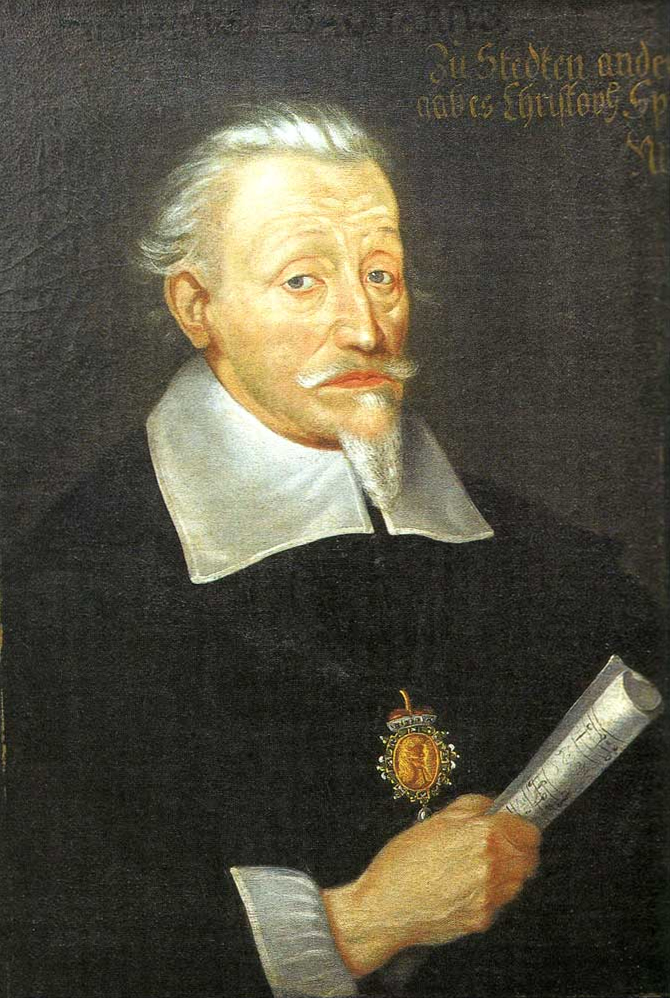
Every year on November 6, the world commemorates the extraordinary life and legacy of Heinrich Schütz (German Early Baroque Composer & Organist). Celebrated across Germany and worldwide for defining contributions to music, their life remains an inspiring beacon of human courage, vision, and excellence.
1. Early Foundations, Background & Formative Years
Born in Köstritz on October 18, 1585, Heinrich Schütz showed remarkable musical talent as a choirboy in the court of Landgrave Moritz of Hesse-Kassel. Although sent to study law at the University of Marburg, the Landgrave recognized his genius and financed his studies in Venice from 1609 to 1612 under the great master Giovanni Gabrieli. In Venice, Schütz mastered the Venetian polychoral style, publishing his first collection of Italian madrigals in 1611.
In 1615, Schütz was appointed court Kapellmeister to John George I, Elector of Saxony, in Dresden, a prestigious position he held for over five decades. During the devastation of the Thirty Years' War (1618–1648), when musical forces and court finances were decimated, Schütz demonstrated immense artistic versatility, creating austere yet deeply moving small-scale sacred concertos (Kleine geistliche Konzerte) using only a few voices and continuo.
Schütz composed Dafne (1627), recognized as the first German opera (now lost), and monumental sacred masterworks including the Psalmen Davids, Symphoniae Sacrae, and his poignant Musikalische Exequien (1636). Synthesizing Italian dramatic expressiveness with German contrapuntal rigor and theological depth, Schütz laid the musical foundation upon which Buxtehude, Handel, and J.S. Bach would later build. He died in Dresden on November 6, 1672, at the age of eighty-seven.
Growing up in Germany, Heinrich Schütz was guided by an innate curiosity, unwavering discipline, and a refusal to accept mediocrity. These formative experiences forged the intellectual and moral bedrock that would later define their world-changing accomplishments.
2. Defining Achievements & Global Career Breakthroughs
Across decades of dedicated service and relentless practice, Heinrich Schütz redefined standards of excellence in music. Whether breaking barriers, innovating masterworks, or transforming public perception, their career represents the pinnacle of professional dedication.
3. Philosophy, Quotations & Guiding Worldview
Throughout their life, Heinrich Schütz articulated profound insights into human potential, creative resilience, and moral responsibility. Their words continue to offer timeless guidance for succeeding generations.
4. Key Milestones & Notable Works
- Composed the landmark funeral masterpiece Musikalische Exequien (1636)
- Composed Dafne (1627), the earliest recorded German opera
- Published the monumental collections Psalmen Davids (1619) and Symphoniae Sacrae (1629, 1647, 1650)
- Served as Kapellmeister to the Electoral Court in Dresden for over 50 years
- Bridged Italian polychoral Renaissance splendor with German sacred Baroque polyphony
5. The Enduring Legacy of Heinrich Schütz
Generations of practitioners, scholars, and future leaders trace their inspiration directly to the path blazed by Heinrich Schütz. Their courage reminds us that true greatness requires relentless perseverance, creative boldness, and a lifelong commitment to uplifting humanity.