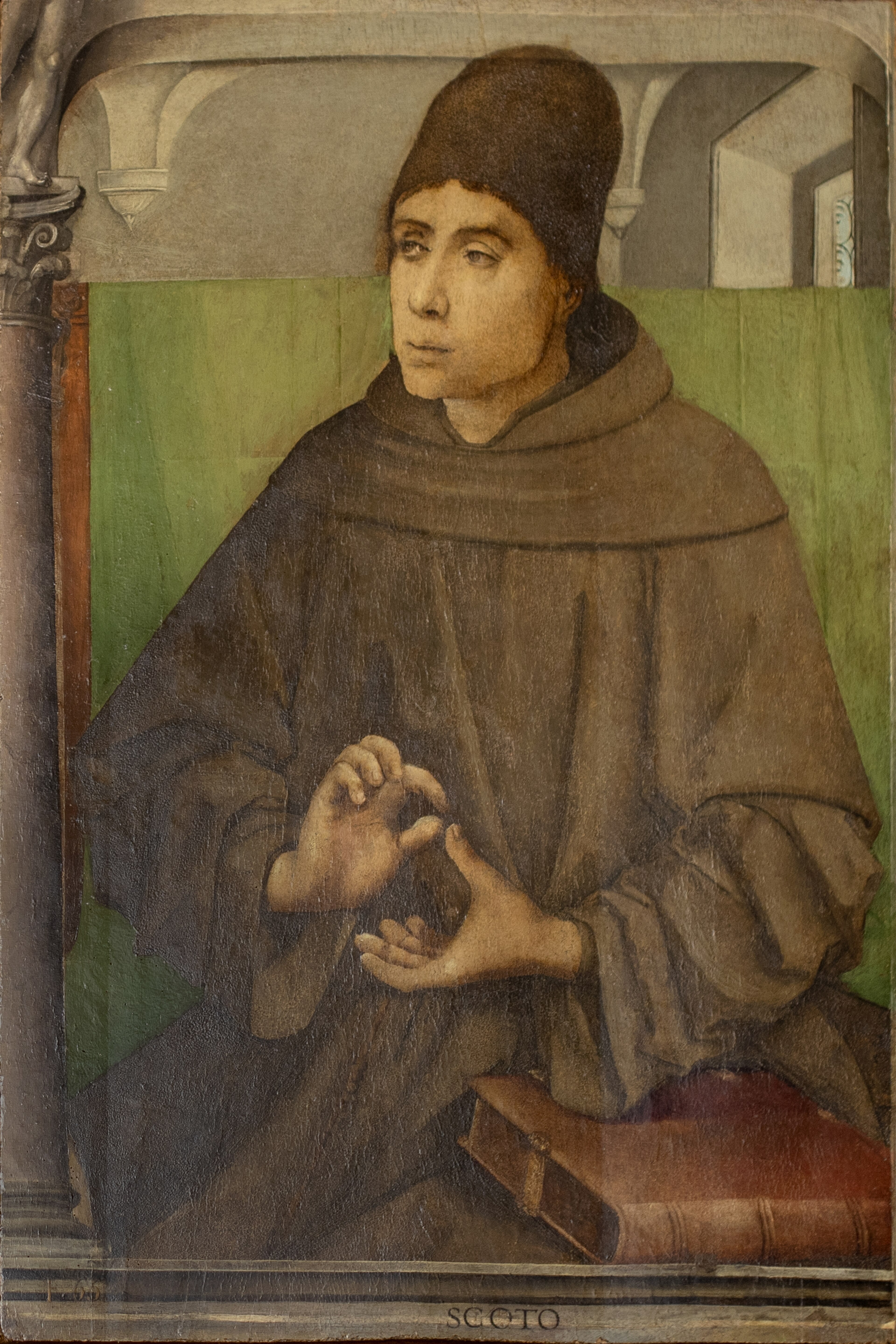
Every year on November 8, the world commemorates the extraordinary life and legacy of Duns Scotus (Scottish Franciscan Friar, High Scholastic Philosopher & Theologian). Celebrated across United Kingdom and worldwide for defining contributions to philosophy, their life remains an inspiring beacon of human courage, vision, and excellence.
1. Early Foundations, Background & Formative Years
John Duns Scotus was born around March 1266 in Duns, Berwickshire, Scotland. Entering the Order of Friars Minor (Franciscans) around 1279, he was ordained a priest at Northampton in March 1291. He studied and lectured at the University of Oxford and Cambridge before being summoned to the prestigious University of Paris (Sorbonne) in 1302.
In 1303, when King Philip IV of France attempted to depose Pope Boniface VIII, Scotus courageously refused to sign the king's anti-papal petition, facing immediate expulsion and exile from France rather than compromising his conscience. Returning to Paris after reconciliation, he was promoted to Regent Master of Theology in 1305.
Scotus earned the immortal scholastic title Doctor Subtilis ('The Subtle Doctor') for his razor-sharp analytical distinctions and nuanced metaphysics. His two most transformative philosophical breakthroughs were the Univocity of Being (the doctrine that 'being' is predicated univocally of both God and creatures, unifying metaphysics) and Haecceity (from the Latin haecceitas, or 'thisness'—the discrete, irreducible principle that makes an individual thing this unique individual rather than merely a member of a species). He also formulated the theological argument for the Immaculate Conception of Mary that the Catholic Church officially defined centuries later. In 1307, Scotus was assigned to Cologne, where he died unexpectedly on November 8, 1308, at age forty-two. He was beatified by Pope John Paul II in 1993, who hailed him as a 'cantor of the Incarnate Word and defender of the Immaculate Conception.'
Growing up in United Kingdom, Duns Scotus was guided by an innate curiosity, unwavering discipline, and a refusal to accept mediocrity. These formative experiences forged the intellectual and moral bedrock that would later define their world-changing accomplishments.
2. Defining Achievements & Global Career Breakthroughs
Across decades of dedicated service and relentless practice, Duns Scotus redefined standards of excellence in philosophy. Whether breaking barriers, innovating masterworks, or transforming public perception, their career represents the pinnacle of professional dedication.
3. Philosophy, Quotations & Guiding Worldview
Throughout their life, Duns Scotus articulated profound insights into human potential, creative resilience, and moral responsibility. Their words continue to offer timeless guidance for succeeding generations.
4. Key Milestones & Notable Works
- Formulated the foundational metaphysical doctrine of the 'Univocity of Being' (ens univocum)
- Developed the philosophical concept of 'Haecceity' ('thisness' / ultimate individual singular reality)
- Formulated the definitive philosophical and theological defense of the 'Immaculate Conception'
- Authored scholastic philosophical masterworks 'Ordinatio' (Opus Oxoniense) and 'Quaestiones Quodlibetales'
- Beatified by Pope John Paul II in 1993 and recognized as 'Doctor Subtilis' across Catholic philosophy
5. The Enduring Legacy of Duns Scotus
Generations of practitioners, scholars, and future leaders trace their inspiration directly to the path blazed by Duns Scotus. Their courage reminds us that true greatness requires relentless perseverance, creative boldness, and a lifelong commitment to uplifting humanity.