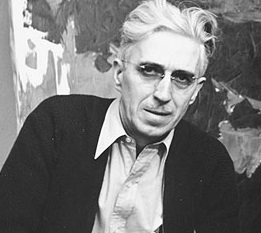
Clyfford Still (1904 – 1980) remains one of history's most celebrated Abstract Expressionist Painter, remembered for shaping cultural discourse, artistic mastery, and intellectual frontiers.
Life & Historical Impact
Clyfford Still, born November 30, 1904, in Grandin, North Dakota, was a foundational pioneer of Abstract Expressionism and a primary originator of Color Field painting. Along with Mark Rothko and Jackson Pollock, Still developed a revolutionary visual language of jagged vertical forms, raw pigment contrasts, and massive unprimed canvases that broke completely from European geometric traditions.
Fiercely protective of his artistic independence, Still famously withdrew from commercial galleries in the 1950s to prevent his works from being commodified. In accordance with his strict will, his estate resulted in the creation of the Clyfford Still Museum in Denver, housing 95% of his monumental lifetime oeuvre in pristine institutional permanence.
Major Achievements & Landmark Works
Throughout their career, Clyfford Still produced landmark achievements that earned global recognition. Notable works and career highlights include: Pioneering Color-Field Abstract Expressionism (1940s–1970s), 1957-D-No. 1 (Major Canvas), PH-1078 (Iconic Jagged Pigment Masterpiece), Founding Collection of the Clyfford Still Museum in Denver, Albright-Knox Art Gallery Major Gift Collection (1964).
Enduring Influence & Philosophy
The philosophical legacy of Clyfford Still continues to enrich contemporary debates on creativity, ethics, and human achievement.