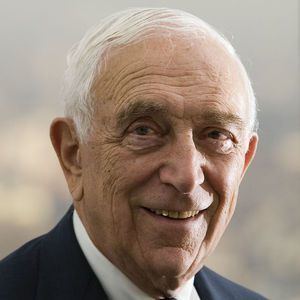
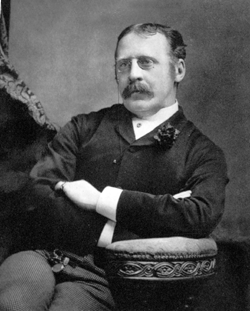
Every year on November 4, the international community commemorates Charles K. Kao (Nobel Laureate in Physics (2009), "Father of Fiber Optics" & Electrical Engineer). Celebrated across Hong Kong / China and worldwide for defining contributions to science, their life remains an inspiring beacon of human courage, vision, and excellence.
1. Early Foundations, Background & Formative Years
Born in Shanghai on November 4, 1933, Charles Kuen Kao moved with his family to Hong Kong in 1948 before pursuing his higher education in electrical engineering in London. In 1966, while working at Standard Telecommunication Laboratories (STL) in Harlow, England, Kao and his colleague George Hockham published a groundbreaking research paper calculating that the high attenuation in existing optical fibers was caused by impurities in the silica glass rather than fundamental physical limitations.
Kao boldly theorized that if glass could be purified to reduce attenuation below 20 decibels per kilometer, optical fibers would become an extraordinarily efficient transmission medium for telephony and digital data. His pioneering insights inspired materials scientists globally to manufacture ultra-pure fused silica fibers, catalyzing the modern telecommunications revolution that underpinned the global internet and undersea communication cables.
Beyond his laboratory breakthroughs, Kao served as Vice-Chancellor of The Chinese University of Hong Kong (CUHK) from 1987 to 1996, modernizing higher education and scientific research infrastructure across East Asia. In 2009, he was awarded half of the Nobel Prize in Physics for "groundbreaking achievements concerning the transmission of light in fibers for optical communication", cementing his legacy as the visionary who connected the world at the speed of light.
Growing up in Hong Kong / China, Charles K. Kao was guided by an innate curiosity, unwavering discipline, and a refusal to accept mediocrity. These formative experiences forged the intellectual and moral bedrock that would later define their world-changing accomplishments.
2. Groundbreaking Breakthroughs & Monumental Achievements
Sir Charles Kuen Kao was a Hong Kong-British-American electrical engineer and physicist who pioneered the development and use of fiber optics in telecommunications, earning the 2009 Nobel Prize in Physics as the "Father of Fiber Optics".
Throughout their career, Charles K. Kao surmounted institutional obstacles, skepticism, and severe adversity. Through unyielding resolve, they established new benchmarks in science that continue to shape the modern world.
3. Cultural Resonance, Philosophy & World Impact
The philosophical principles embodied by Charles K. Kao extend far beyond regional frontiers. Admirers and scholars across Europe, the Americas, Africa, Asia, and Oceania recognize their timeless contribution to human progress, ethical leadership, and creative mastery.
4. Key Milestones & Notable Works
Notable Achievements & Works
- 1966 landmark paper: "Dielectric-fibre surface waveguides for optical frequencies"
- Nobel Prize in Physics (2009) for pioneering optical fiber communications
- Vice-Chancellor of The Chinese University of Hong Kong (1987–1996)
- Co-founding the Independent Schools Foundation Academy in Hong Kong
- Faraday Medal (1989) & IEEE Alexander Graham Bell Medal (1985)
5. Enduring Legacy for Future Generations
On November 4, we reflect upon a legacy that transcends time. For aspiring students, creators, and leaders everywhere, the journey of Charles K. Kao serves as proof that conviction, mastery, and dedication leave an indelible mark upon human history.