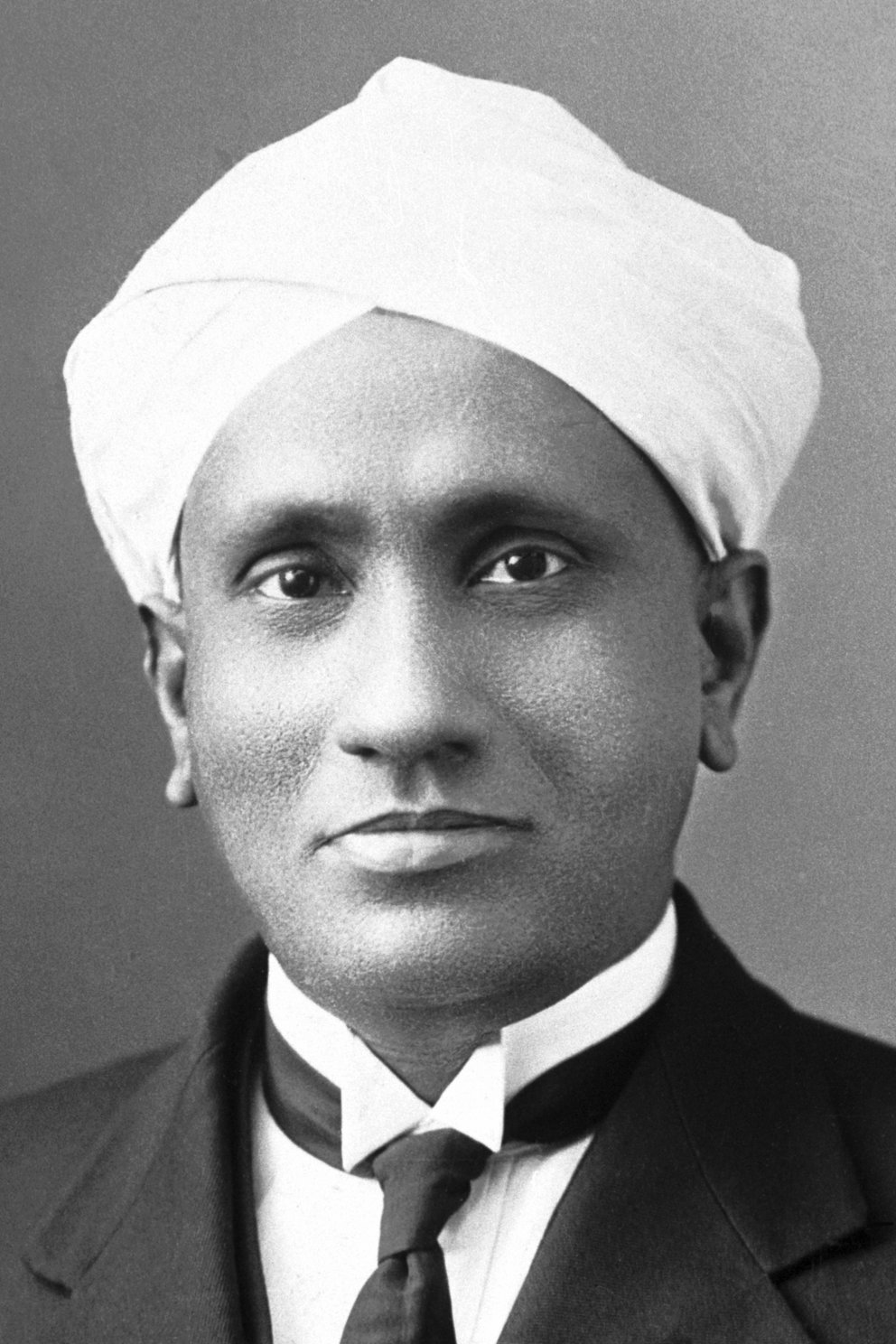
Every year on November 7, the world commemorates the extraordinary life and legacy of C. V. Raman (Indian Physicist & Nobel Laureate (Discoverer of the Raman Effect)). Celebrated across India and worldwide for defining contributions to science, their life remains an inspiring beacon of human courage, vision, and excellence.
1. Early Foundations, Background & Formative Years
Chandrasekhara Venkata Raman was born on November 7, 1888, in Tiruchirappalli, Tamil Nadu, into a Tamil Brahmin family of scholars. His father was a lecturer in mathematics and physics. A child prodigy, Raman passed his matriculation at age eleven and earned his Bachelor's and Master's degrees from Presidency College, Chennai, with highest academic honors at age nineteen, publishing original research papers in the British Philosophical Magazine while still an undergraduate.
Unable to secure a scientific post in colonial India, Raman entered the Indian Finance Department in Calcutta in 1907 as an Assistant Accountant-General. For a decade, he led a remarkable double life: balancing civil accounts by day, and conducting tireless experimental physics by evening and dawn at the Indian Association for the Cultivation of Science (IACS) at Bowbazar Street.
In 1917, Raman resigned from his lucrative government post to accept the Palit Chair of Physics at the University of Calcutta. In the summer of 1921, during a sea voyage across the Mediterranean, he became fascinated by the deep opalescent blue of the water, disproving Lord Rayleigh's theory that ocean color was merely a reflection of the sky and showing it resulted from molecular light scattering. On February 28, 1928, working with K. S. Krishnan, Raman discovered inelastic scattering of light (the Raman Effect), proving the quantum nature of photons. For this discovery, he received the 1930 Nobel Prize in Physics, knighthood, and later the Bharat Ratna (1954). He served as the first Indian Director of the Indian Institute of Science (IISc) in Bangalore and founded the Raman Research Institute, dedicating his entire life to Indian scientific self-reliance.
Growing up in India, C. V. Raman was guided by an innate curiosity, unwavering discipline, and a refusal to accept mediocrity. These formative experiences forged the intellectual and moral bedrock that would later define their world-changing accomplishments.
2. Defining Achievements & Global Career Breakthroughs
Across decades of dedicated service and relentless practice, C. V. Raman redefined standards of excellence in science. Whether breaking barriers, innovating masterworks, or transforming public perception, their career represents the pinnacle of professional dedication.
3. Philosophy, Quotations & Guiding Worldview
Throughout their life, C. V. Raman articulated profound insights into human potential, creative resilience, and moral responsibility. Their words continue to offer timeless guidance for succeeding generations.
4. Key Milestones & Notable Works
- Discovered the Raman Effect (inelastic scattering of photons) on February 28, 1928
- Awarded the Nobel Prize in Physics in 1930 — the first Asian scientist to receive the Nobel
- Pioneered the physics of musical instruments (violins, mridangam, and tabla)
- First Indian Director of the Indian Institute of Science (IISc) Bangalore (1933–1937)
- Founded the Indian Academy of Sciences (1934) and the Raman Research Institute (1948)
- Conferred the Bharat Ratna, India's highest civilian honor, in 1954
5. The Enduring Legacy of C. V. Raman
Generations of practitioners, scholars, and future leaders trace their inspiration directly to the path blazed by C. V. Raman. Their courage reminds us that true greatness requires relentless perseverance, creative boldness, and a lifelong commitment to uplifting humanity.