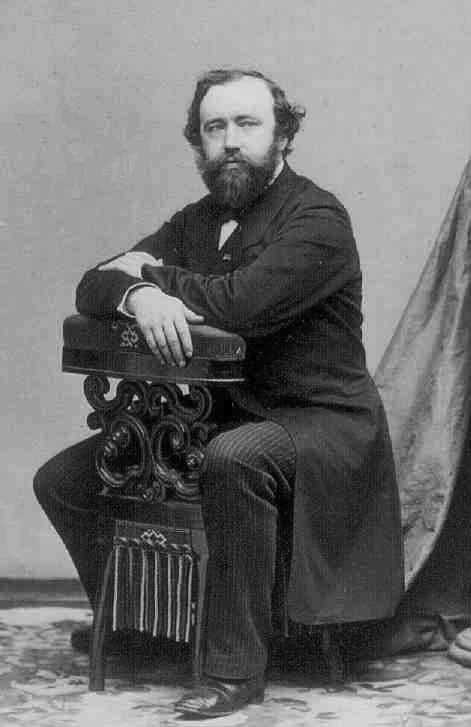
Every year on November 6, the world commemorates the extraordinary life and legacy of Adolphe Sax (Belgian Instrument Designer, Acoustic Inventor & Creator of the Saxophone). Celebrated across Belgium and worldwide for defining contributions to music, their life remains an inspiring beacon of human courage, vision, and excellence.
1. Early Foundations, Background & Formative Years
Born in Dinant, Belgium, on November 6, 1814, Antoine-Joseph "Adolphe" Sax was the eldest son of Charles-Joseph Sax, a renowned royal cabinetmaker and brass instrument artisan. Sax displayed incredible resilience from early childhood, surviving a string of catastrophic accidents that earned him the local nickname "the ghost child"—including falling from a three-story window, swallowing a needle, suffering severe gunpowder burns, and accidentally drinking diluted sulfuric acid. He studied flute and clarinet at the Royal Conservatory of Brussels, quickly mastering both performance and acoustic mechanics.
Relocating to Paris in 1842 with virtually no capital, Sax set up a workshop on the Rue Neuve-Saint-Georges. He recognized an acoustic void in contemporary European orchestration: orchestral brass instruments were powerful but inflexible, while woodwinds possessed agility and delicate tone but were completely overpowered in outdoor military bands. Sax envisioned an instrument that bridged this divide—marrying the single-reed mouthpiece of a clarinet with a conical brass tube and wide flare.
On June 22, 1846, Sax was granted a French patent for a complete family of fourteen saxophones. Celebrated by French composer Hector Berlioz for its "tender and passionate" timbre, the instrument was swiftly adopted by the French military musical corps following a famous public battle of the bands on the Champ de Mars in 1845. Sax later taught at the Paris Conservatoire. Though plagued by fierce patent litigation and bankruptcy driven by jealous rivals, his acoustic invention survived to become the definitive solo voice of twentieth-century jazz and contemporary music.
Growing up in Belgium, Adolphe Sax was guided by an innate curiosity, unwavering discipline, and a refusal to accept mediocrity. These formative experiences forged the intellectual and moral bedrock that would later define their world-changing accomplishments.
2. Defining Achievements & Global Career Breakthroughs
Across decades of dedicated service and relentless practice, Adolphe Sax redefined standards of excellence in music. Whether breaking barriers, innovating masterworks, or transforming public perception, their career represents the pinnacle of professional dedication.
3. Philosophy, Quotations & Guiding Worldview
Throughout their life, Adolphe Sax articulated profound insights into human potential, creative resilience, and moral responsibility. Their words continue to offer timeless guidance for succeeding generations.
4. Key Milestones & Notable Works
- Patented the saxophone family (soprano through contrabass) in Paris (1846)
- Invented the saxhorn family, widely adopted in brass bands and military bands worldwide
- First professor of saxophone at the Paris Conservatoire (1857–1870)
- Pioneered bass clarinet keywork improvements that remain standard modern design
- Celebrated on the former 200 Belgian franc banknote and throughout Dinant, Belgium
5. The Enduring Legacy of Adolphe Sax
Generations of practitioners, scholars, and future leaders trace their inspiration directly to the path blazed by Adolphe Sax. Their courage reminds us that true greatness requires relentless perseverance, creative boldness, and a lifelong commitment to uplifting humanity.